





Zostel
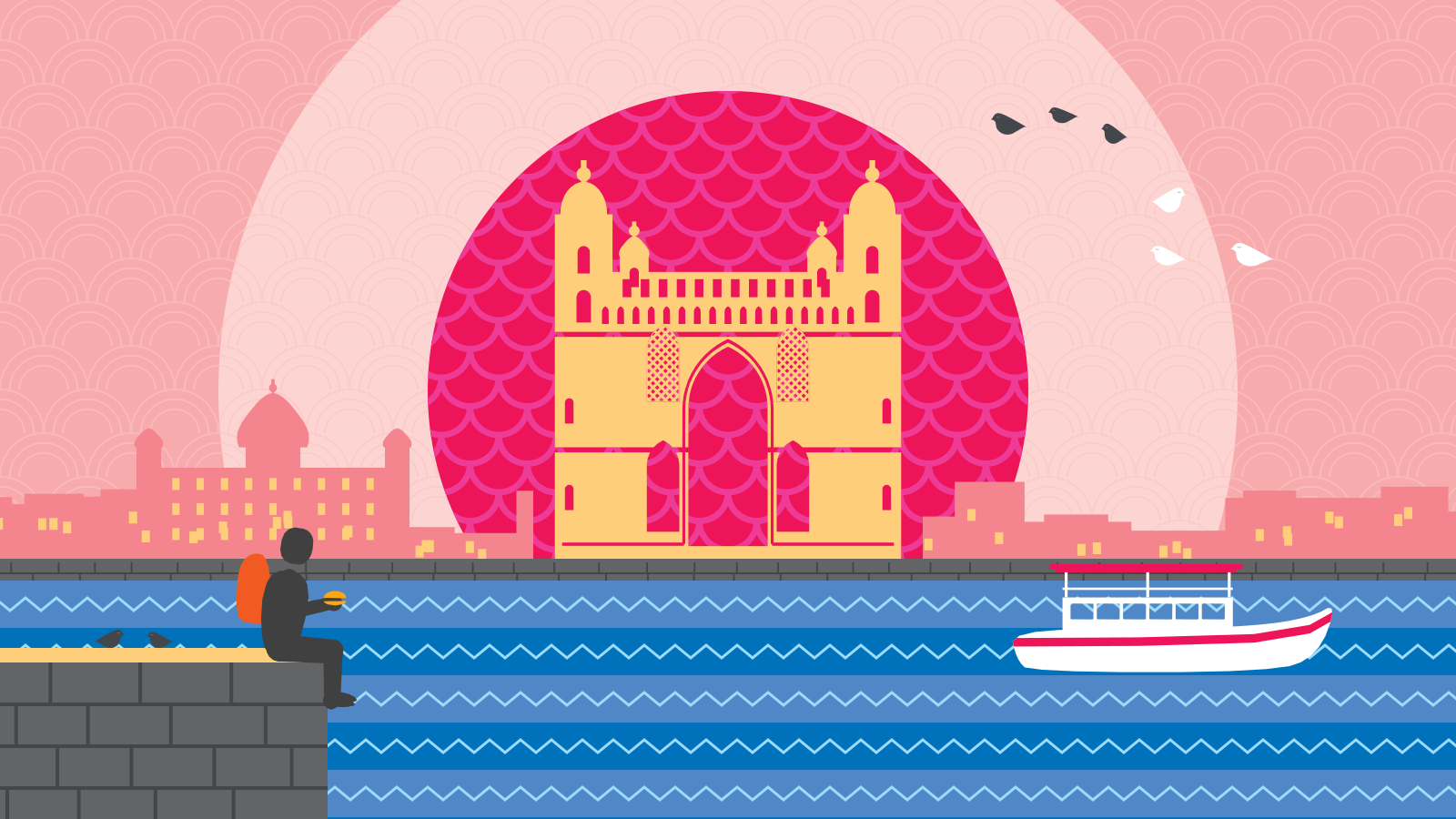
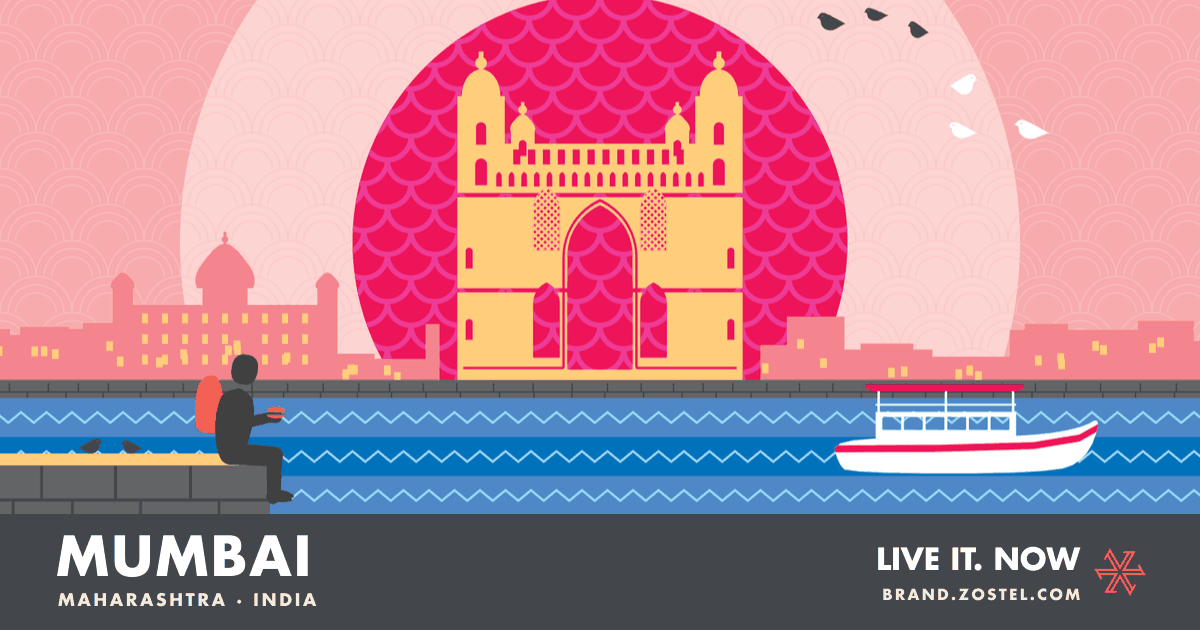
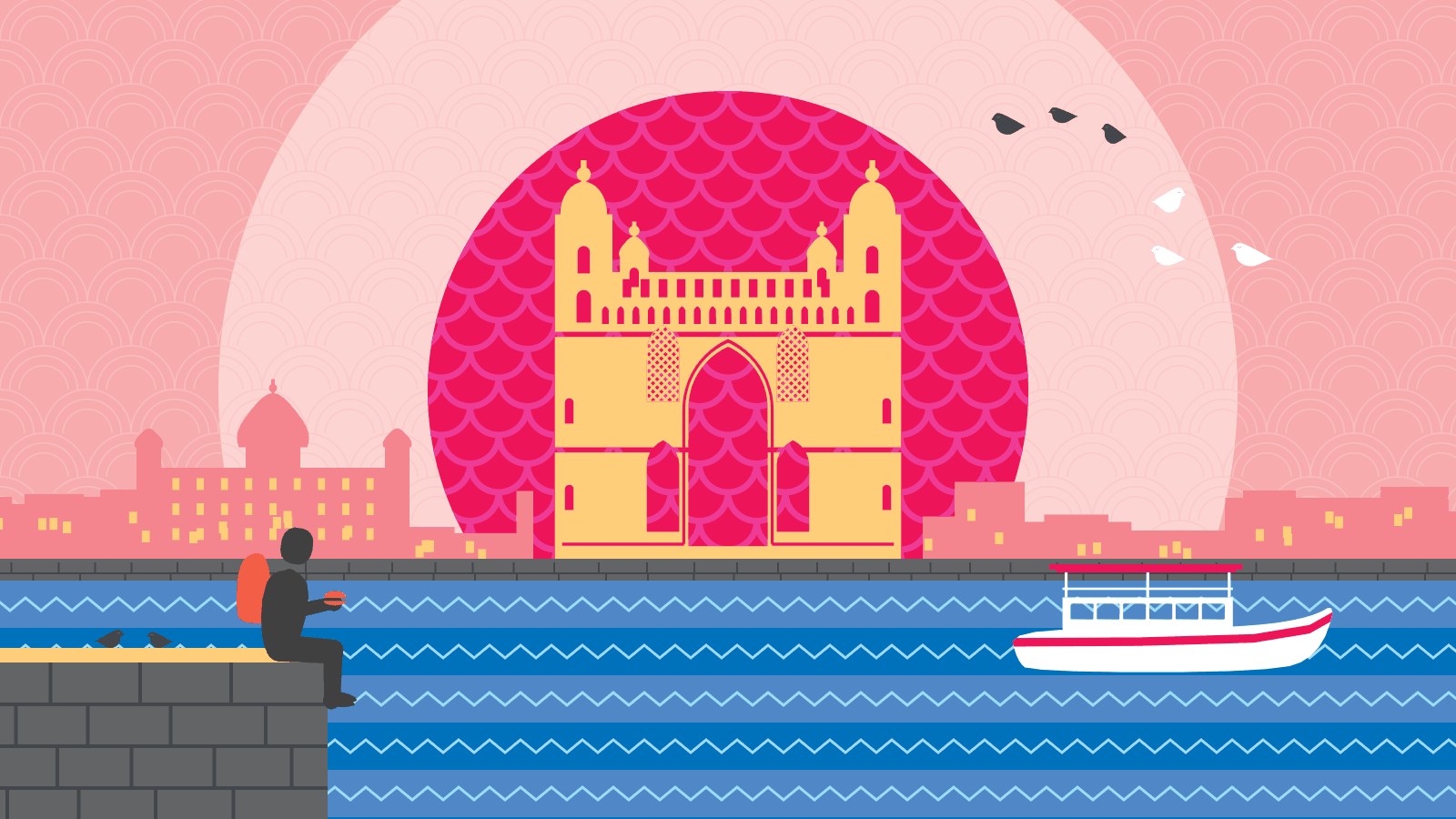
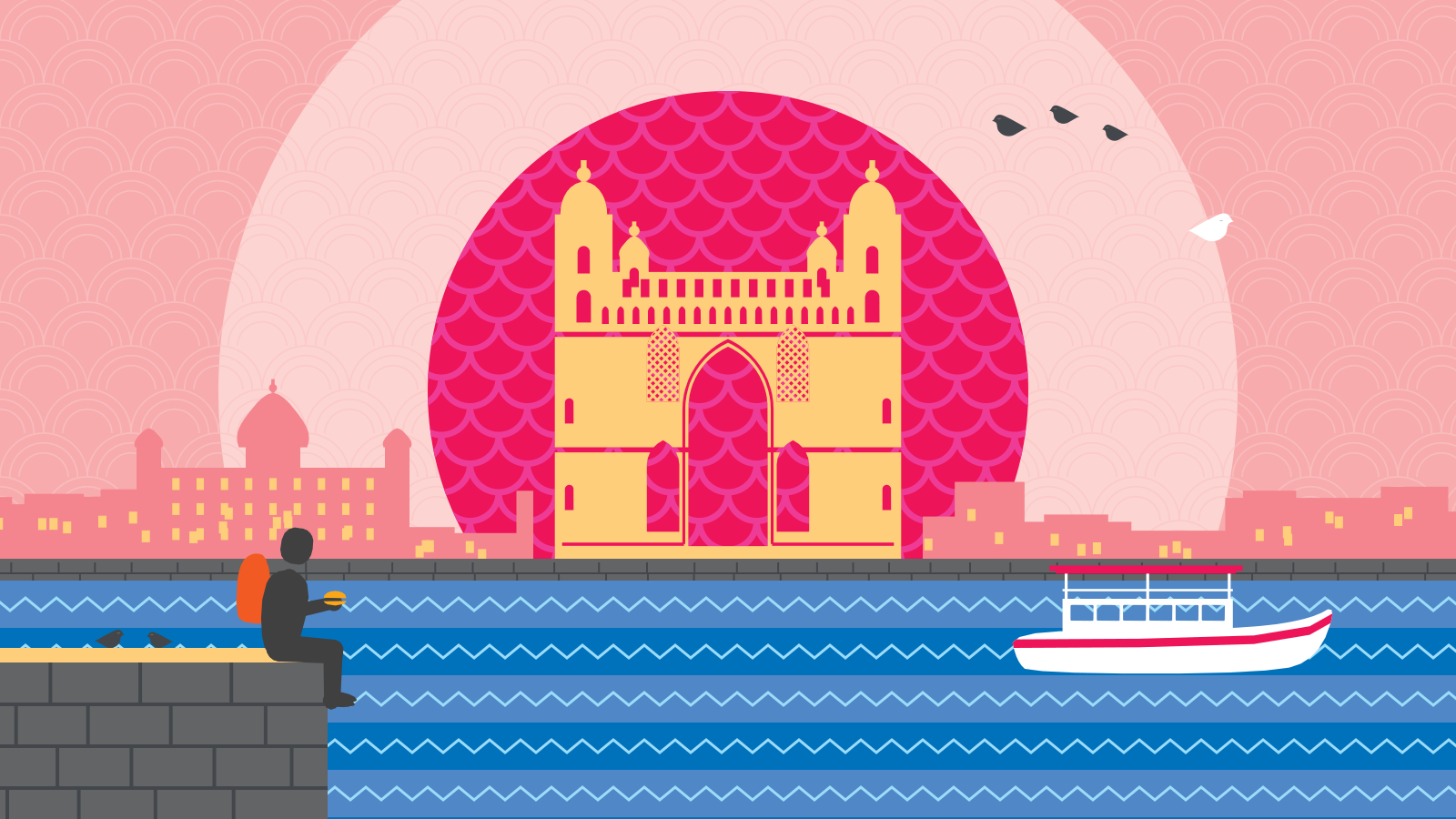
The Mumbai cover: Dusk at the Gateway of India
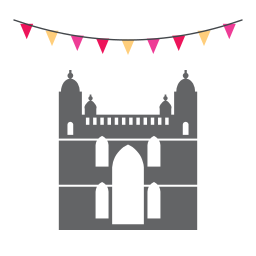
Gateway of India on Rani Pink — the Mumbai tile
Language

Mumbai

Gateway of India · Maharashtra · India

Make its poster The kit
The Mumbai cover: Dusk at the Gateway of India
Gateway of India on Rani Pink — the Mumbai tile

Why this icon The Gateway of India on the Apollo Bunder waterfront. Source: en.wikipedia.org

Zostel

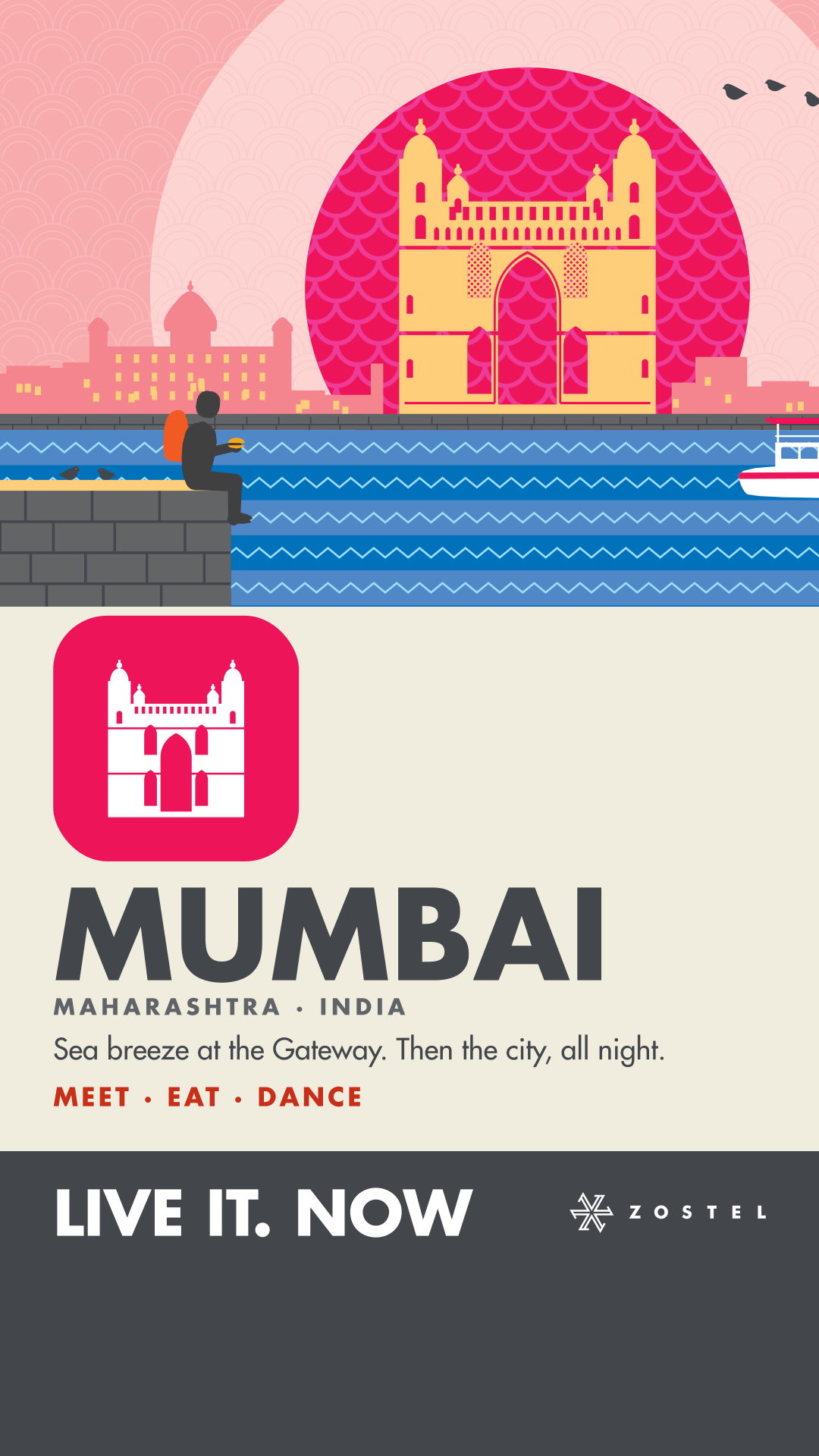
Sea breeze at the Gateway. Then the city, all night.

MEET · EAT · DANCE

The story

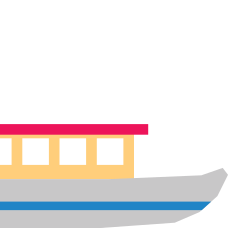
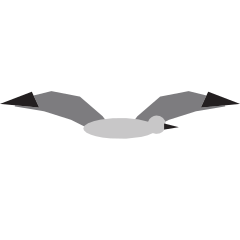
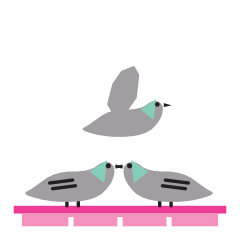
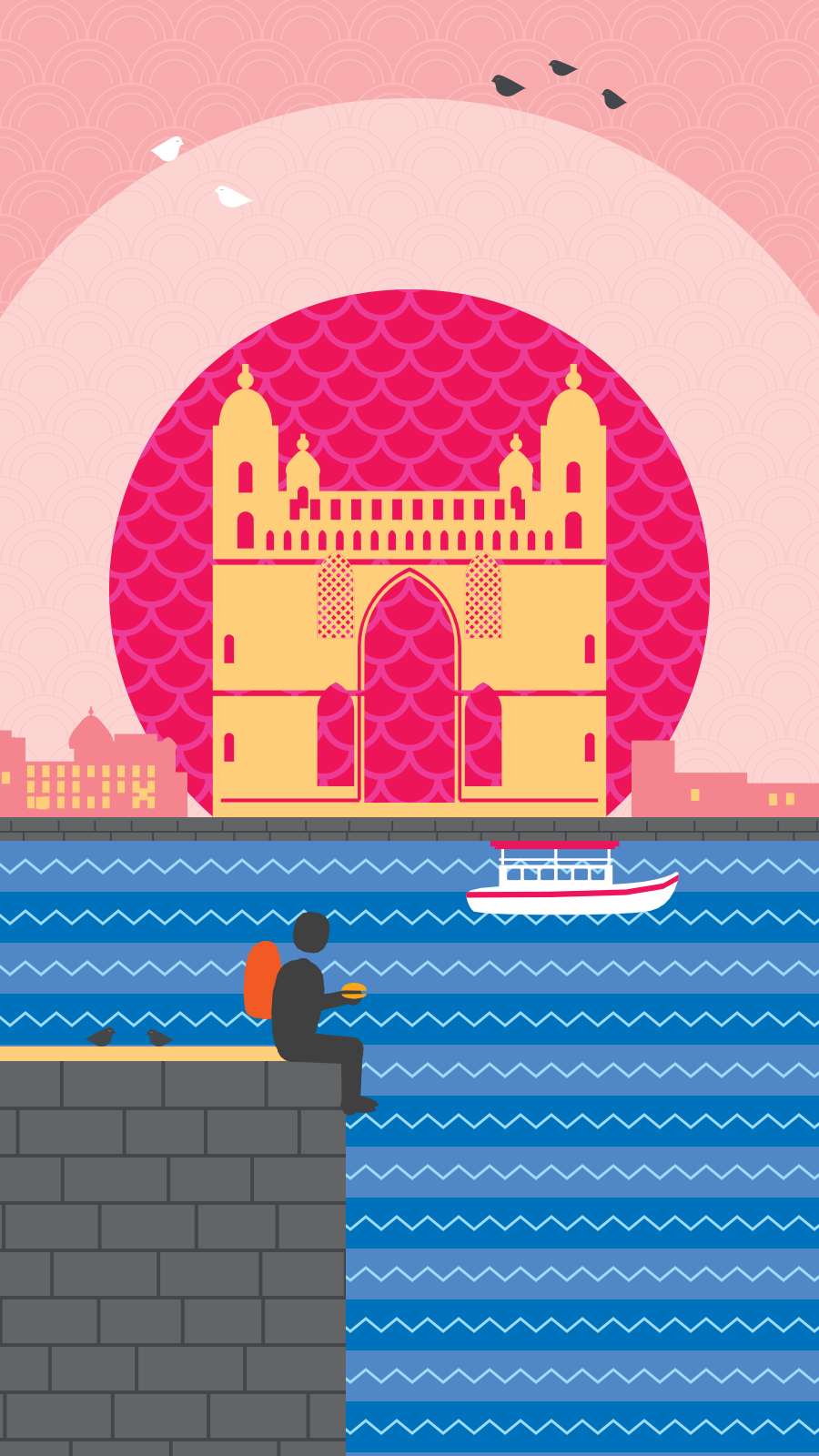
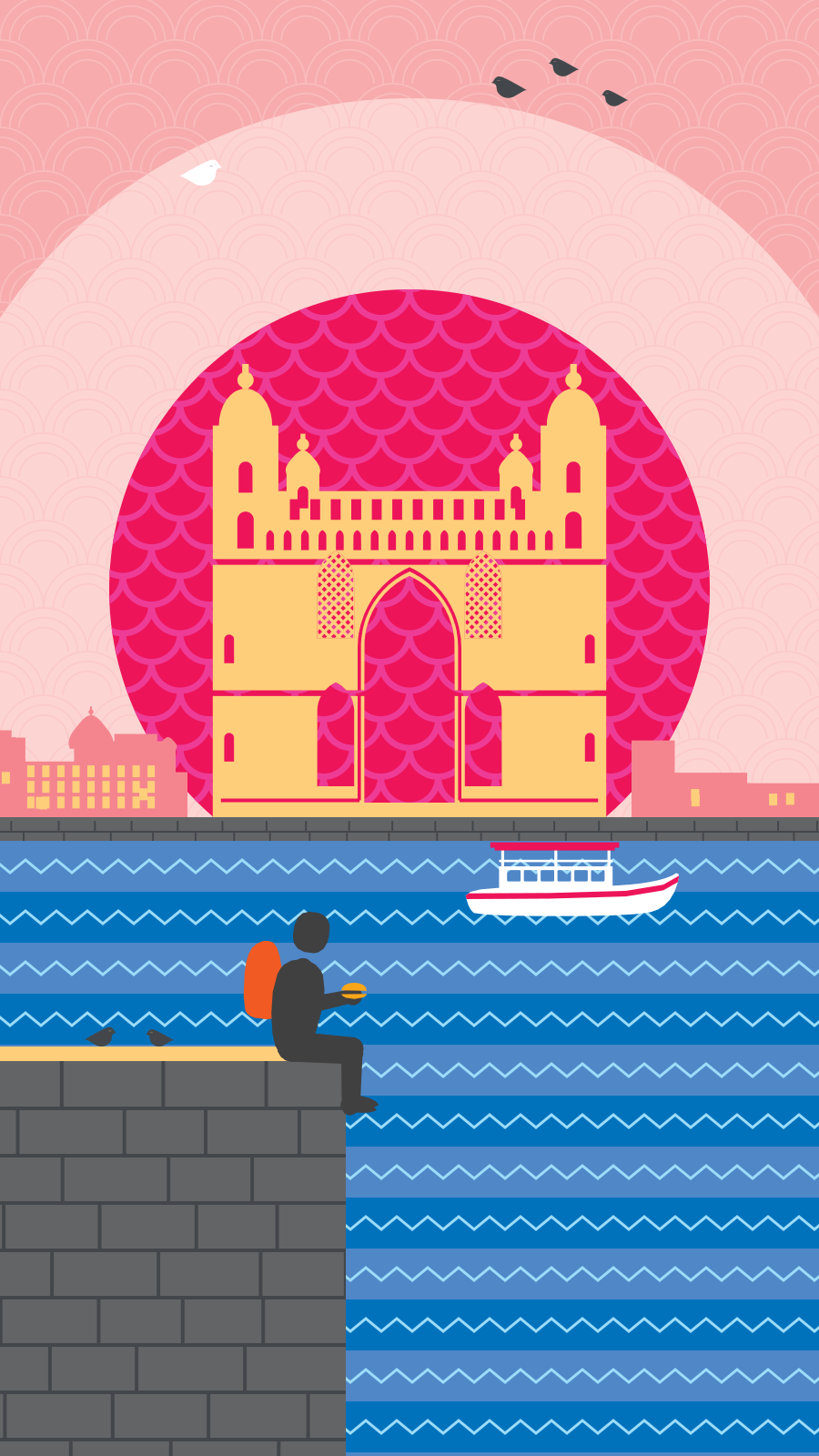
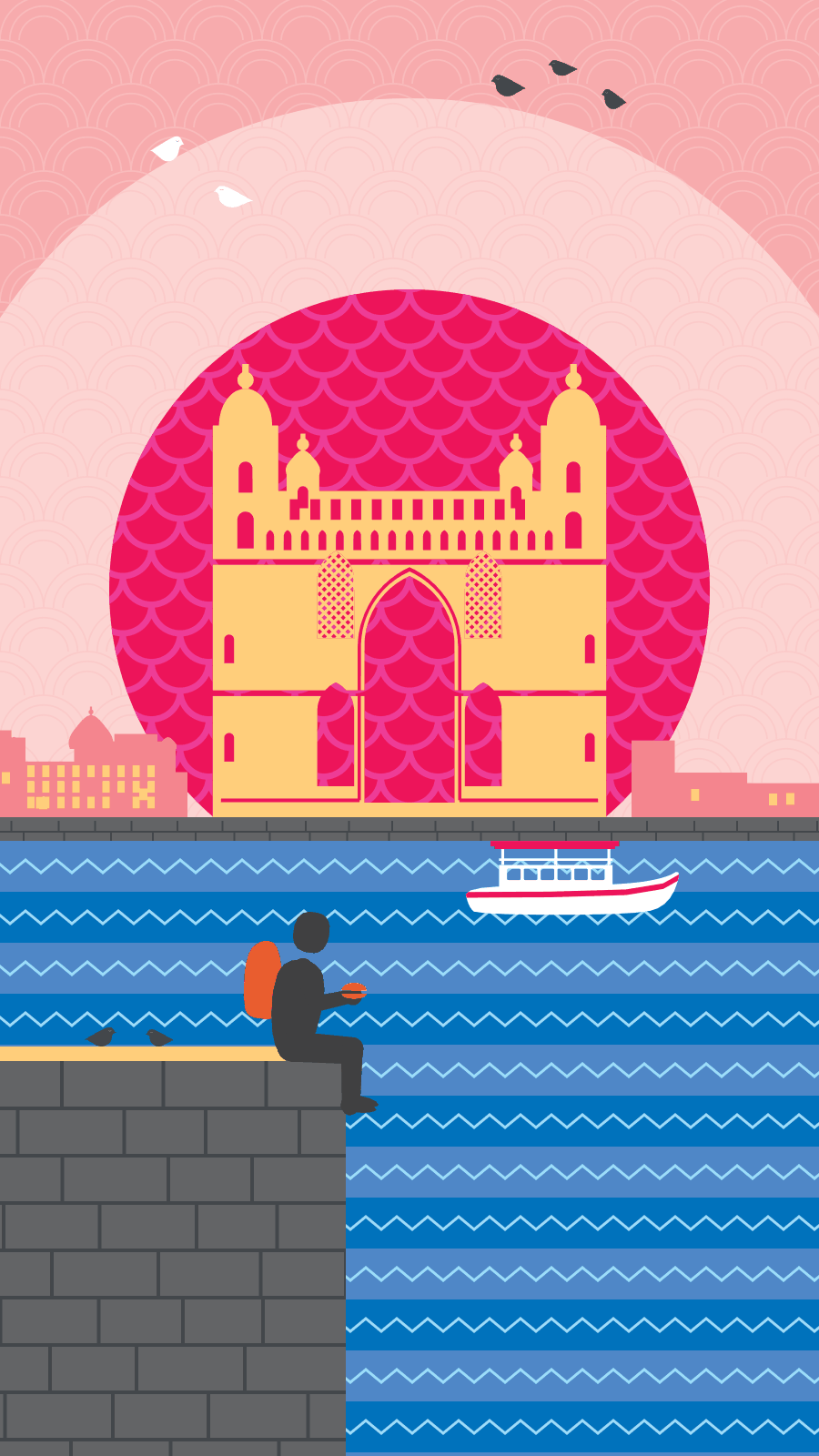
Dusk at the Gateway of India: the honey-stone arch glows inside a big setting sun on the harbour, a launch rides its mooring, gulls wheel, pigeons sit on the sea wall and a traveller sits on its end with a vada pav.

Why this picture

The Gateway of India (1924) stands on the waterfront at Apollo Bunder facing Mumbai Harbour: one great arch under four turrets between lower wings, in yellow basalt, with stone jaali screens in its arches. Seen from the water at dusk the sun goes down behind it and the city's windows come on; the Taj Mahal Palace's dome rises beside it, launches leave its jetties for Elephanta, pigeons crowd its sea wall and gulls winter on the harbour from October. Vada pav is the city's own snack.

The sky wears Gond scales, from Madhya Pradesh.

The motion

The harbour's water lines run, row against row; the launch rides its mooring; gulls wheel; a flight of pigeons crosses the whole sky; pigeons peck on the sea wall; the city's windows come on; the sun breathes. A 16-second loop.

Colour

Rani Pink #ED145A
Apricot #FFCE7B
Gulabi #EE3C96

Mumbai takes Rani Pink #ED145A, one of the three Flowers colours — with its icon in white on it.
Another moment in Mumbai

A second scene: another true moment at Mumbai, drawn in the graphic vocabulary with the animals and city symbols that belong there. Wide for screens, tall for a phone held upright.

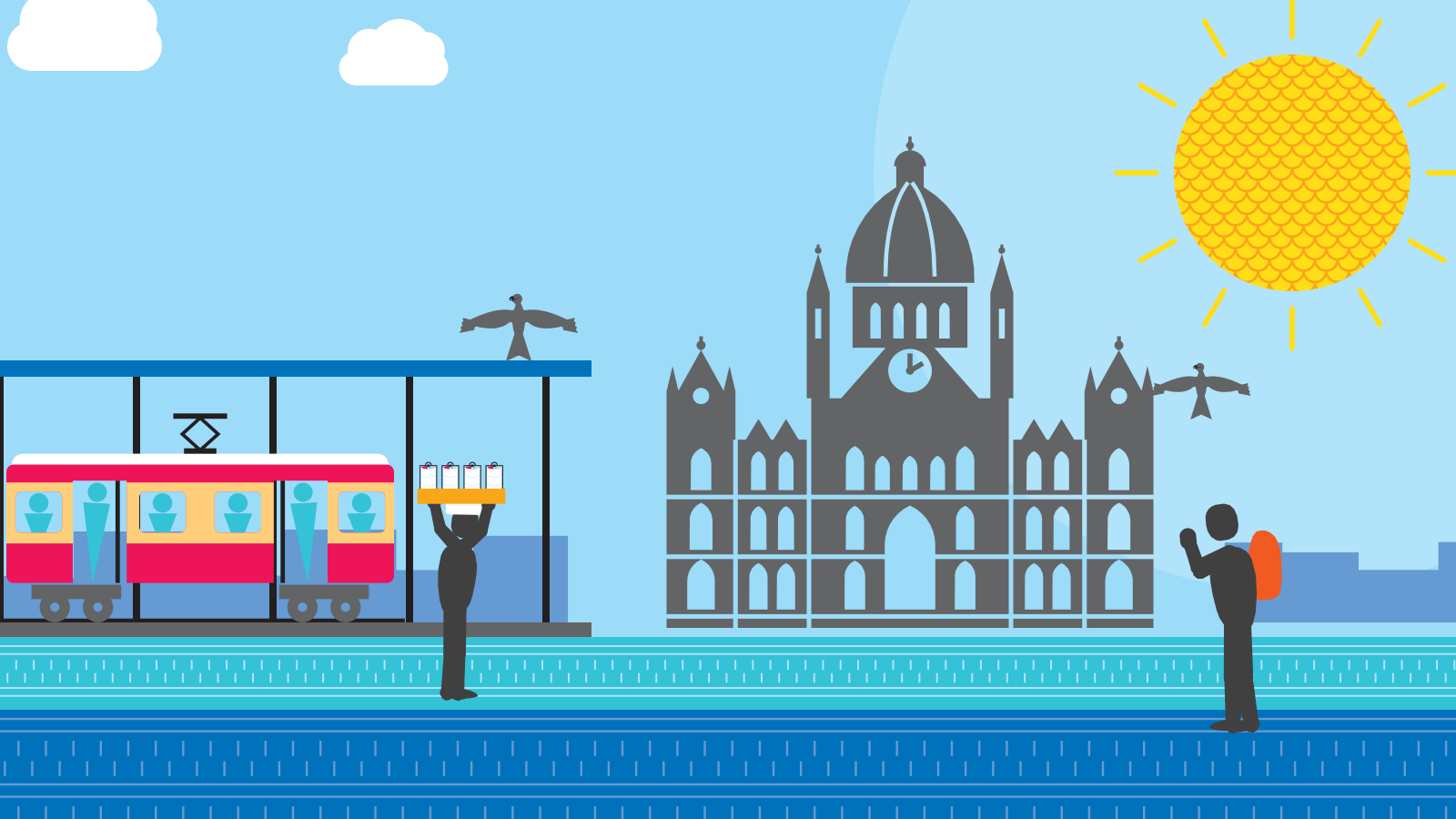
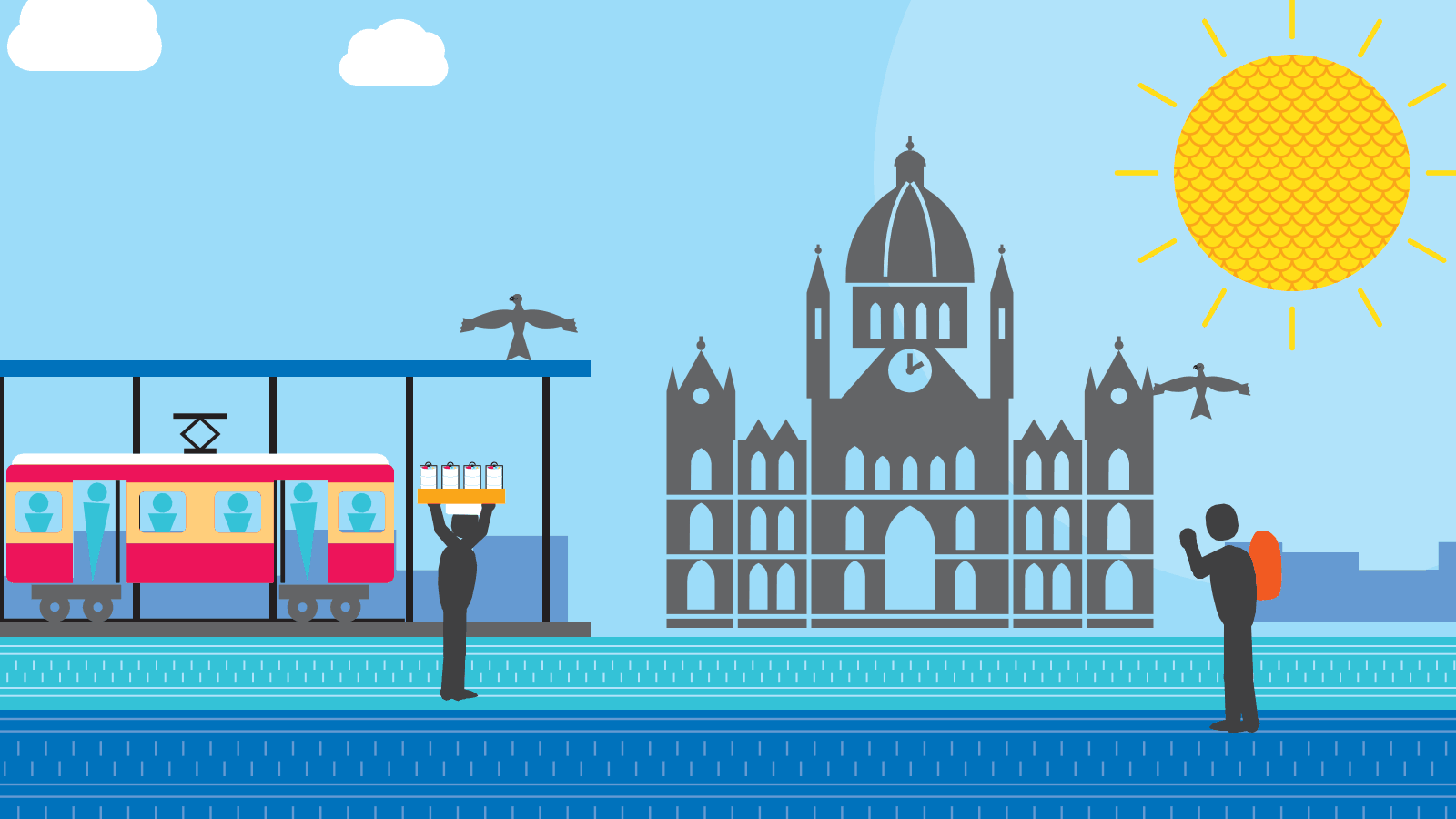
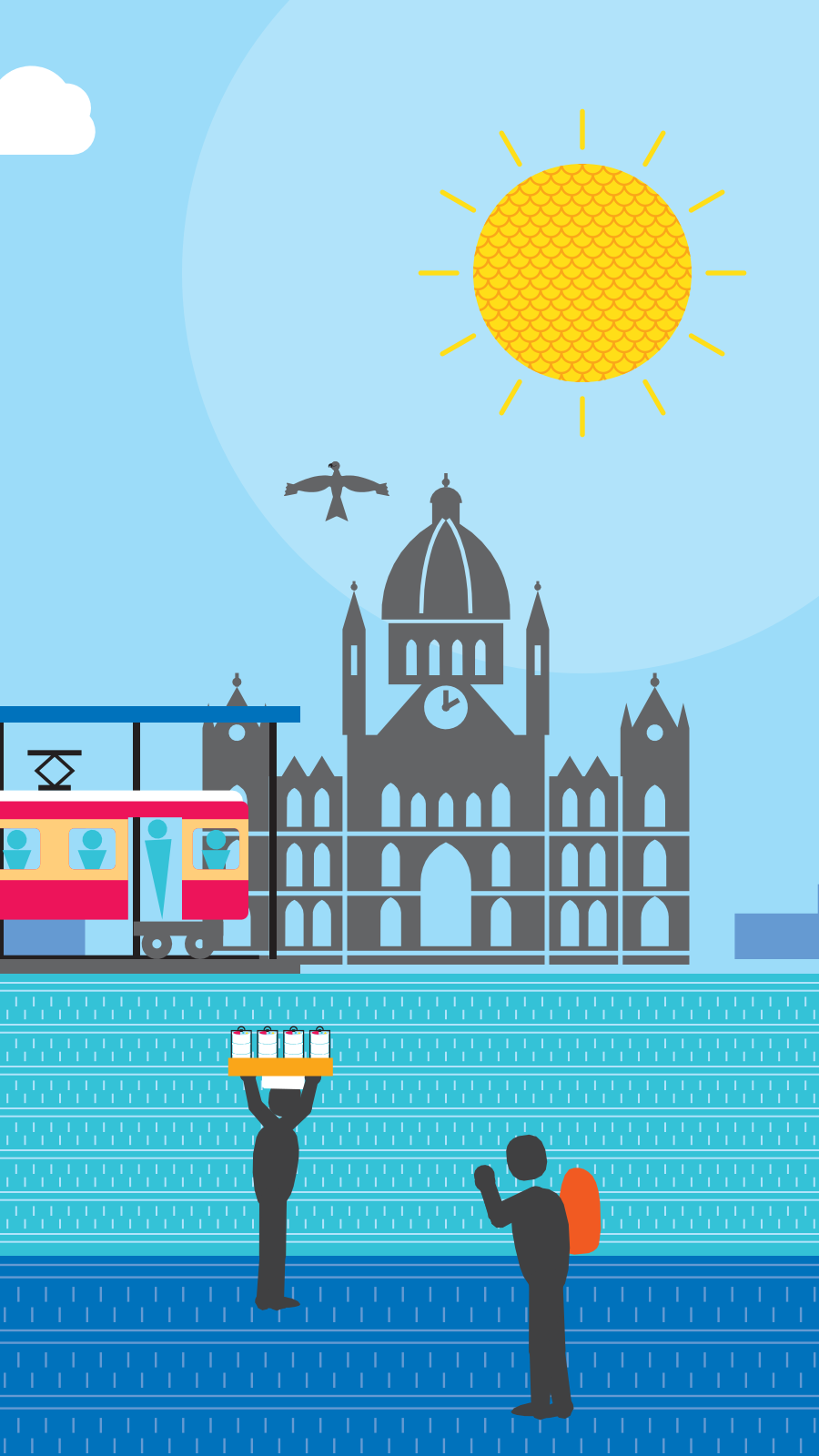
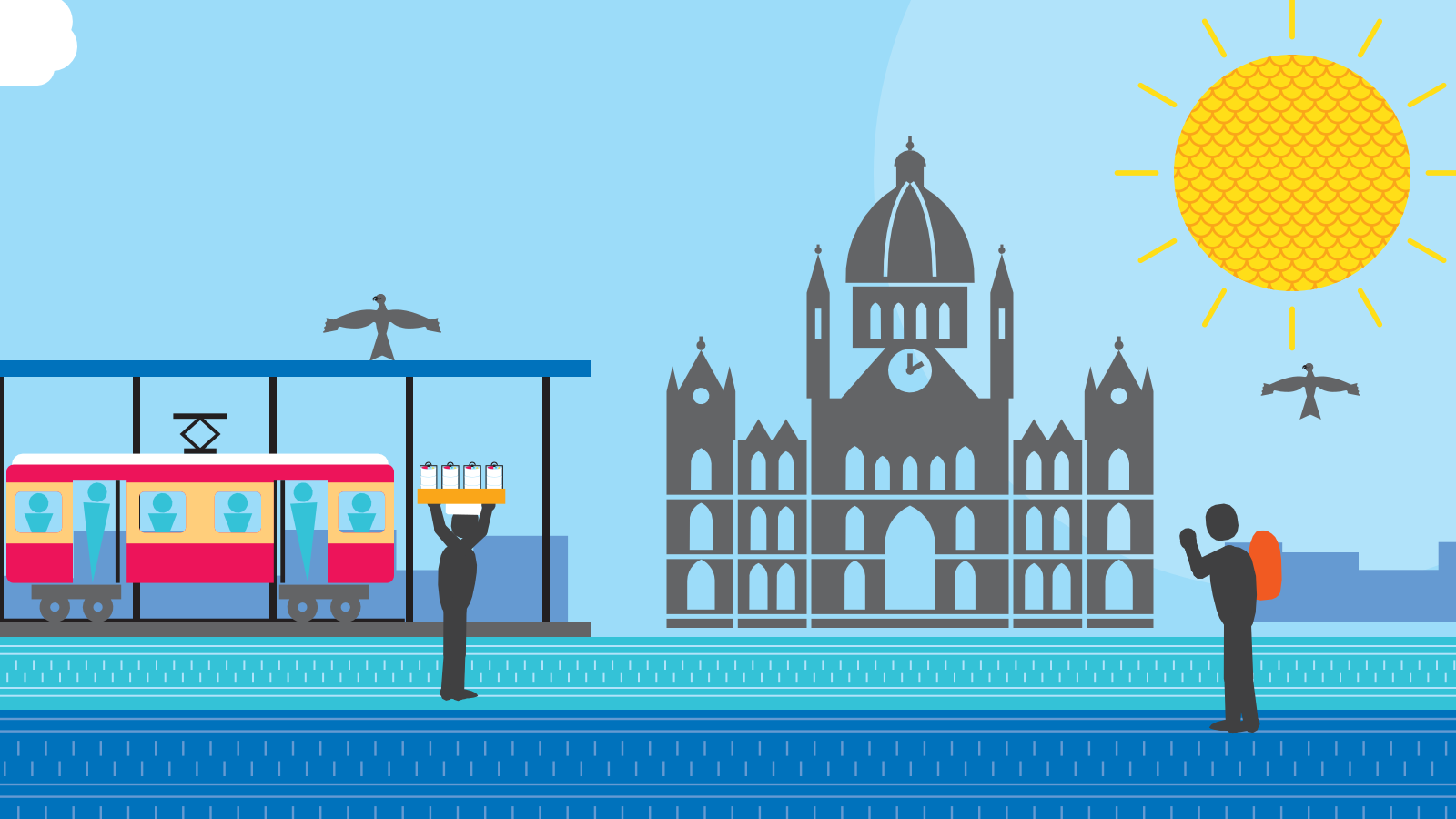
The second Mumbai scene: A weekday morning at Chhatrapati Shivaji Maharaj Terminus

The story

A weekday morning at Chhatrapati Shivaji Maharaj Terminus: the great Gothic front stands in the morning sun over its forecourt, a Mumbai local waits at the platform beside it with commuters at its open doors, a dabbawala carries his crate of tiffins off the train, black kites wheel over the city and a traveller stops to take a photograph.

Why this moment

CSMT (F. W. Stevens, 1887; UNESCO 2004) is the Central line's terminus, its ribbed dome, clock gable, turrets and pointed windows over the forecourt, and the suburban locals run in and out of its platforms all day. Some 5,000 dabbawalas carry home-cooked lunches across the city every late morning, taking the tiffins off the locals at the big stations and carrying them in crates on their heads, in white Gandhi topis. Black kites wheel over Mumbai in numbers, and the winter months are clear and dry.

The motion

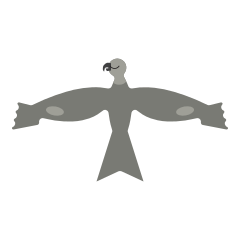
Black kites wheel in wide circles over the city; clouds cross the whole sky above the dome; the sun's rays turn. A 16-second loop.

Mumbai in symbols

Beside its icon, the things that are Mumbai, drawn in the Brand Manual's city language: a monument in the city grey with its openings cut, the things of the place in flat landscape colours. Each comes in colour and in the city grey. An alternate it keeps on file comes last. Every place's symbols

  • Chhatrapati Shivaji Maharaj TerminusMonument

    Chhatrapati Shivaji Maharaj Terminus (Victoria Terminus, F. W. Stevens, 1887; UNESCO World Heritage 2004): Victorian Gothic with Indian detail, the great ribbed dome over a gabled front with its clock, turrets and pointed windows; the statue on the dome is left out. The Gateway is the harbour; this is the city at work.

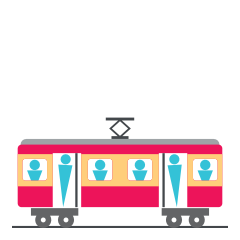
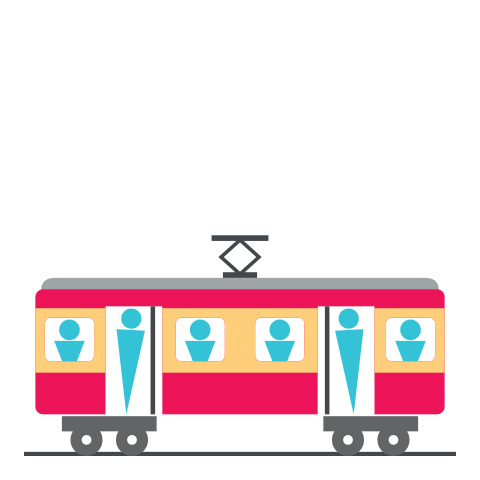
  • The Mumbai localOf the place

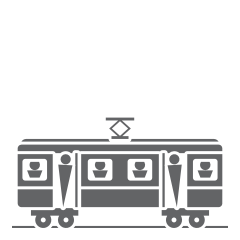
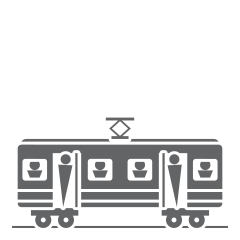
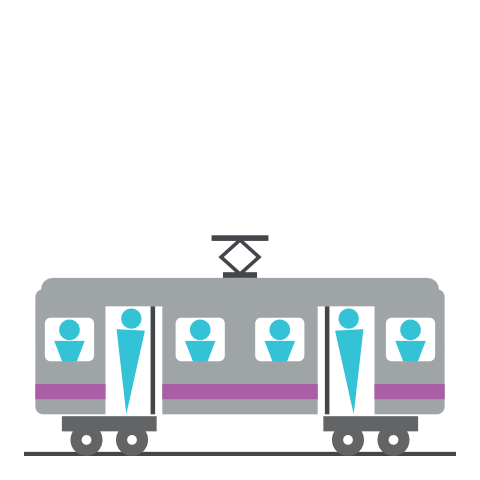
    The Mumbai local: the suburban trains that carry the city, doors open, people standing at them, a car of the EMU seen side on — its people the snake boat's rowers, discs over inverted triangles.

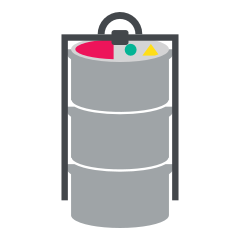
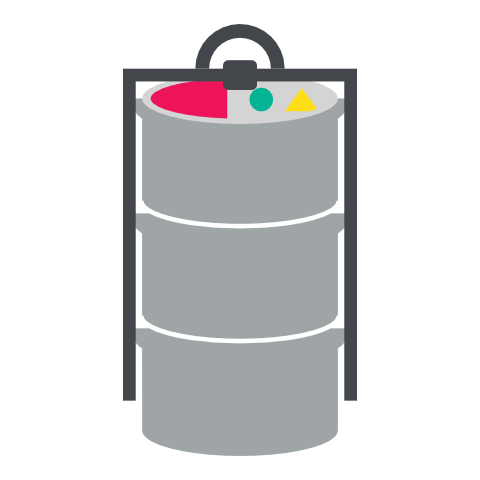
  • A dabbawala's tiffinOf the place

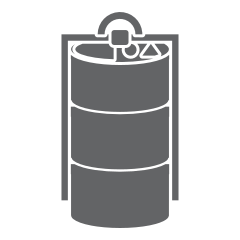
    The dabbawalas' tiffin: some 200,000 home-cooked lunches a day carried across Mumbai by about 5,000 dabbawalas, each steel tiffin carrier coded in colours on its lid so it finds its way back.

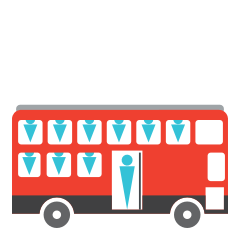
  • A BEST double-deckerOf the place

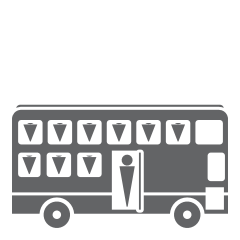
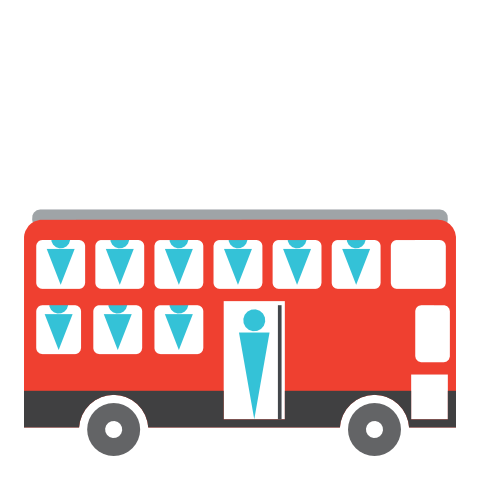
    BEST's double-deckers have run in Mumbai since 1937, the first in India; the old red diesels were retired in 2023 and the electric double-deckers took their routes — the city's bus, two decks of people, in red.

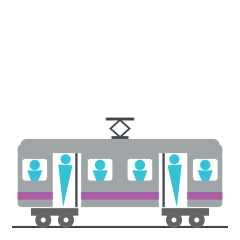
  • The Mumbai local, stainless rake (steel, violet band)Of the place · Alternate

    The Mumbai local: the suburban trains that carry the city, doors open, people standing at them, a car of the EMU seen side on — its people the snake boat's rowers, discs over inverted triangles.

  • Vada pavOf the place · Alternate

    Vada pav, Mumbai's own street food (Ashok Vaidya's stall at Dadar station, 1966): a spiced potato vada fried in gram-flour batter, in a soft pav with chutneys, a fried salted green chilli on the side.

Also drawn for Mumbai 5

Detailed icons from the library that name Mumbai among their places: one drawing, on the page of every place it belongs to. Those drawn for Mumbai alone come first. Every detailed icon

Say hello to Mumbai's Zobus

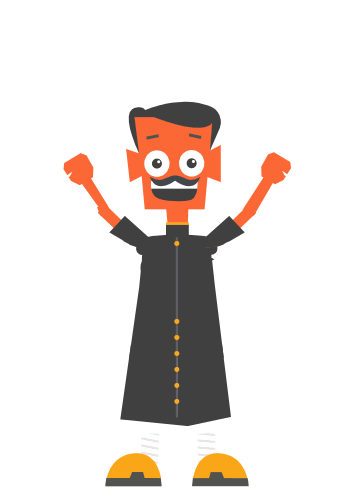
Zobu in Mumbai's own dress, on the palette. Hover or tap one and it waves. Each comes still and alive — idle, hello and hop — for stickers, stories and the app.

Every destination's Zobus →

The animals of Mumbai

Animals and birds the research behind Mumbai's picture names, drawn in the Brand Manual's animal style, in colour and in the city grey. All the animals of India

The kit

Everything Mumbai needs: its profile, its cover, wide and tall, its icon, tile, display picture and lockup, its loop and the symbol becoming it, its second scene, its city map, its city symbols and its Zobus — every file ready to download.

62 files in one zip, the cover, its second scene, its symbols, its Zobus and its city map included
The Mumbai profile: its cover, its tile and its words
Profile

Mumbai’s page as a story, 1080 × 1920: its cover, its tile, its name, its line and its verbs — for stories, status and a phone’s lock screen.

The Mumbai cover, wide
Cover, wide

1600 × 900, for screens: a page’s top, a slide, a share card. The still is the loop’s first frame. The animated SVG loops in 16 s; where it shouldn’t move, use the still.

The Mumbai cover, tall
Cover, tall

900 × 1600, composed for a phone held upright: stories, reels, a lock screen. The animated SVG loops in 16 s; where it shouldn’t move, use the still.

Gateway of India — the Mumbai tile
Tile

The icon in one colour on Mumbai’s own — for a grid, a story, a sticker.

Gateway of India — the Mumbai icon
Icon

A monument: city grey, its detail cut out. Transparent; the mono takes any one colour.

Gateway of India, Mumbai — the icon, alive
Loop

Festival bunting flutters above it, or confetti points twinkle. 7.2 s, seamless.

Motion

The symbol becomes Mumbai and turns back — a Lottie loop for stories, the app and the web.

The Mumbai display picture, as a circleThe Mumbai display picture, square
Display picture

Circle-safe: the colour, the icon and the name — for chats, socials and the app.

Zostel Mumbai lockup
Lockup

The horizontal lockup, with Mumbai under the wordmark — for signage, email and merch.

Chhatrapati Shivaji Maharaj TerminusThe Mumbai localA dabbawala's tiffinA BEST double-decker
City symbols

Mumbai’s symbols, each in colour and in the city grey, as SVG and PNG — in the zip’s symbols folder.

Mumbai Zobu, femaleMumbai Zobu, male
Zobus

Mumbai’s Zobu pair, still and alive (idle, hello, hop), waving still and as a face (a profile picture) — in the zip’s zobus folder.

Also made for Mumbai 5

The rest of what the library holds for Mumbai: the pattern of its region, the card its links share, each opening its own file or gallery.

The map we made for Mumbai

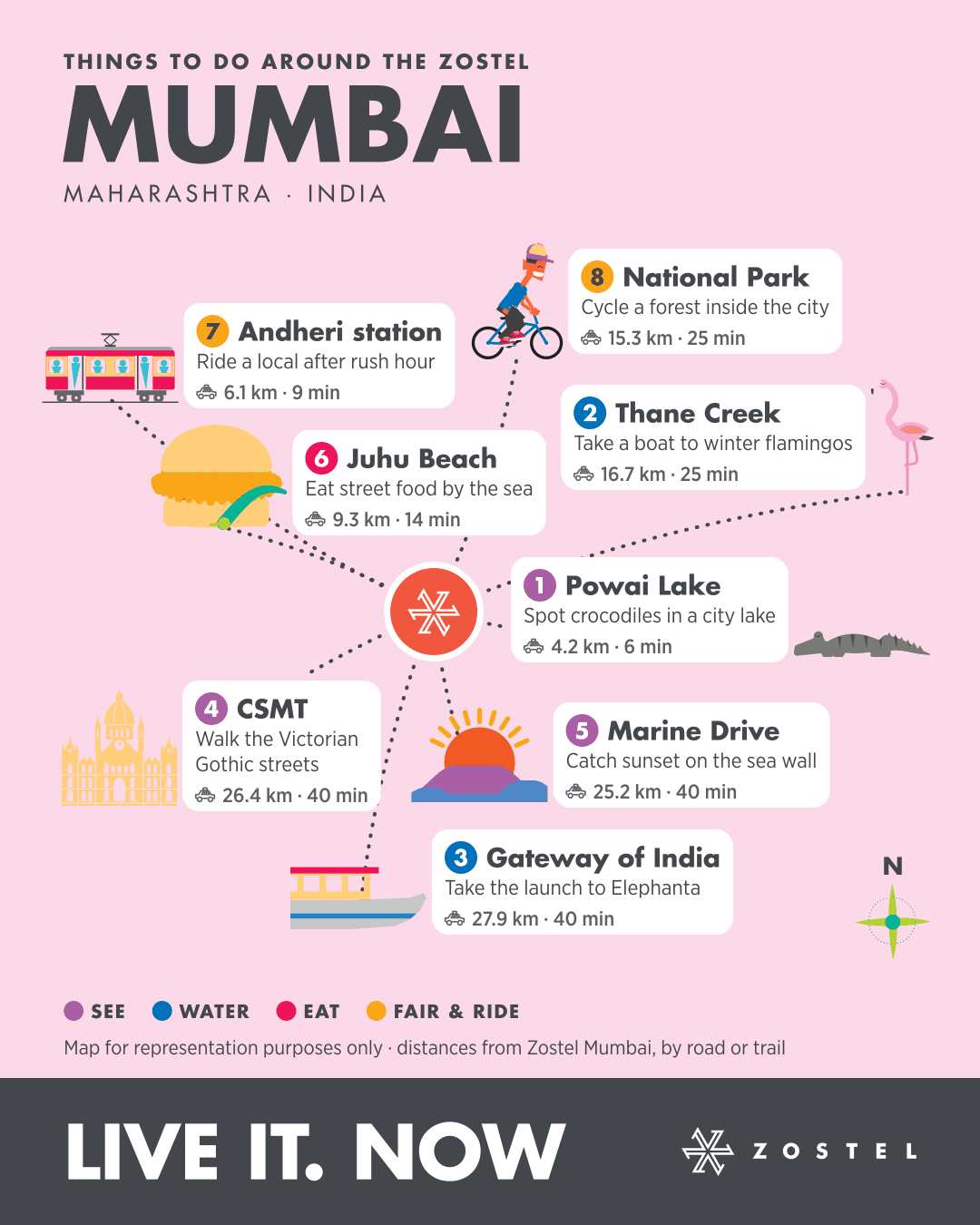
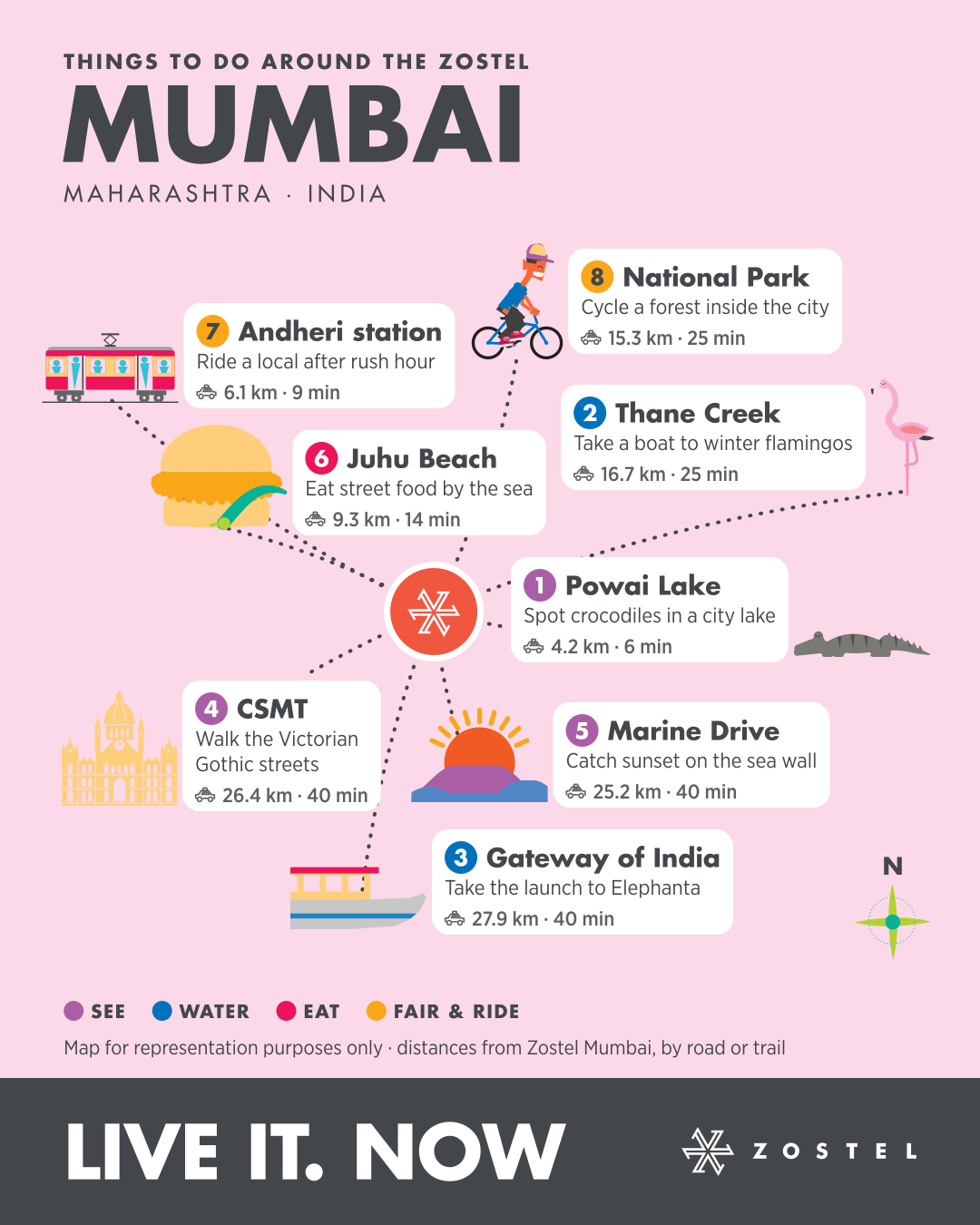
Eight things to do around Zostel Mumbai, each in its true direction with its distance and time from the door — a map made for your phone.

  1. Spot crocodiles in a city lakePowai Lake · 4.2 km · 6 min drive
  2. Take a boat to winter flamingosThane Creek · 16.7 km · 25 min drive
  3. Take the launch to ElephantaGateway of India · 27.9 km · 40 min drive
  4. Walk the Victorian Gothic streetsCSMT · 26.4 km · 40 min drive
  5. Catch sunset on the sea wallMarine Drive · 25.2 km · 40 min drive
  6. Eat street food by the seaJuhu Beach · 9.3 km · 14 min drive
  7. Ride a local after rush hourAndheri station · 6.1 km · 9 min drive
  8. Cycle a forest inside the cityNational Park · 15.3 km · 25 min drive

1080 × 1350, for a phone or a story. Distances and times from Zostel Mumbai, measured on OpenStreetMap routing. Map for representation purposes only.

On the map

Mumbai is in Maharashtra, India — one of the 84 places where Zostel is live.

Region
Maharashtra
Country
India
Where
19.08° N, 72.88° E
Landscape
Flowers
Mumbai · Maharashtra · India