





Zostel
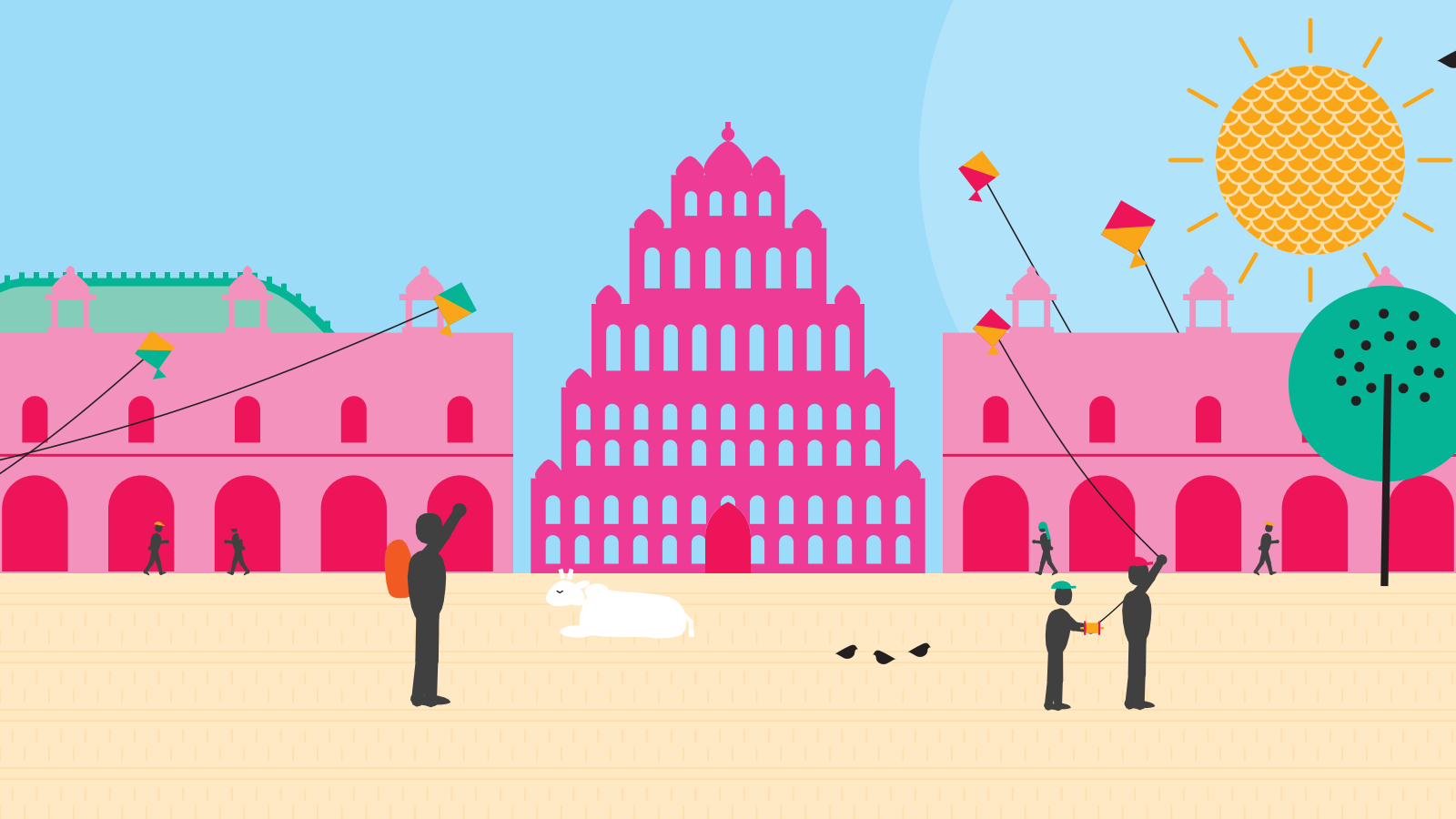
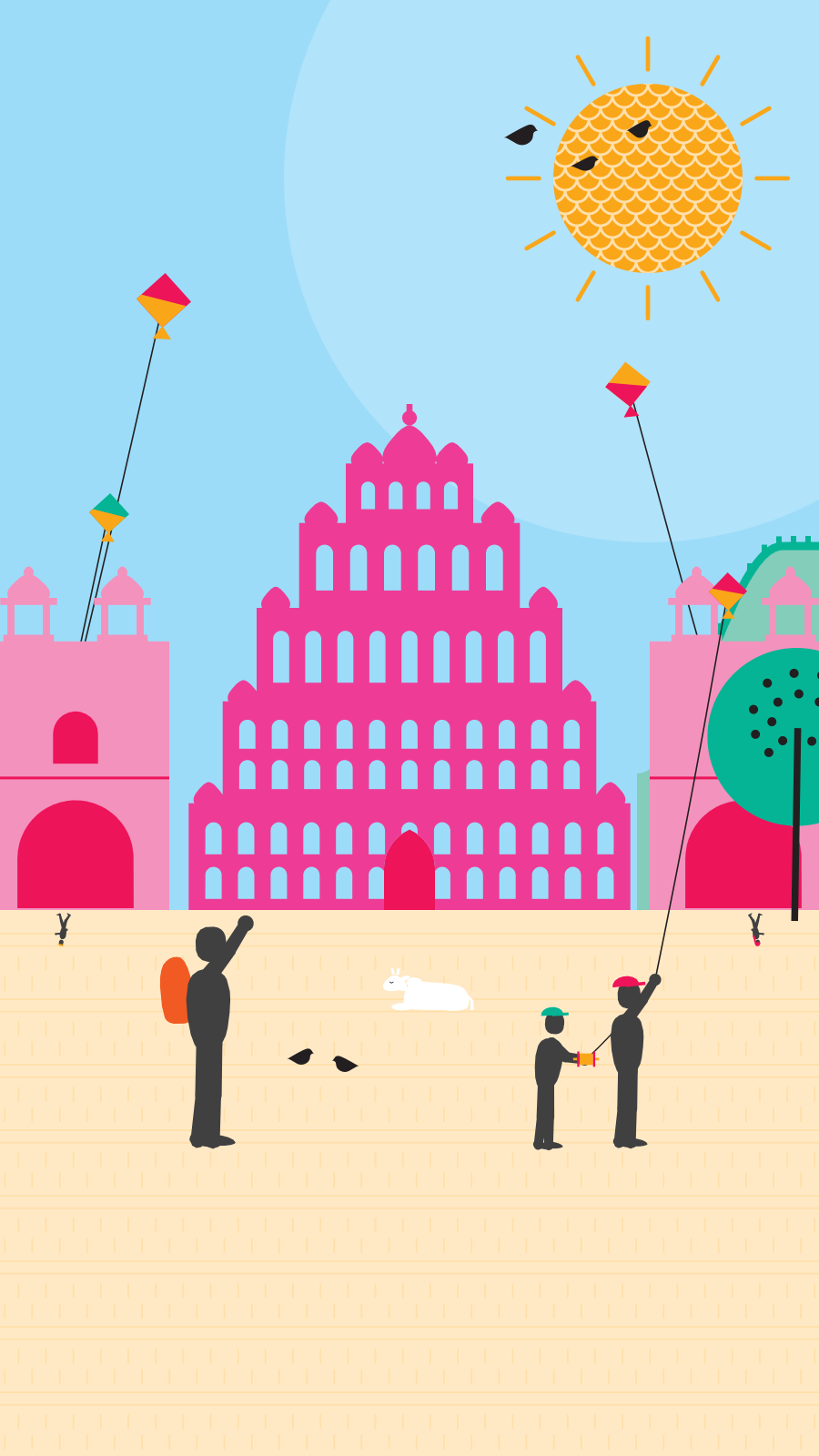
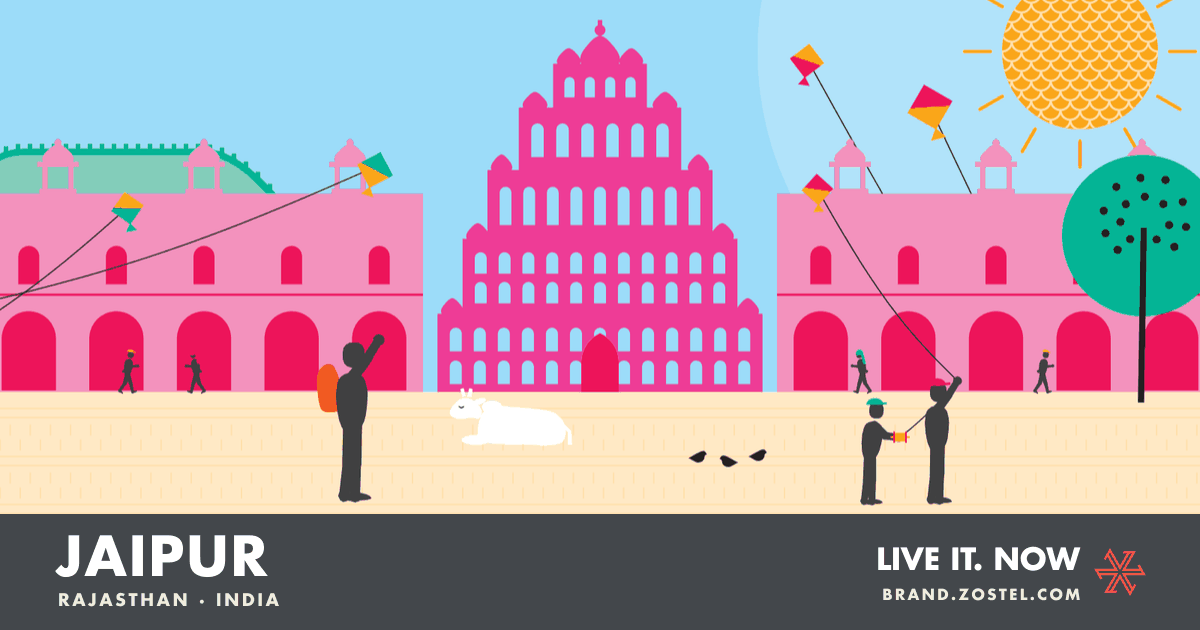
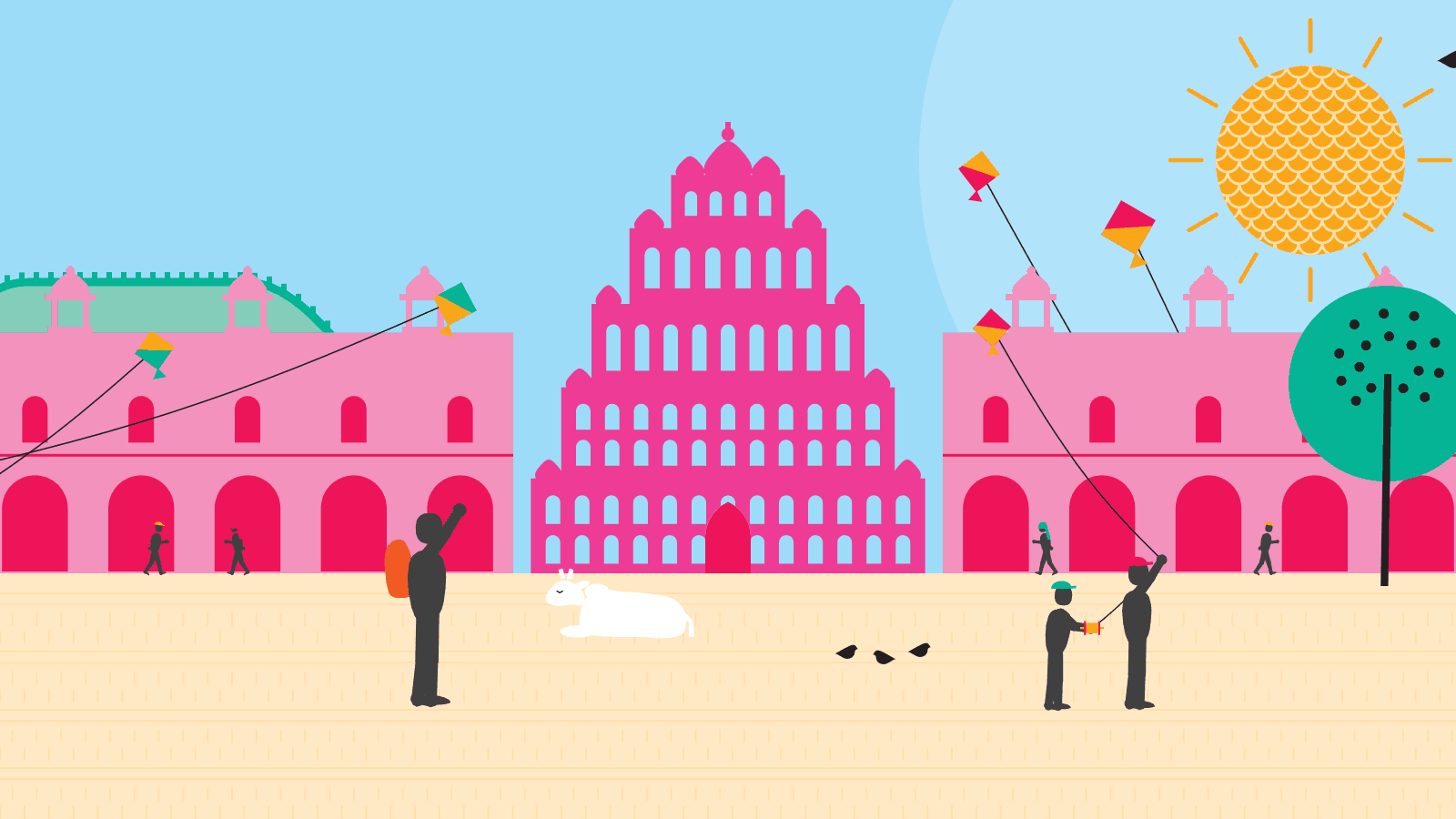
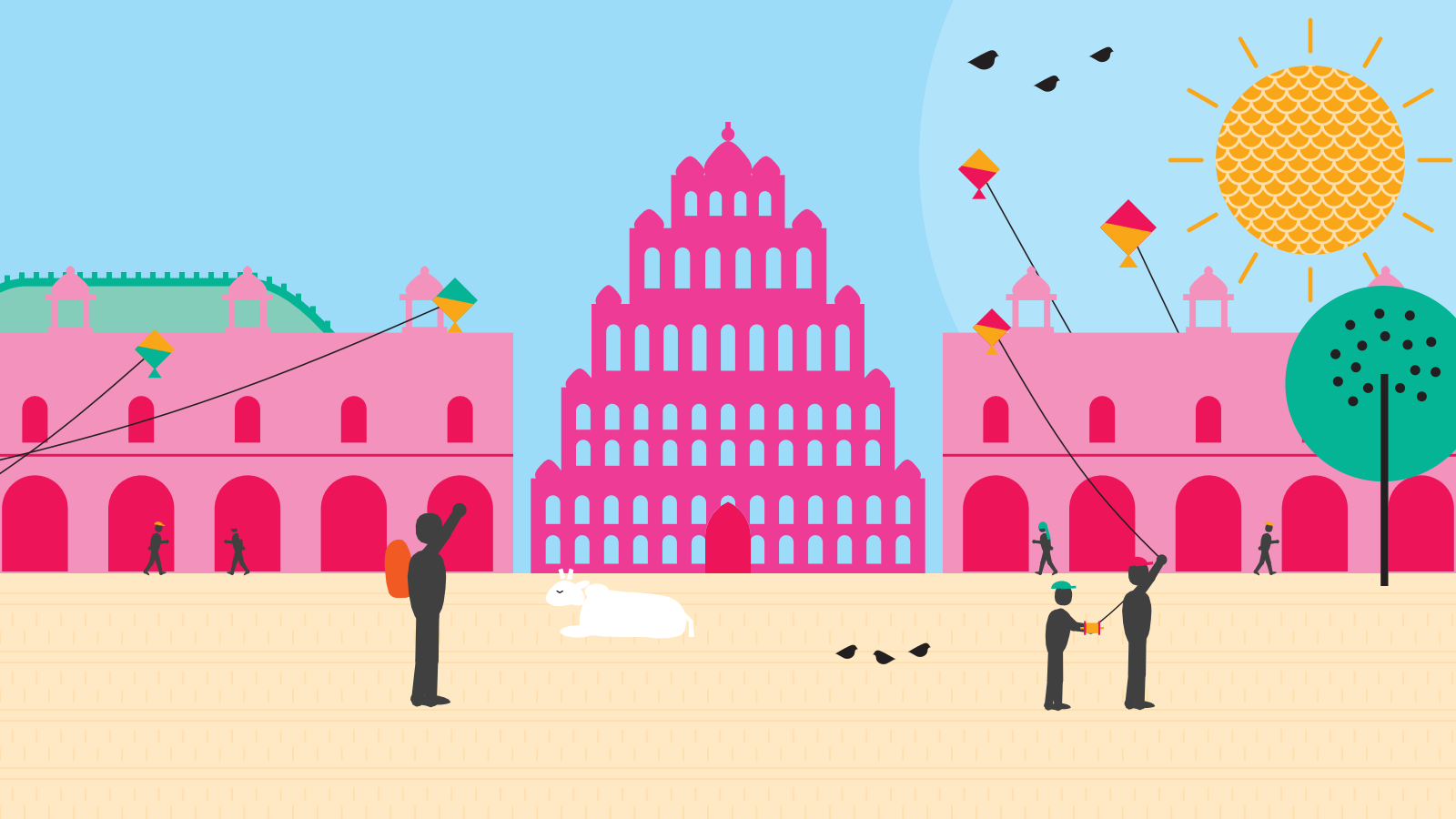
The Jaipur cover: A crisp Makar Sankranti morning below the Hawa Mahal
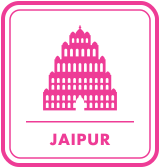
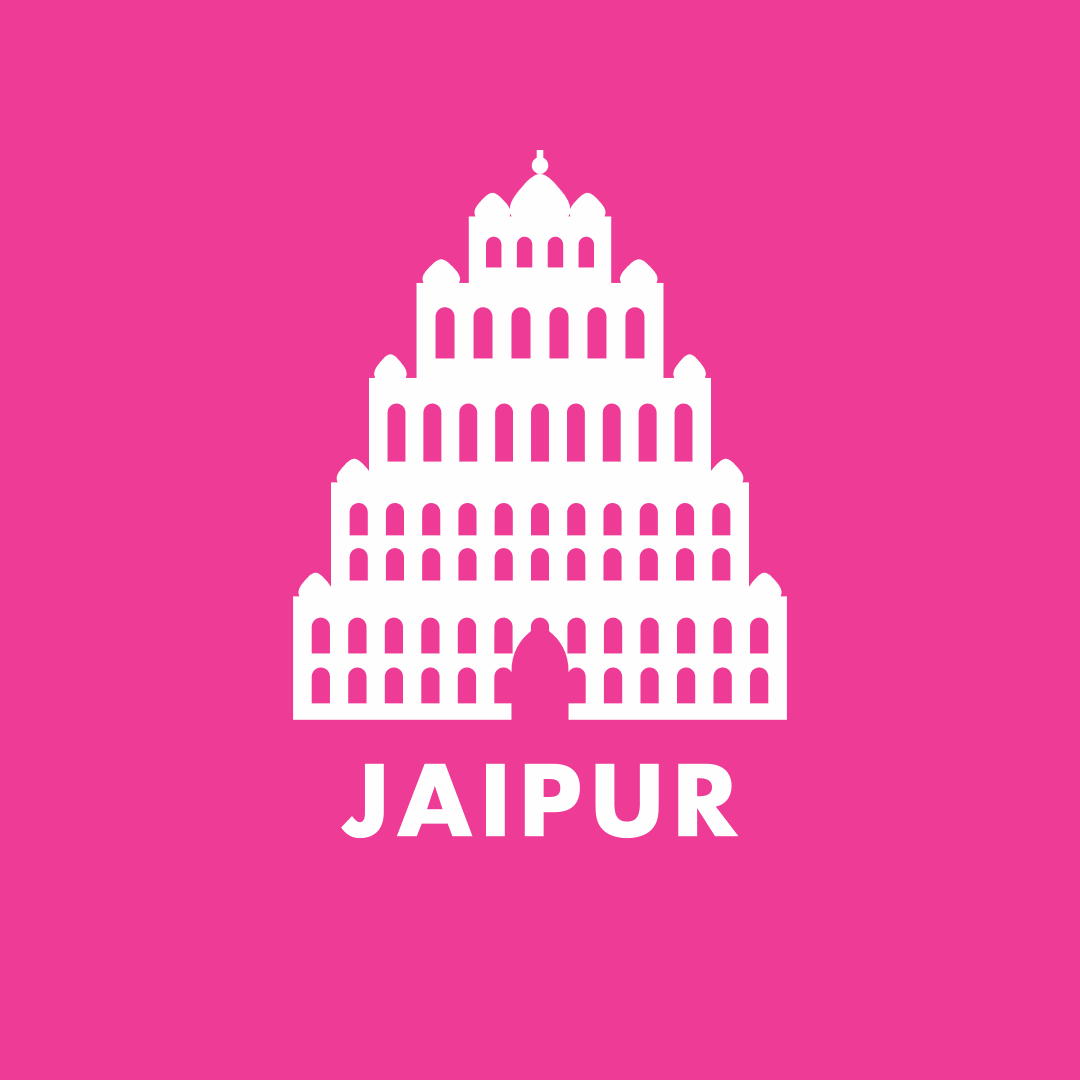
Hawa Mahal on Gulabi — the Jaipur tile
Language

Jaipur

Hawa Mahal · Rajasthan · India

Make its poster The kit
The Jaipur cover: A crisp Makar Sankranti morning below the Hawa Mahal
Hawa Mahal on Gulabi — the Jaipur tile

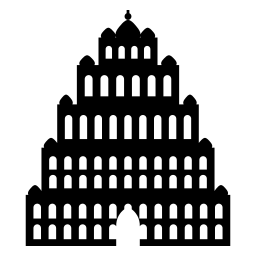
Why this icon The Hawa Mahal's honeycomb of 953 windows. Source: en.wikipedia.org

Zostel

Count the Hawa Mahal's windows. Lose count. Hit the bazaar.

SEE · SHOP · EAT

The story

A crisp Makar Sankranti morning below the Hawa Mahal: the pink honeycomb of windows glows in the low sun, paper kites dance over the rooftops, a boy flies his from the street while his friend minds the spool, shoppers stroll under the pink arcades, a cow dozes in the street, and a traveller points up, counting the windows.

Why this picture

The Hawa Mahal (1799), the Palace of Winds, is a five-storey screen of 953 small latticed windows about 15 m high, built so the royal women could watch the street unseen; its pink sandstone faces east, into the morning sun. The old city was painted pink in 1876, its bazaars run under two-storey arcades, cows wander its streets, and the Nahargarh hills stand behind it. On Makar Sankranti, 14 January, the whole sky over Jaipur fills with kites, their fliers duelling to cut each other's strings.

The motion

The kites dip and swing on their strings, and one cut loose in a fight drifts in over the Hawa Mahal and away on the wind; the sun's rays turn; pigeons fly across and peck in the street; the cow's ear flicks; the neem sways. A 16-second loop.

Colour

Rani Pink #ED145A
Apricot #FFCE7B
Gulabi #EE3C96

Jaipur takes Gulabi #EE3C96, one of the three Flowers colours — with its icon in white on it.
Another moment in Jaipur

A second scene: another true moment at Jaipur, drawn in the graphic vocabulary with the animals and city symbols that belong there. Wide for screens, tall for a phone held upright.

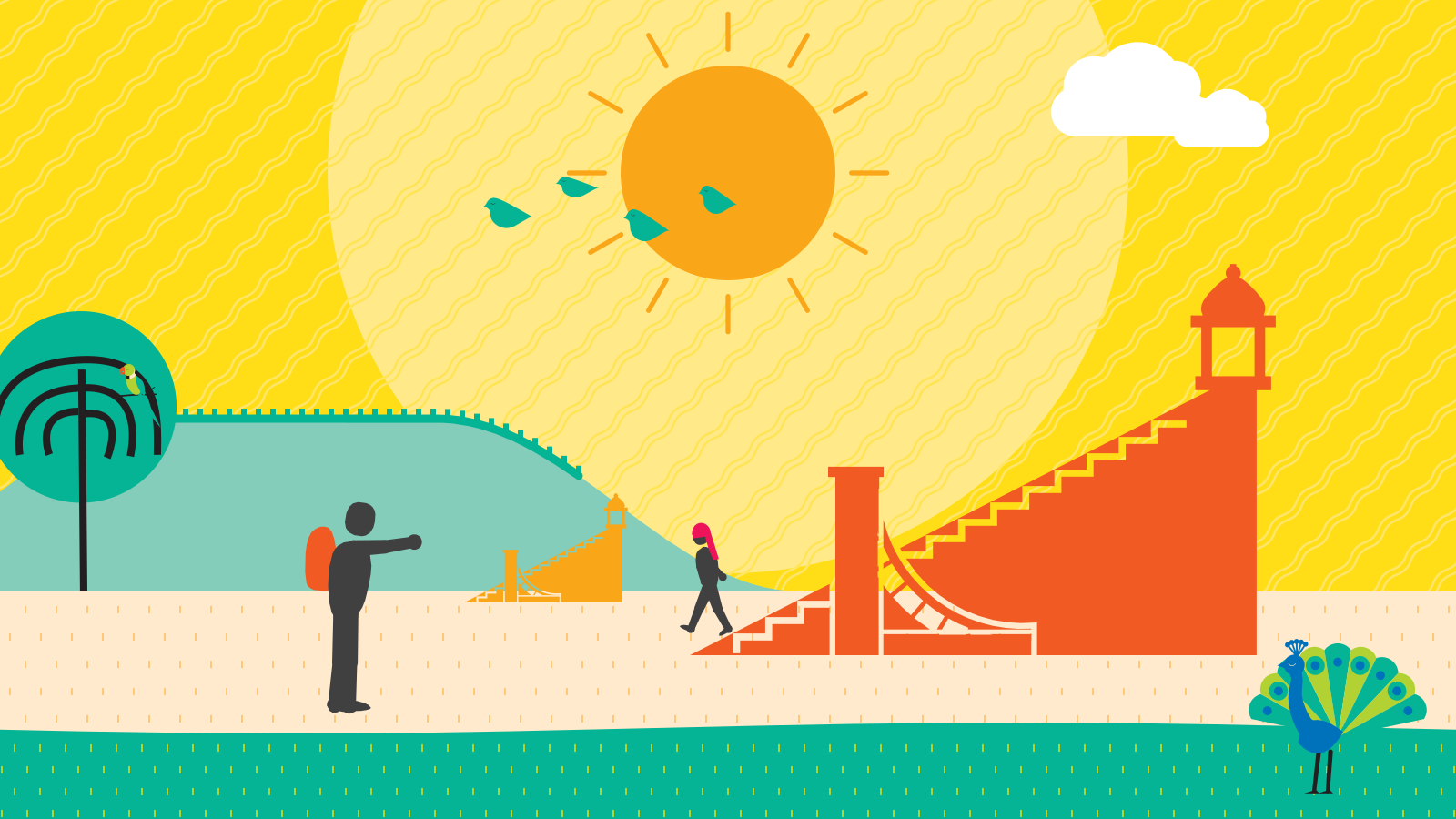
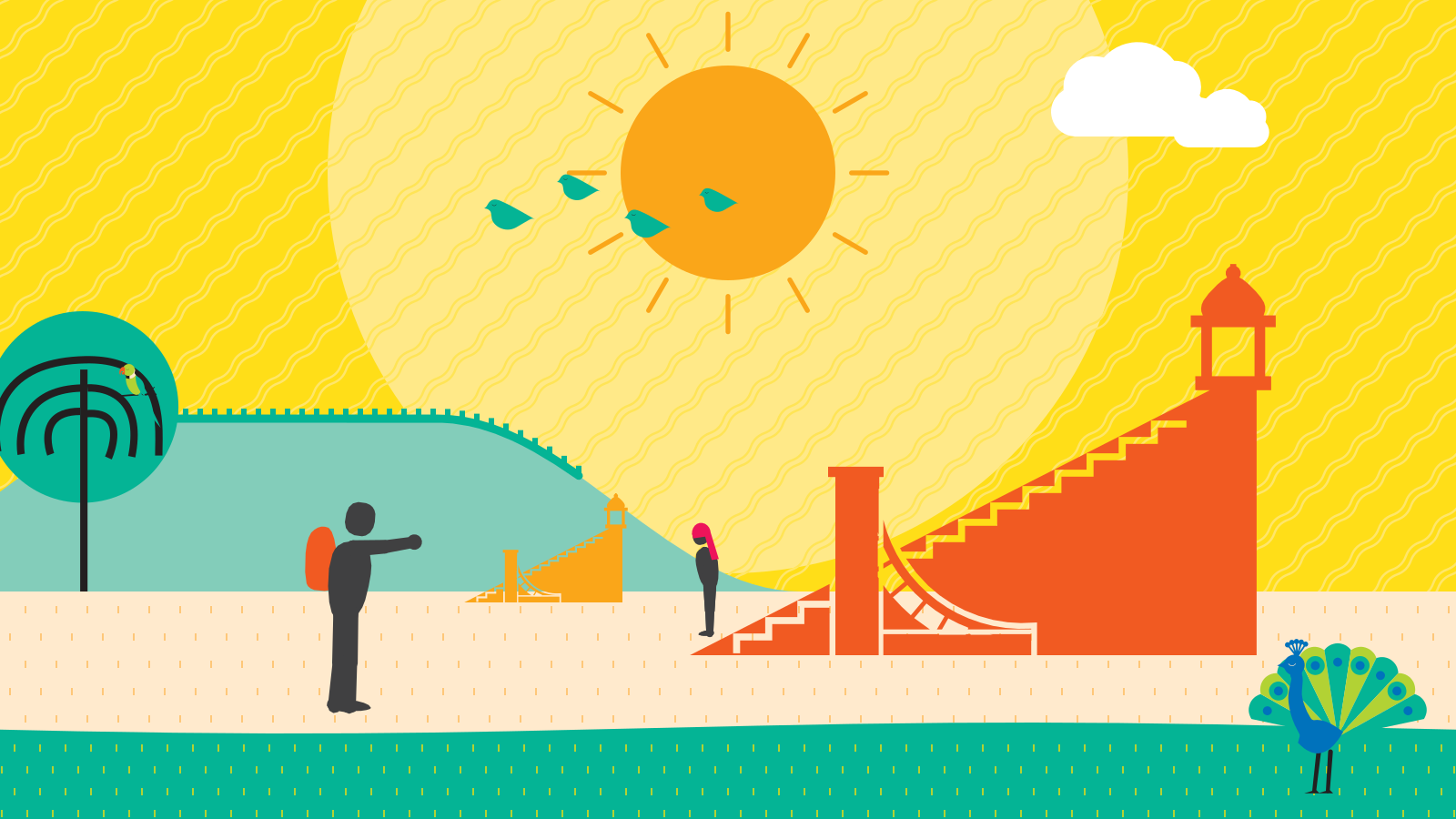
The second Jaipur scene: An afternoon at Jantar Mantar

The story

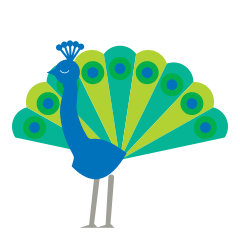
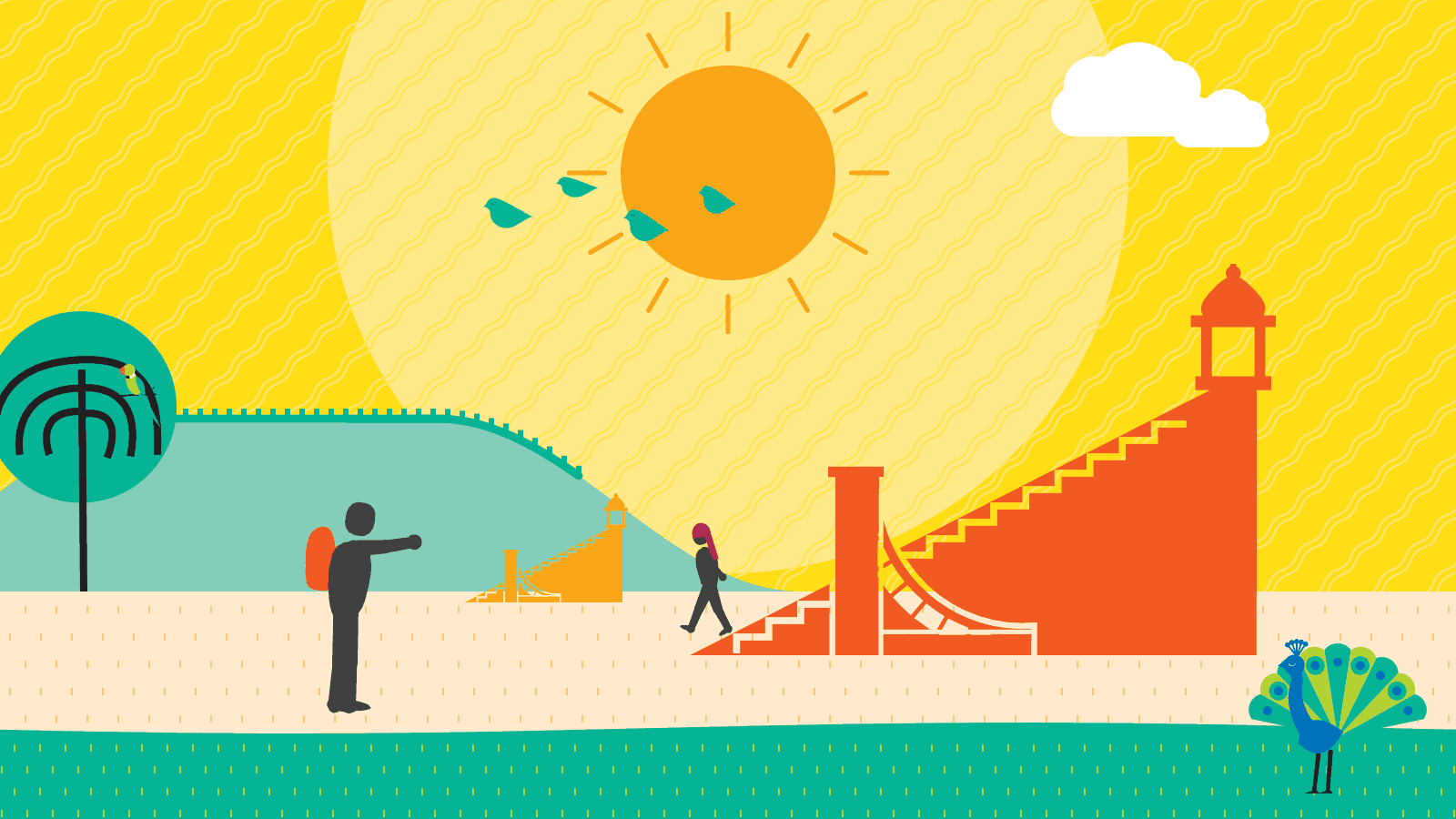
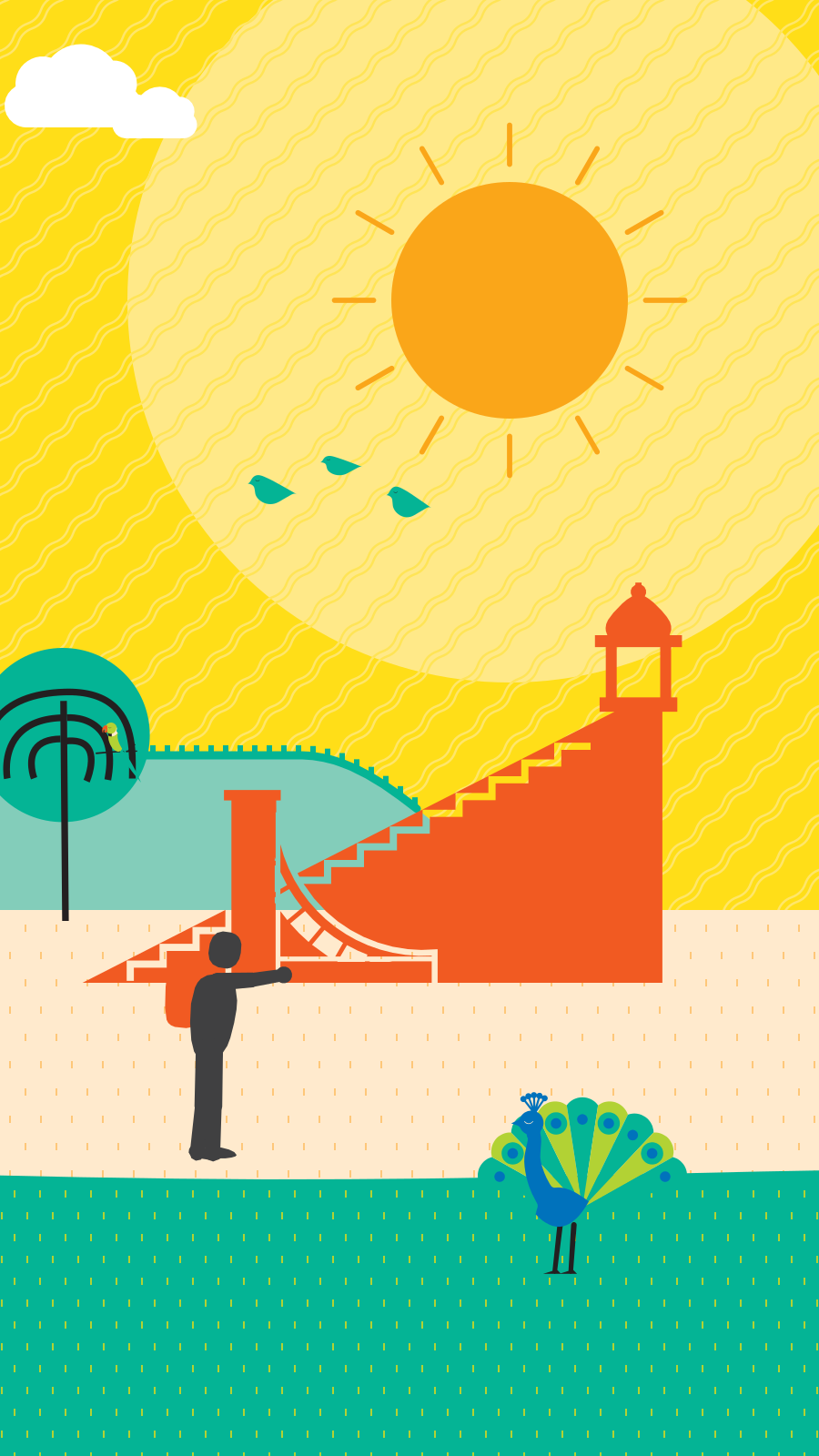
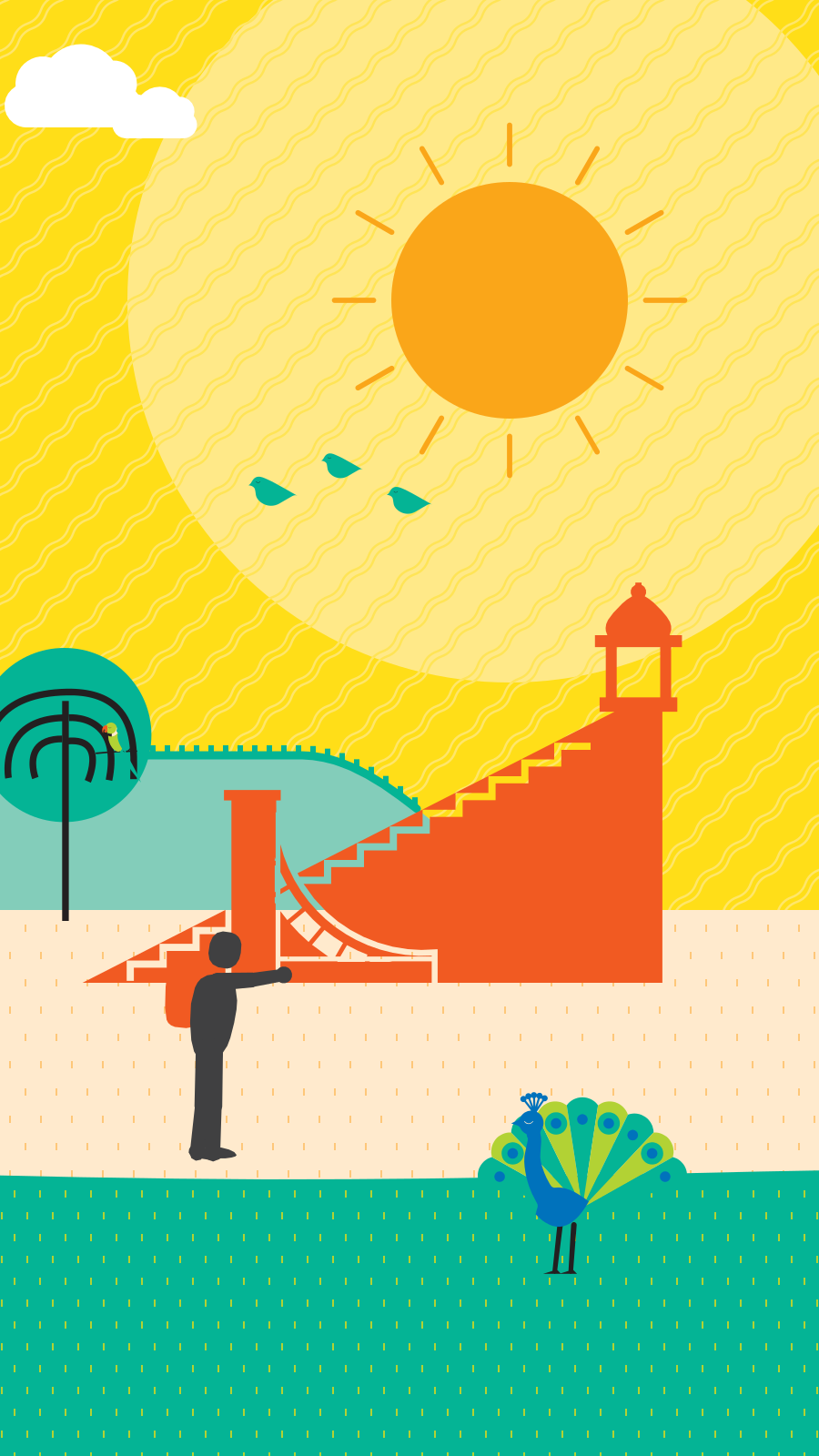
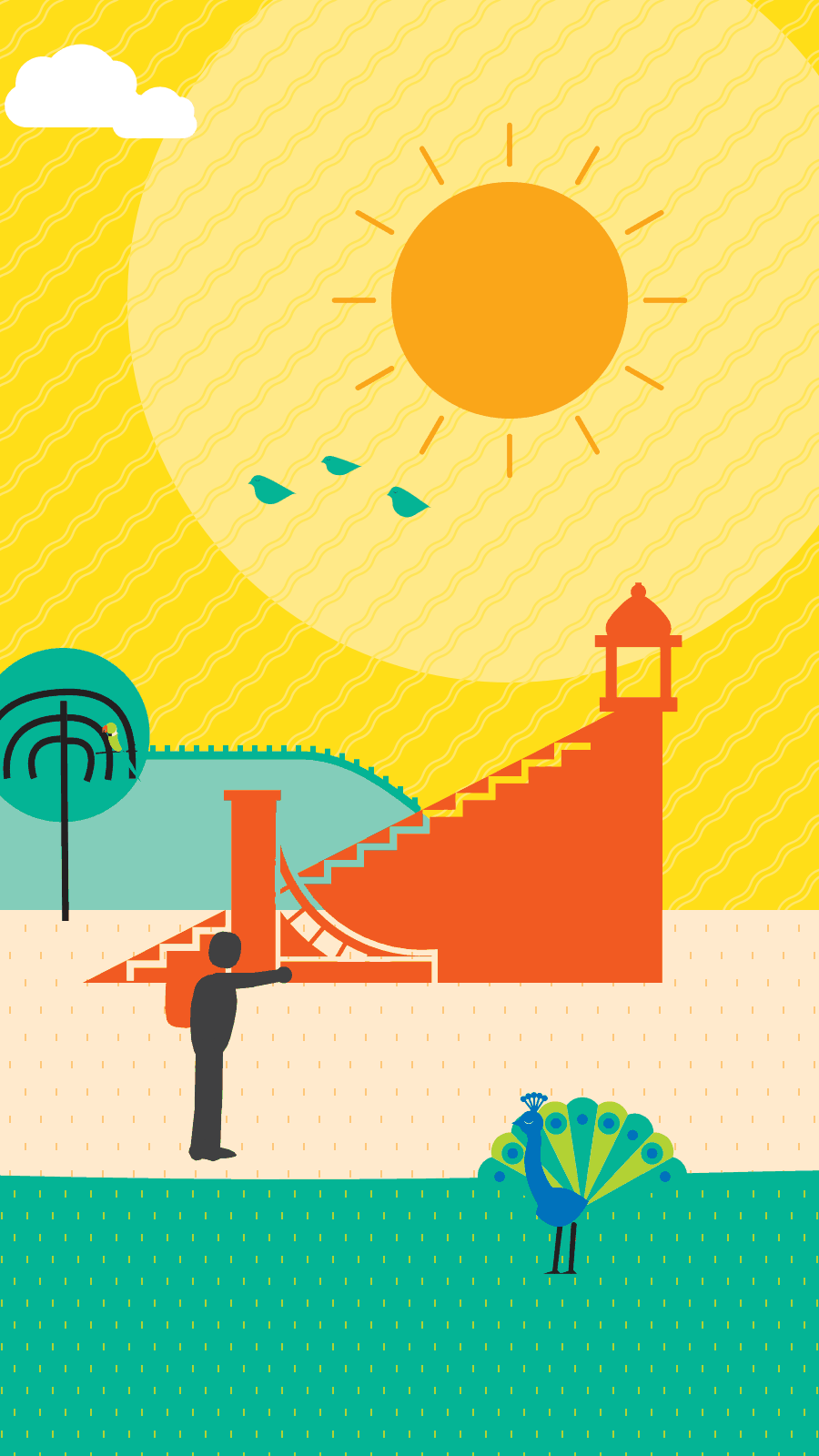
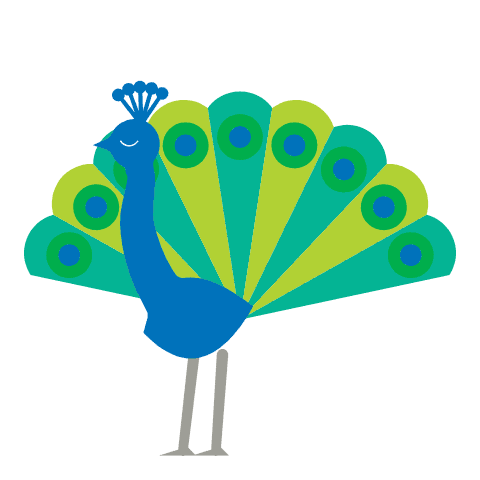
An afternoon at Jantar Mantar: the Samrat Yantra, the world's largest sundial, stands in the low sun with the Nahargarh ridge and its fort wall behind; a traveller on the courtyard points up its long stair, the small Laghu Samrat stands nearer, a peacock fans its train by the lawn and parakeets fly over.
Why this moment

Jantar Mantar (1734, a UNESCO site) is Sawai Jai Singh II's observatory in the old city; its Samrat Yantra is a 27 m gnomon, a stair climbing toward the pole star between its quadrant arcs, and the small Laghu Samrat has the same shape. The Nahargarh fort runs along the Aravalli ridge above the city. Peafowl and rose-ringed parakeets are Jaipur's common birds.

The sky wears Leheriya, from Rajasthan.

The motion

A flock of parakeets flies across the whole sky; the sun's rays turn; a cloud bank drifts over the ridge; the neem sways; a woman of the city walks the courtyard. A 16-second loop.

The sound of Jaipur

What you hear in Jaipur, each on a card of its own. Nothing plays until you tap.

  • Kite flyer on a roof

    Kite string

    A paper kite tugging on a rooftop: the string zipping off its wooden spool, the paper rattling, then a sharp snap.

    Its own sound · 4 s

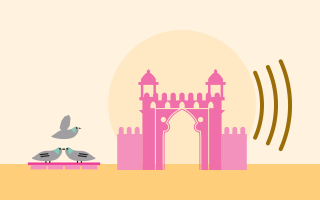
  • Pink pol (Jaipur's city gate) and pigeons on a ledge

    Bazaar morning

    A crisp winter morning below the pink sandstone palace: pigeons bursting off the ledges, parakeets overhead, bicycle bells and autos, shutters rolling up.

    Its air · 10 s

Jaipur in symbols

Beside its icon, the things that are Jaipur, drawn in the Brand Manual's city language: a monument in the city grey with its openings cut, the things of the place in flat landscape colours. Each comes in colour and in the city grey. Every place's symbols

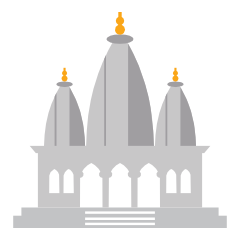
  • Samrat Yantra, Jantar MantarMonument

    Jantar Mantar (Sawai Jai Singh II, 1734; UNESCO World Heritage 2010): the Vrihat Samrat Yantra, the world's largest stone sundial, 27 m high — a great triangle whose stair points at the pole star, a kiosk on top, its curved quadrants marked in marble; its shadow moves a hand's width a minute.

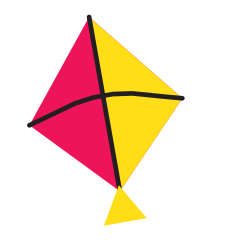
  • Kites and a charkhi for Makar SankrantiOf the place

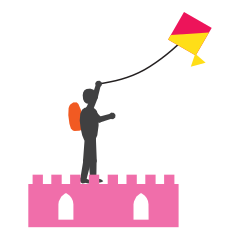
    Makar Sankranti (14 January), when the sky over Jaipur fills with paper kites: patangs flown from rooftops on cotton string wound on a charkhi.

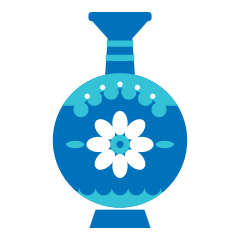
  • A Jaipur blue-pottery vaseOf the place

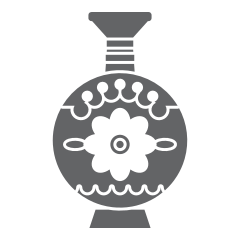
    Jaipur blue pottery: a Persian craft that came to Jaipur under Sawai Ram Singh II, made of quartz paste (not clay), painted in cobalt blue and turquoise on white with flowers and arabesques; a GI-tagged craft.
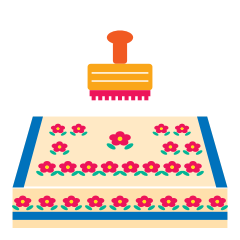
  • Block-printed cloth and its wooden blockOf the place

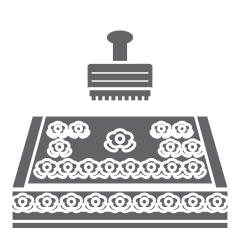
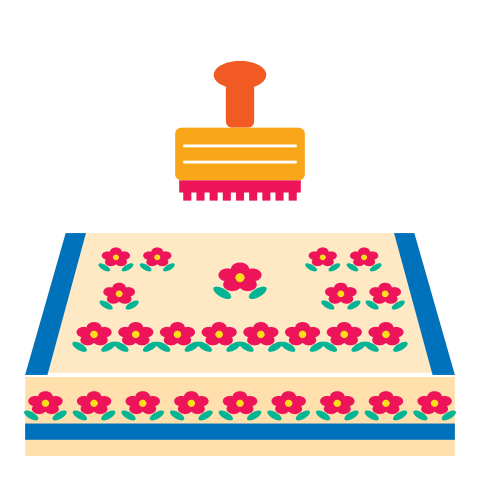
    Jaipur's hand block printing (Sanganer and Bagru, by the Chhipa printers): carved wooden blocks, one per colour, stamped by hand along the cloth, Sanganer's fine flowers on a pale ground.
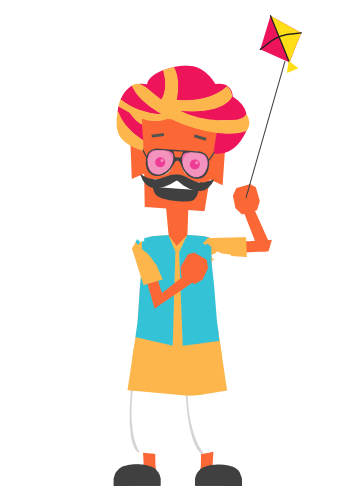
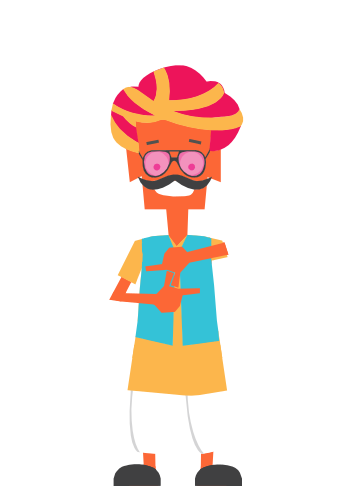
Say hello to Jaipur's Zobus

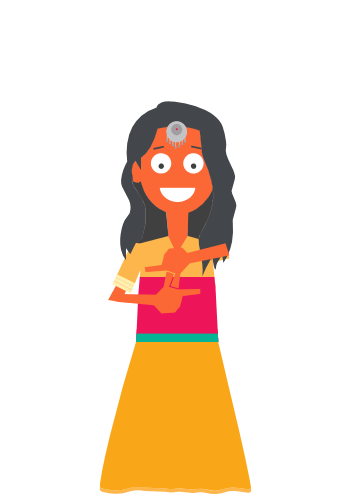
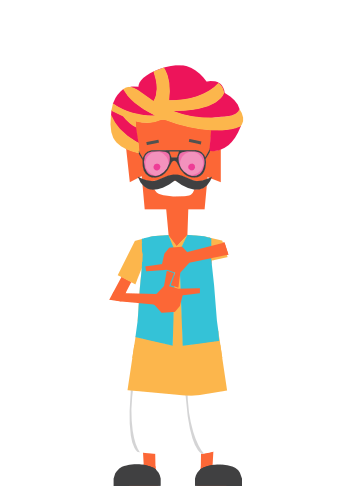
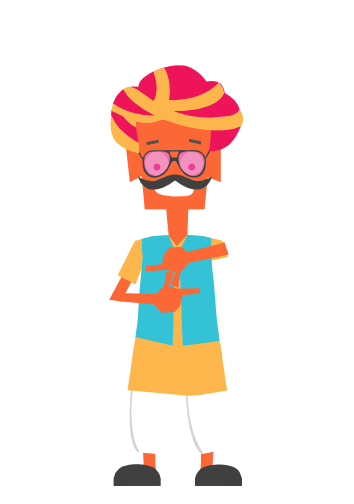
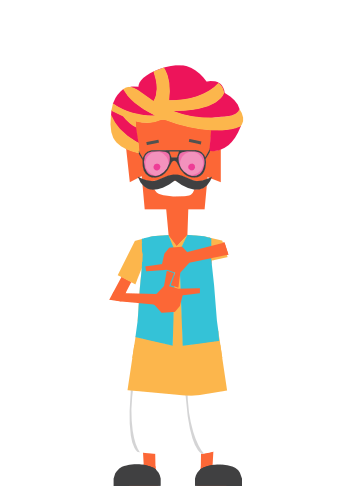
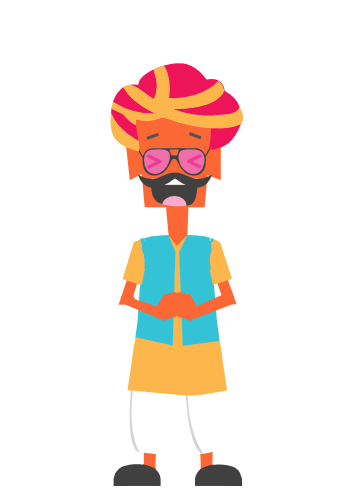
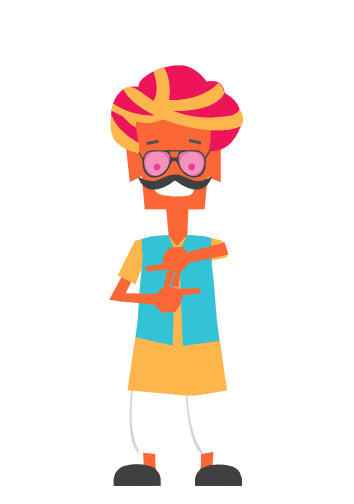
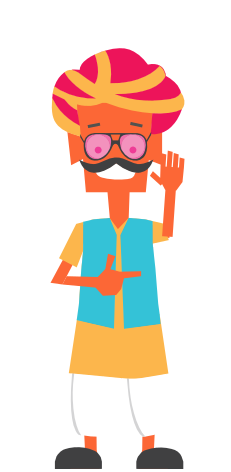
Zobu in Jaipur's own dress, on the palette. Hover or tap one and it waves. Each comes still and alive — idle, hello and hop — for stickers, stories and the app.

Every destination's Zobus →

The animals of Jaipur

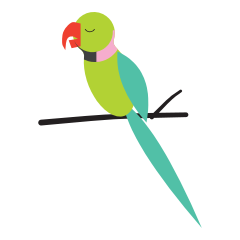
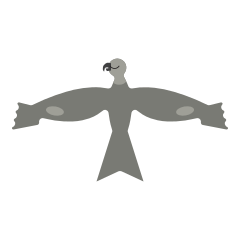
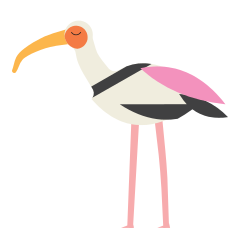
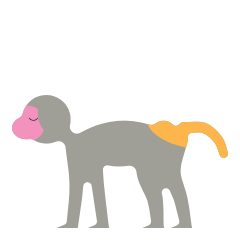
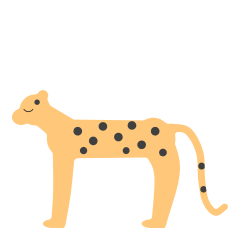
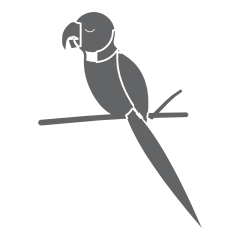
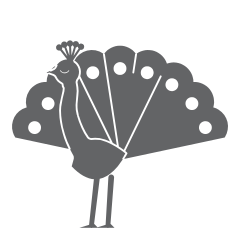
Animals and birds the research behind Jaipur's picture names, drawn in the Brand Manual's animal style, in colour and in the city grey. All the animals of India

The kit

Everything Jaipur needs: its profile, its cover, wide and tall, its icon, tile, display picture and lockup, its loop and the symbol becoming it, its second scene, its city map, its city symbols and its Zobus — every file ready to download.

55 files in one zip, the cover, its second scene, its symbols, its Zobus and its city map included
The Jaipur profile: its cover, its tile and its words
Profile

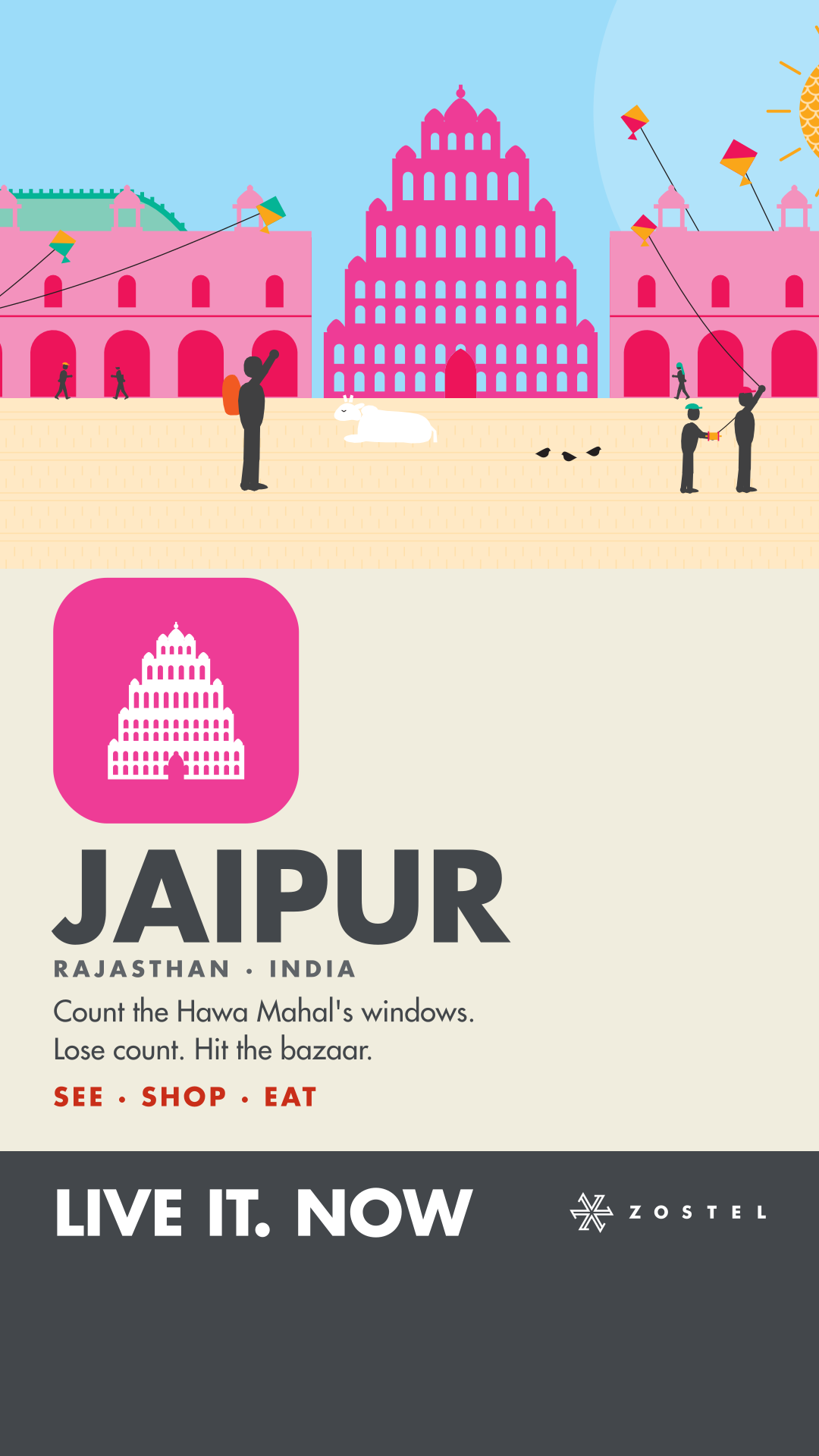
Jaipur’s page as a story, 1080 × 1920: its cover, its tile, its name, its line and its verbs — for stories, status and a phone’s lock screen.

The Jaipur cover, wide
Cover, wide

1600 × 900, for screens: a page’s top, a slide, a share card. The still is the loop’s first frame. The animated SVG loops in 16 s; where it shouldn’t move, use the still.

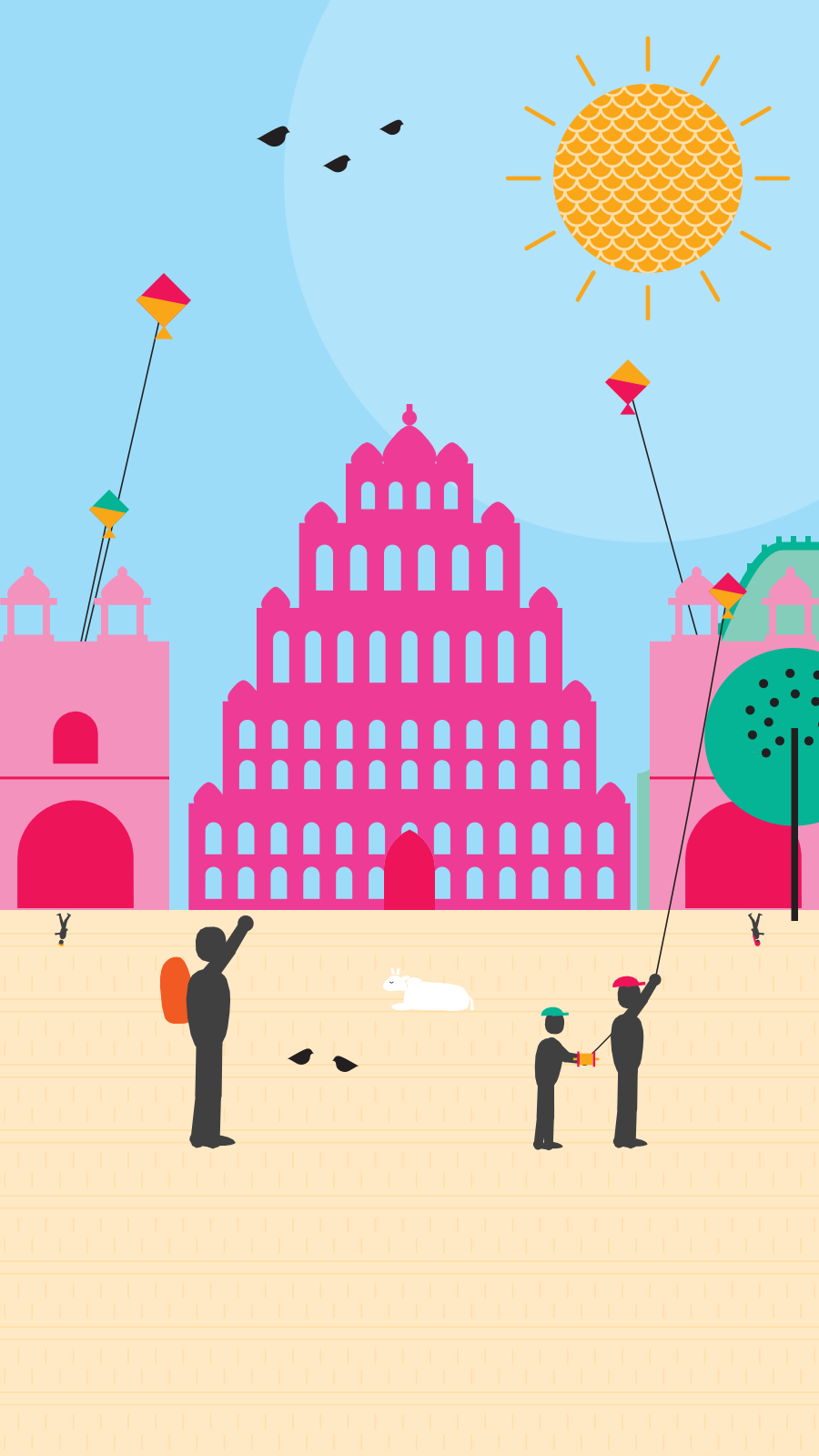
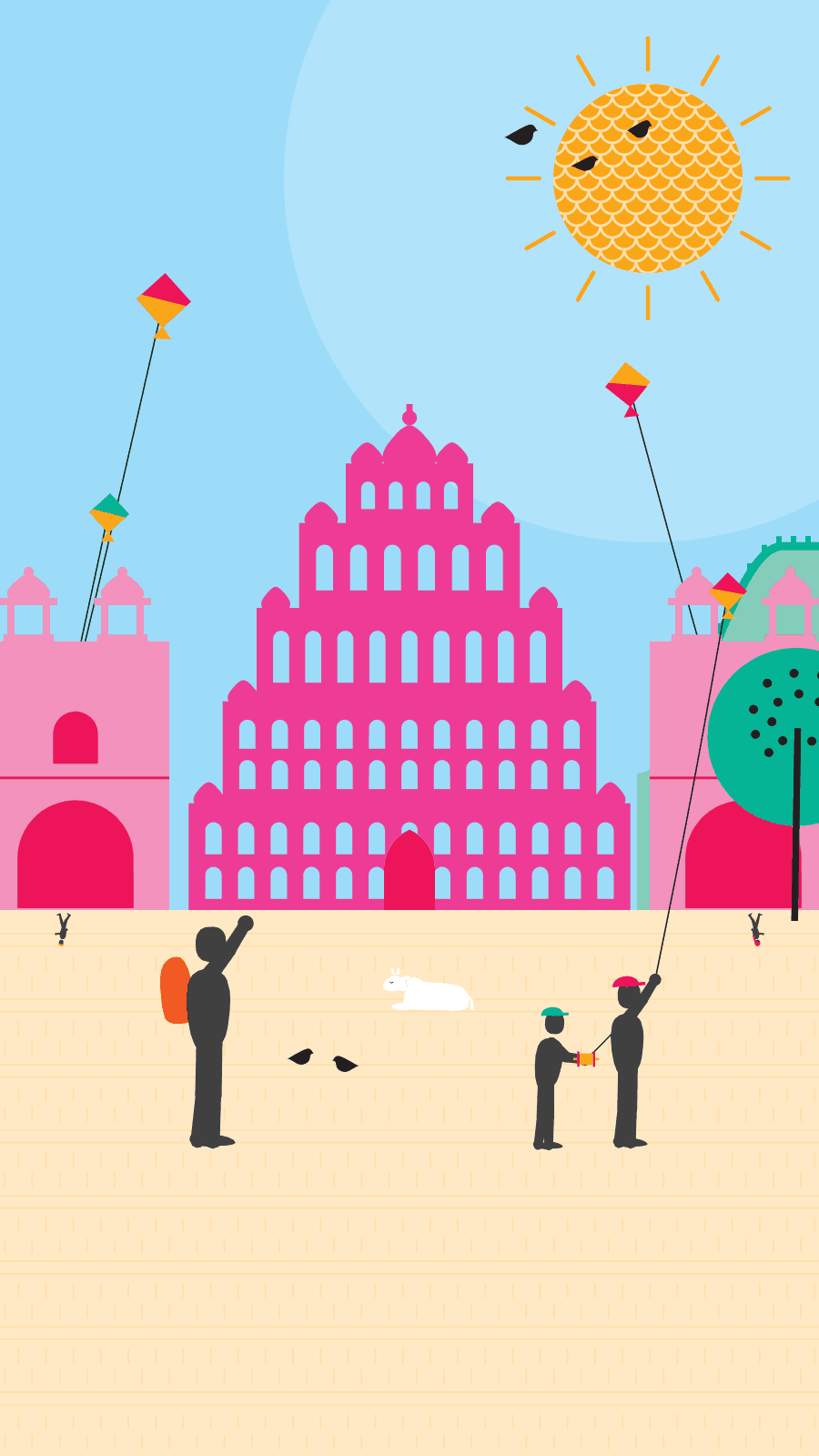
The Jaipur cover, tall
Cover, tall

900 × 1600, composed for a phone held upright: stories, reels, a lock screen. The animated SVG loops in 16 s; where it shouldn’t move, use the still.

Hawa Mahal — the Jaipur tile
Tile

The icon in one colour on Jaipur’s own — for a grid, a story, a sticker.

Hawa Mahal — the Jaipur icon
Icon

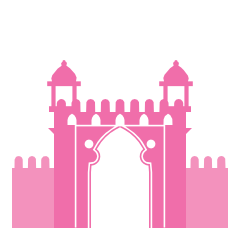
A monument: city grey, its detail cut out. Transparent; the mono takes any one colour.

Hawa Mahal, Jaipur — the icon, alive
Loop

Festival bunting flutters above it, or confetti points twinkle. 7.2 s, seamless.

Motion

The symbol becomes Jaipur and turns back — a Lottie loop for stories, the app and the web.

The Jaipur display picture, as a circleThe Jaipur display picture, square
Display picture

Circle-safe: the colour, the icon and the name — for chats, socials and the app.

Zostel Jaipur lockup
Lockup

The horizontal lockup, with Jaipur under the wordmark — for signage, email and merch.

Samrat Yantra, Jantar MantarKites and a charkhi for Makar SankrantiA Jaipur blue-pottery vaseBlock-printed cloth and its wooden block
City symbols

Jaipur’s symbols, each in colour and in the city grey, as SVG and PNG — in the zip’s symbols folder.

Jaipur Zobu, femaleJaipur Zobu, male
Zobus

Jaipur’s Zobu pair, still and alive (idle, hello, hop), waving still and as a face (a profile picture) — in the zip’s zobus folder.

Also made for Jaipur 5

The rest of what the library holds for Jaipur: the pattern of its region, the card its links share, each opening its own file or gallery.

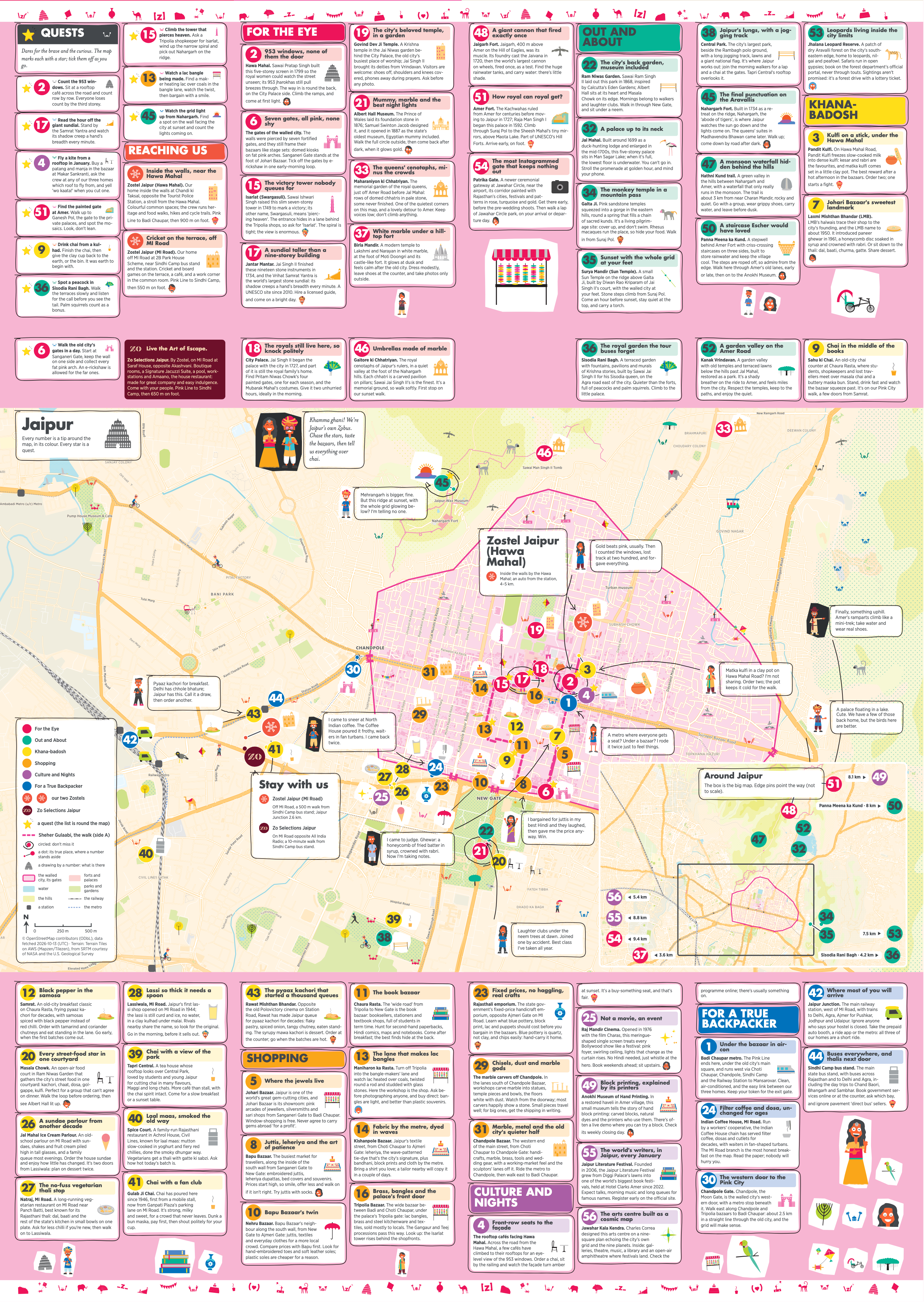
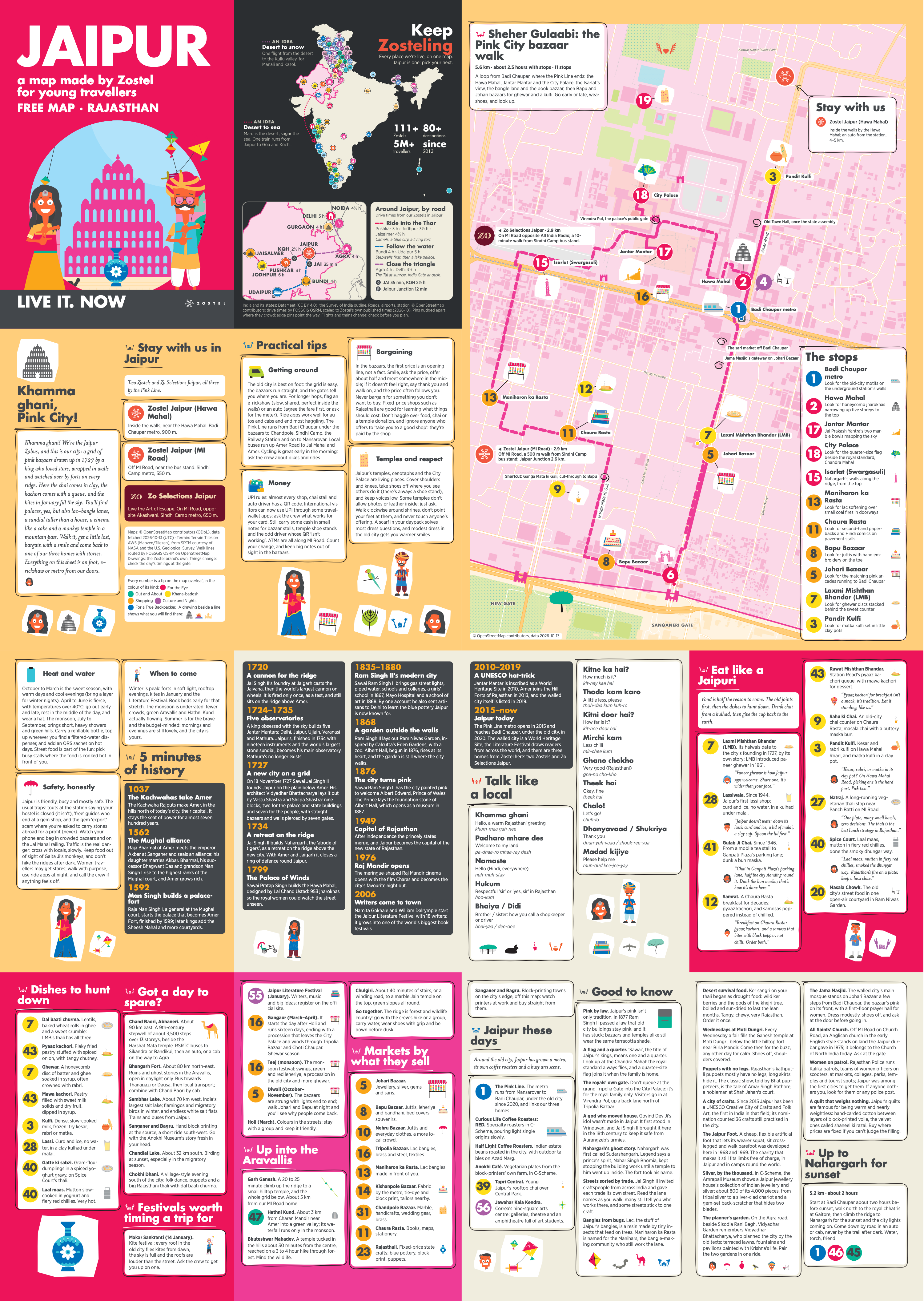
The map we made for Jaipur

56 things to do around our two Zostels and Zo Selections, two walks and ten quests, on one A2 sheet that folds to A6 — a map made for travellers. Print it, fold it, go.

A2, both sides, folds to A6. For print: double-sided, flipping on the long edge; at a print shop, the PDF at actual size.

ClickTap the sheet to zoom in
The mapClick to zoom in
The guideClick to zoom in

Base map © OpenStreetMap contributors.

Its pieces on the map 92

Every spot on the Jaipur sheet, by what you go there for, each drawn with a drawing of the library. A piece opens its drawing with its files; the line under it names the other places that drawing belongs to.

On the map

Jaipur is in Rajasthan, India — one of the 84 places where Zostel is live.

Region
Rajasthan
Country
India
Where
26.91° N, 75.79° E
Landscape
Flowers
Jaipur · Rajasthan · India