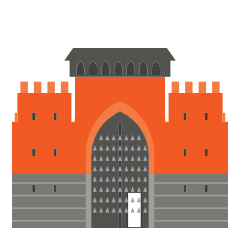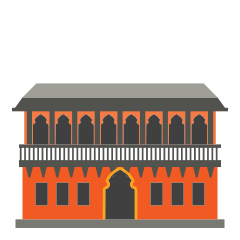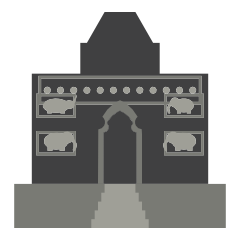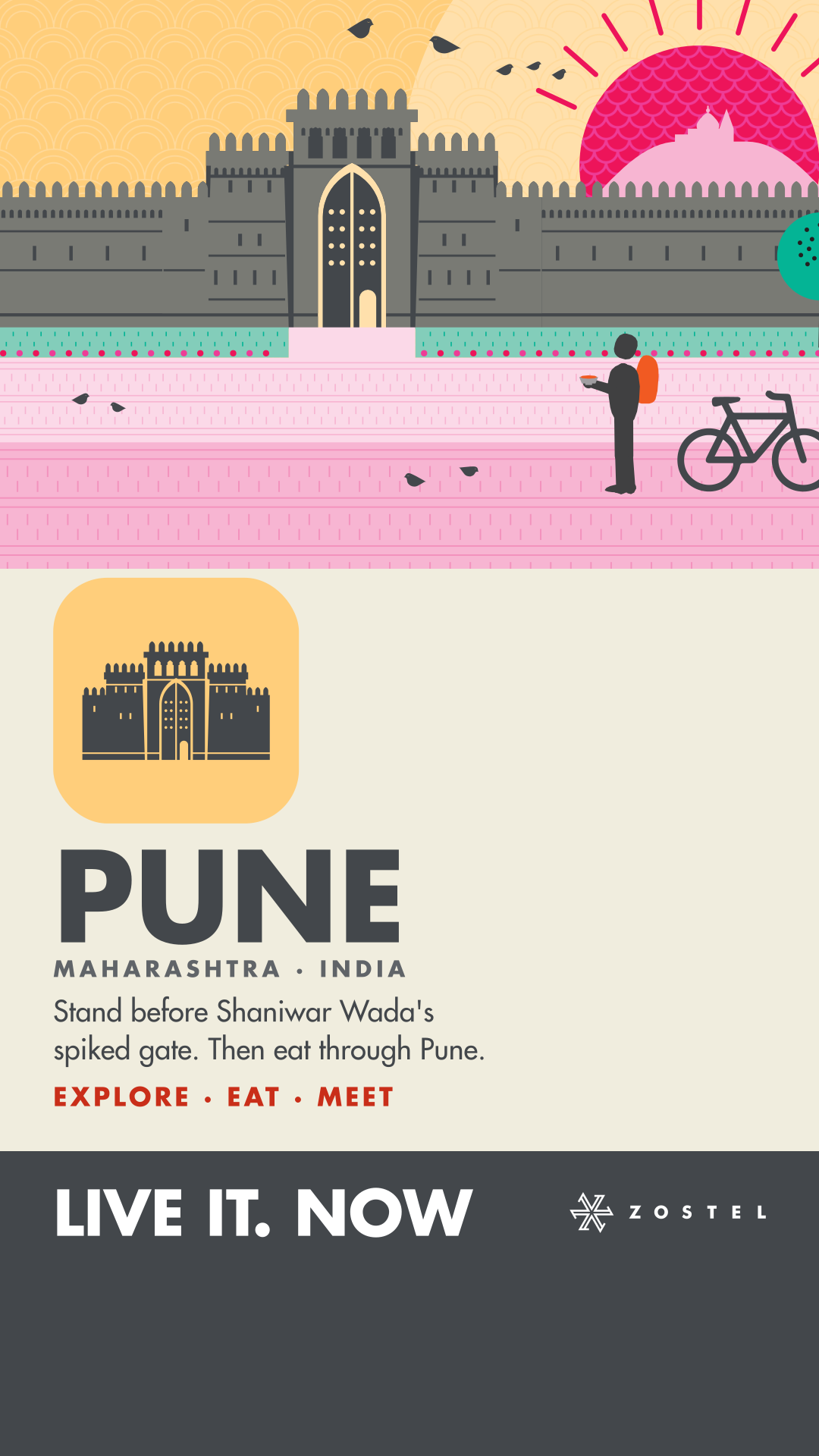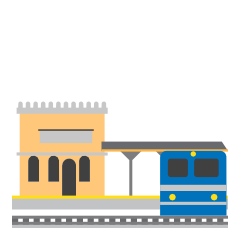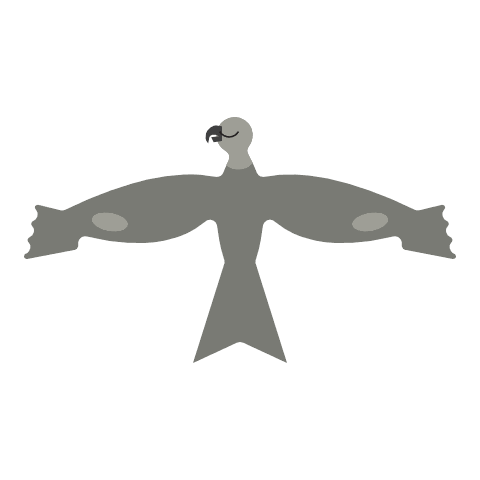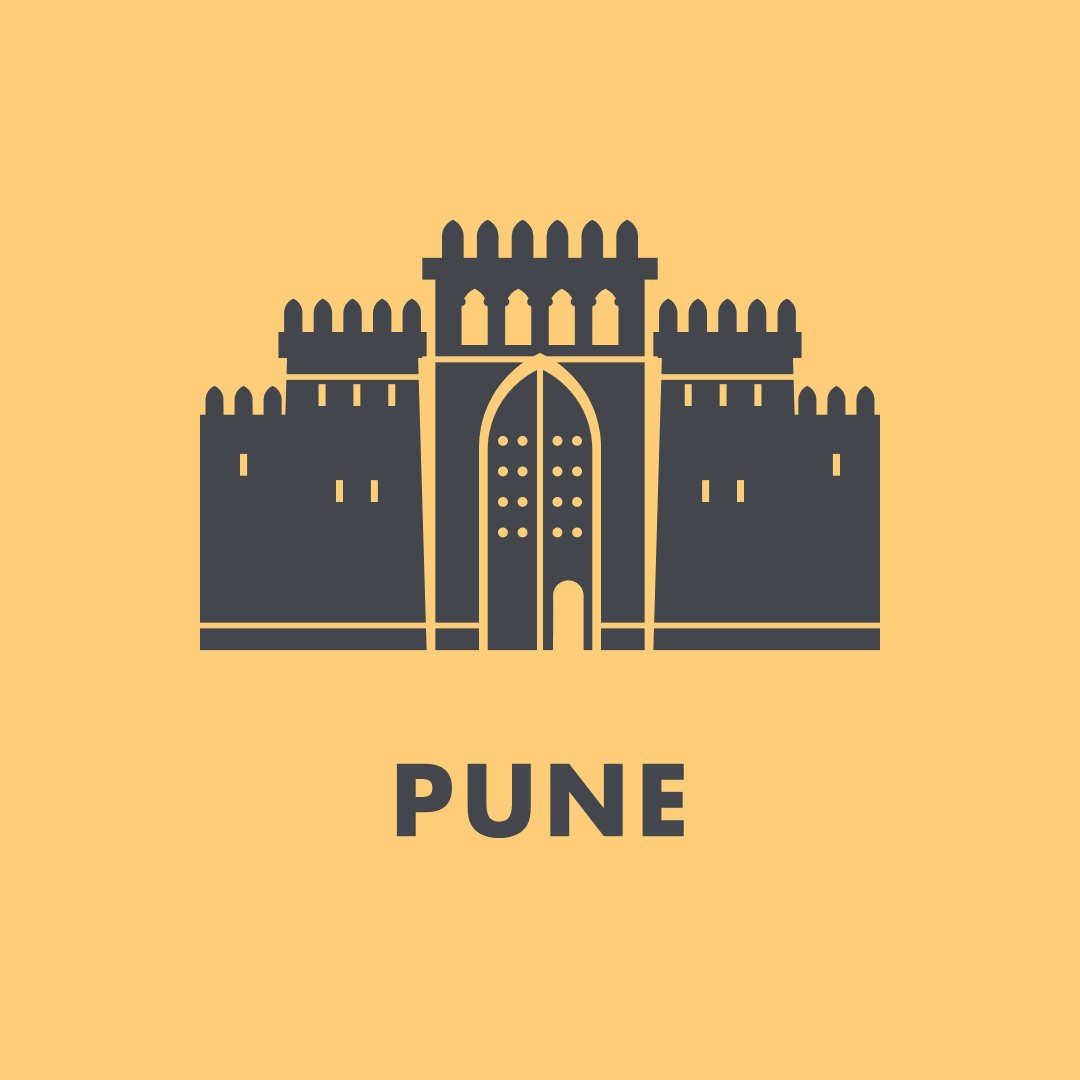








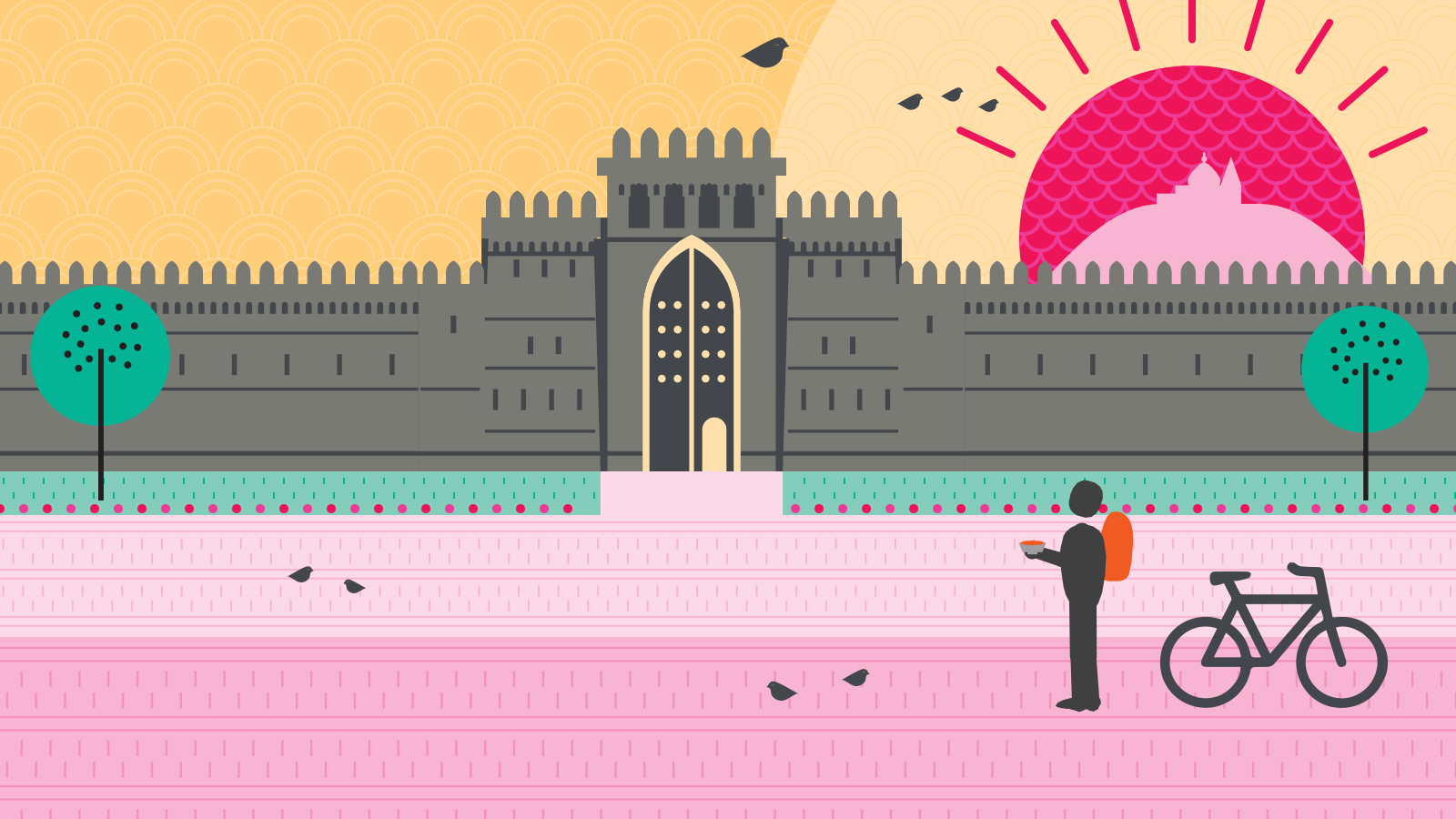

Why this icon Shaniwar Wada's Delhi Gate, its doors spiked against war elephants. Source: en.wikipedia.org
Stand before Shaniwar Wada's spiked gate. Then eat through Pune.
The story
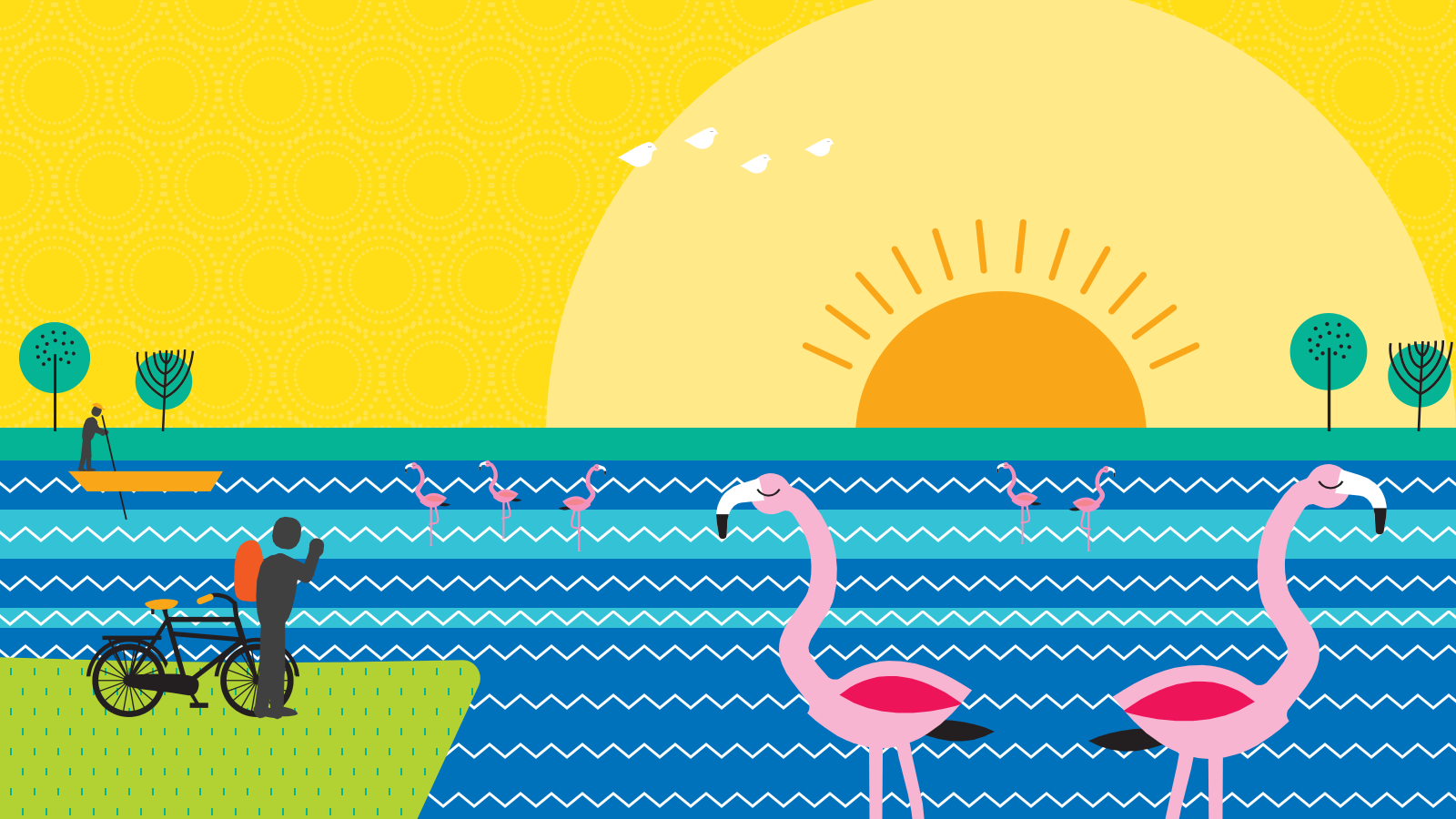
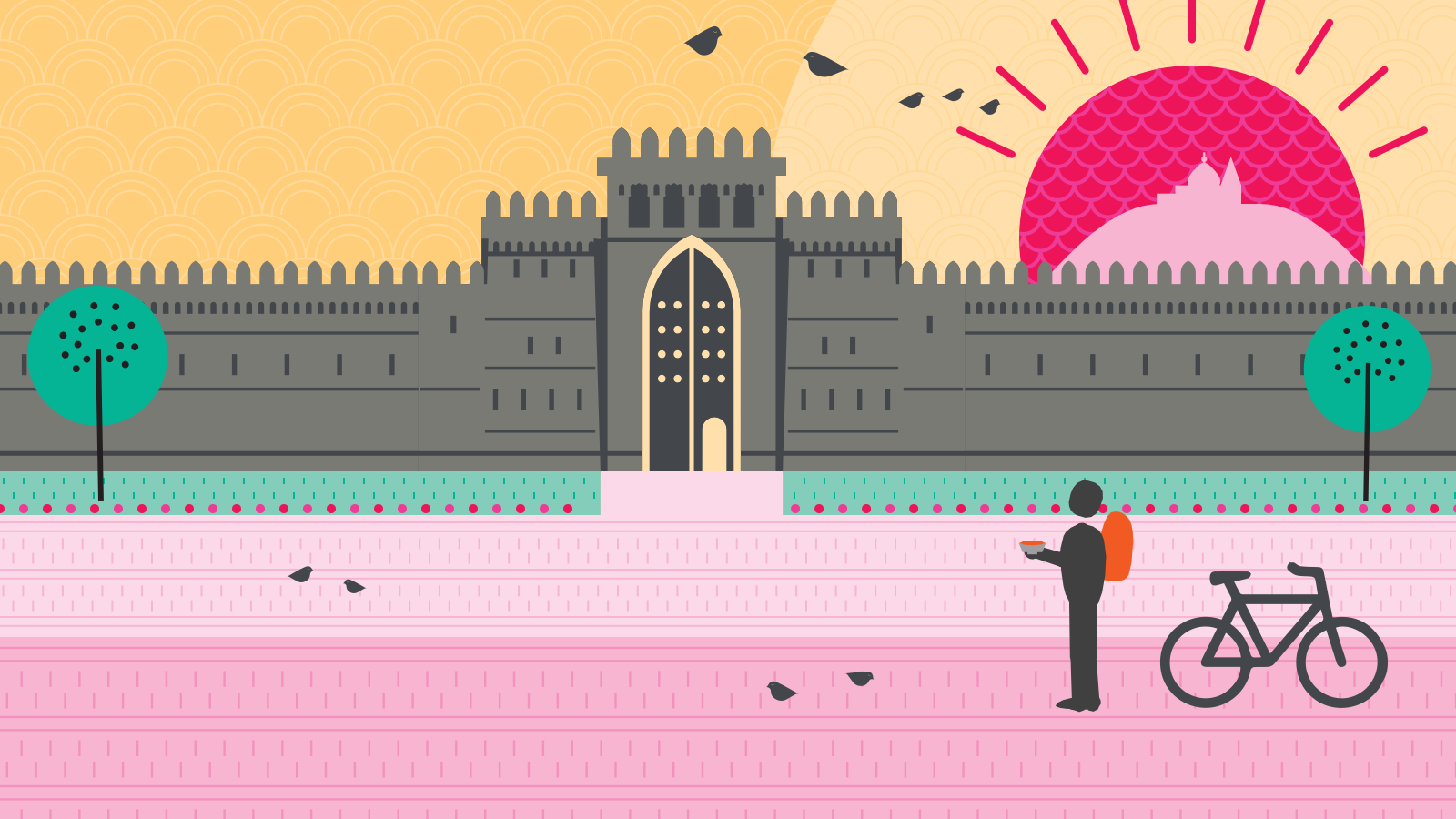
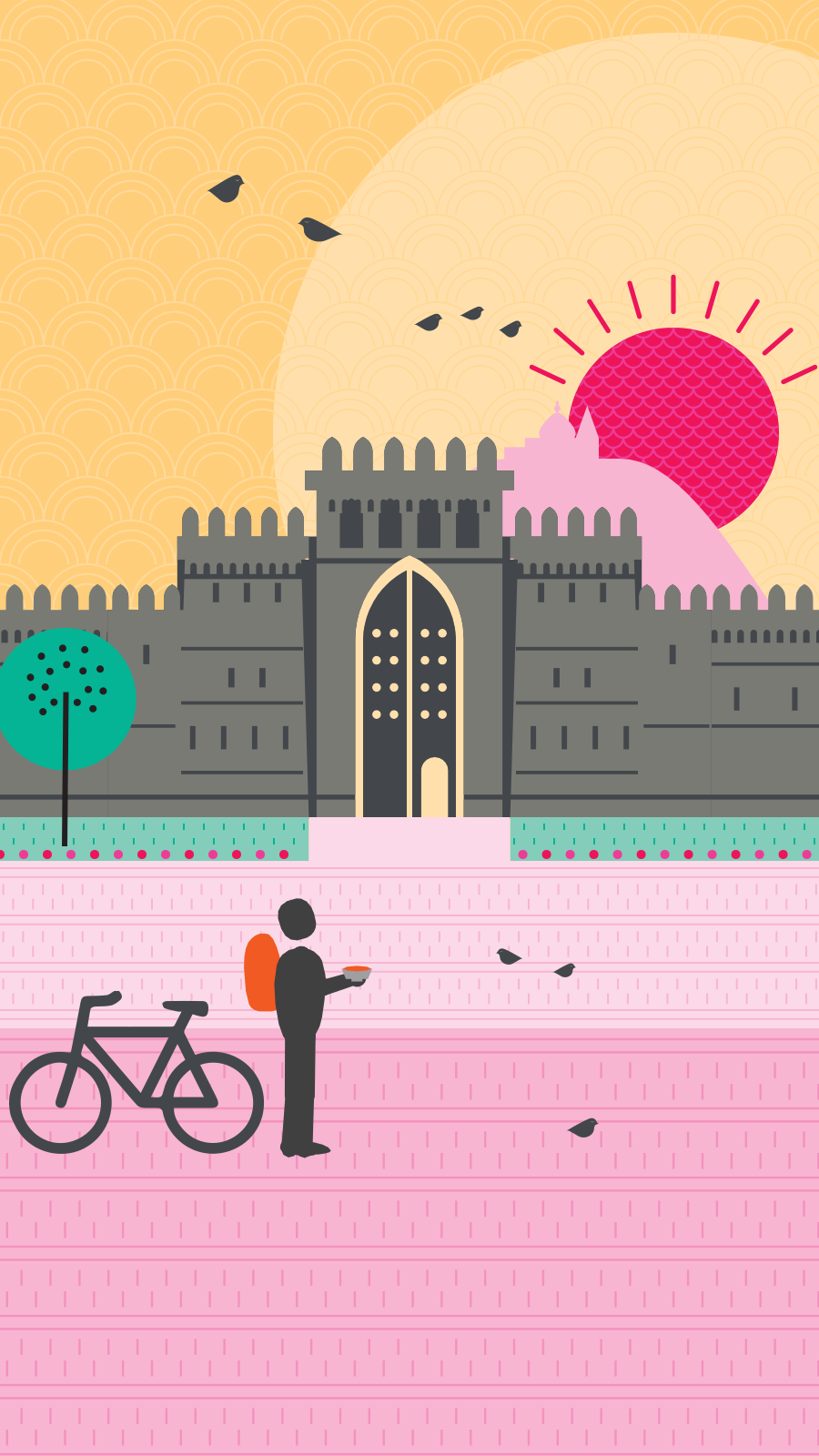
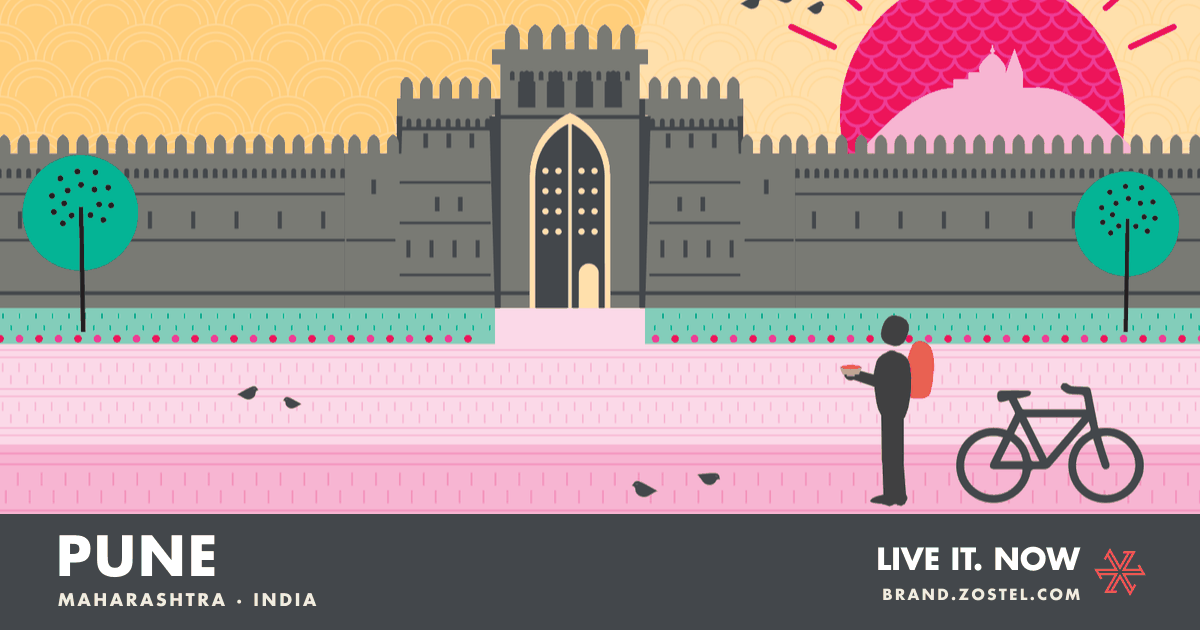
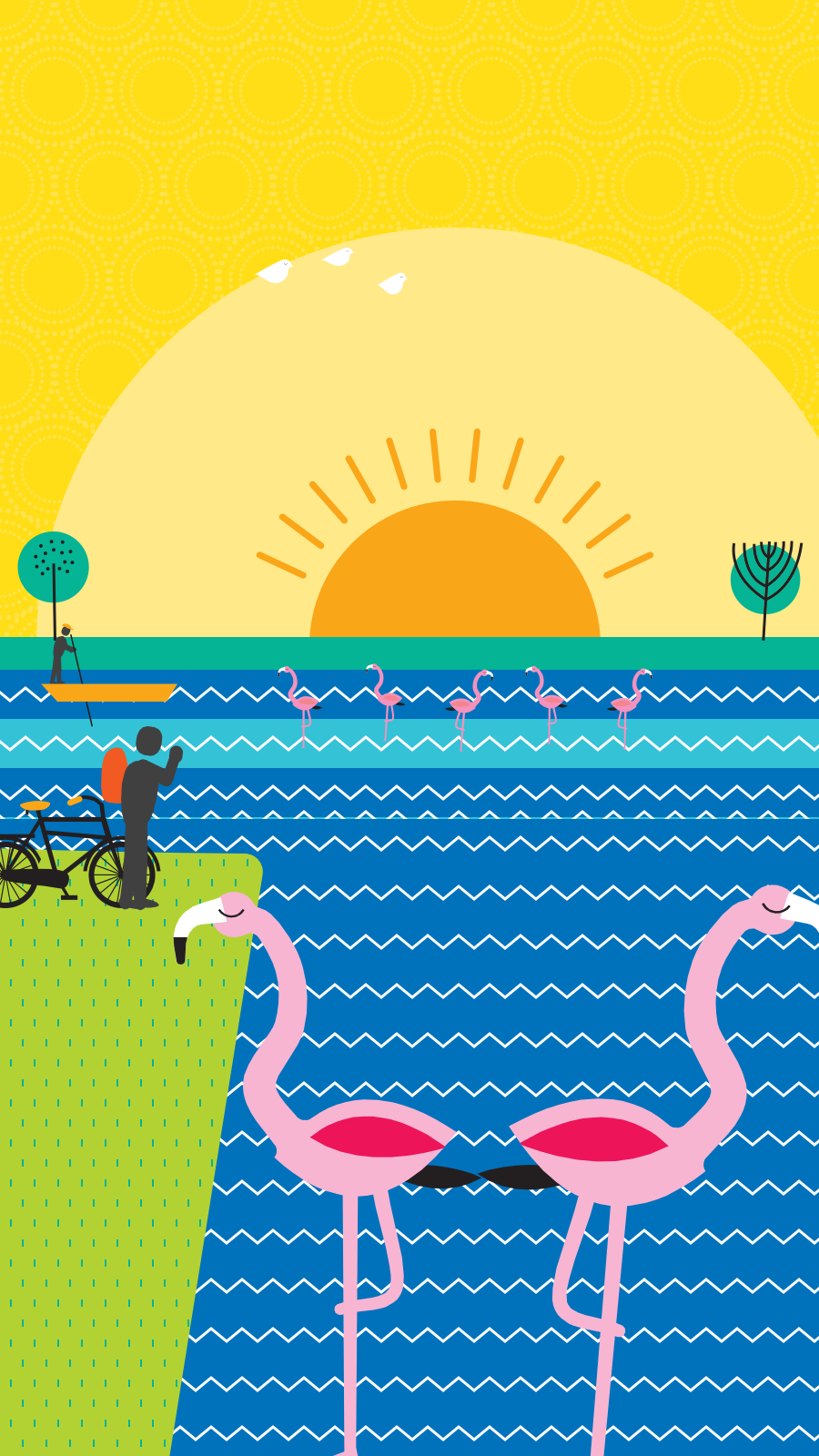
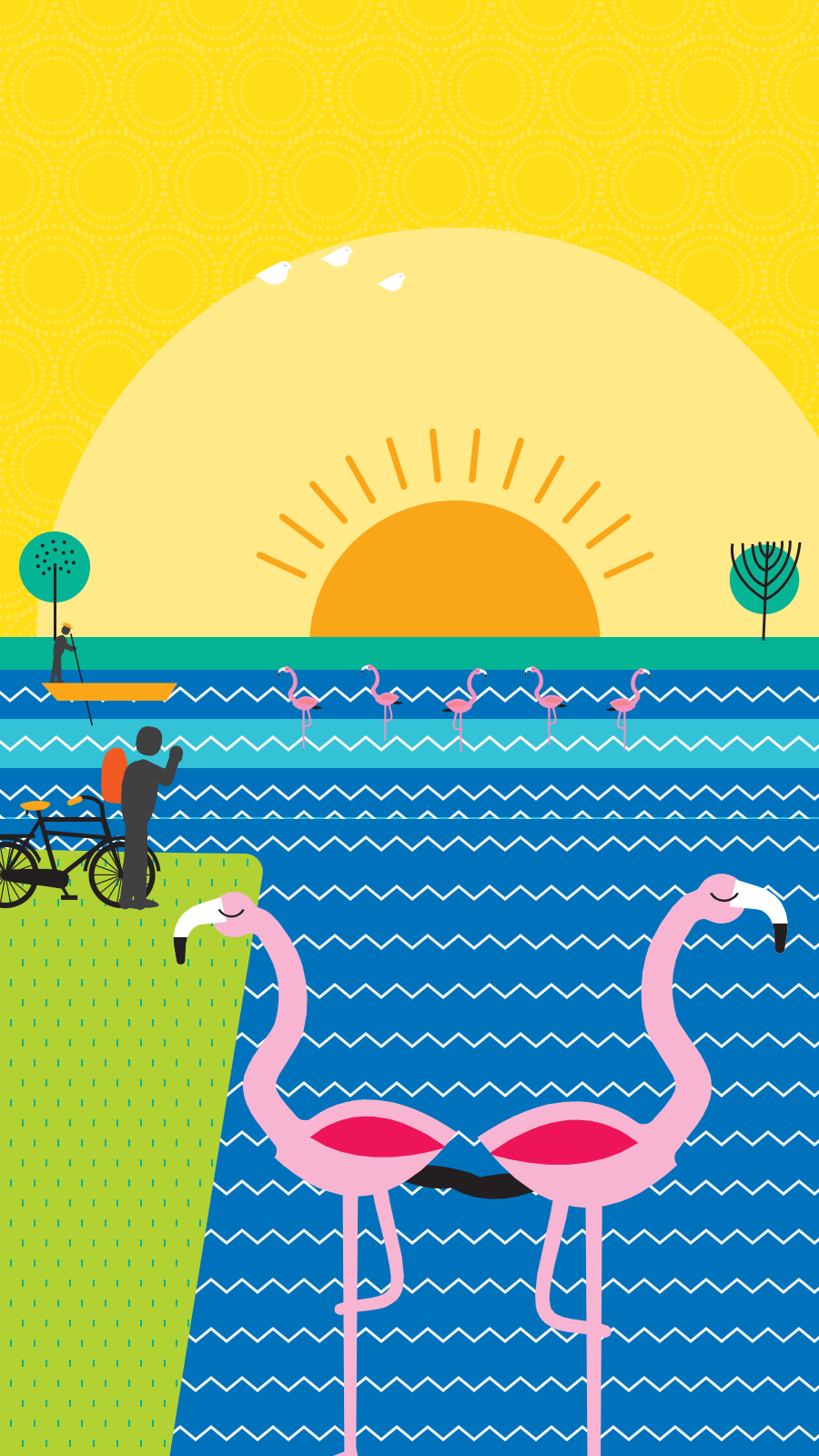
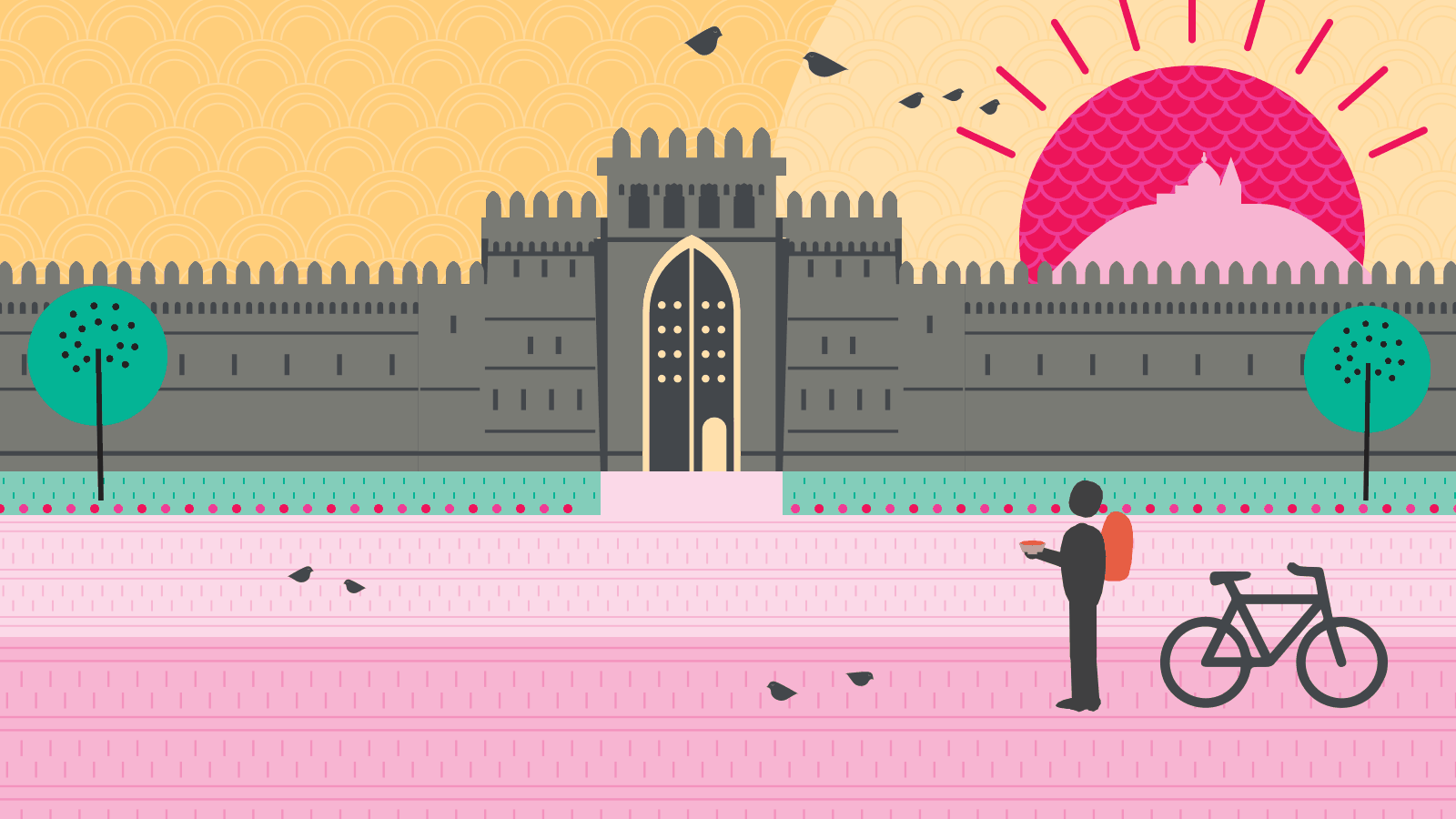
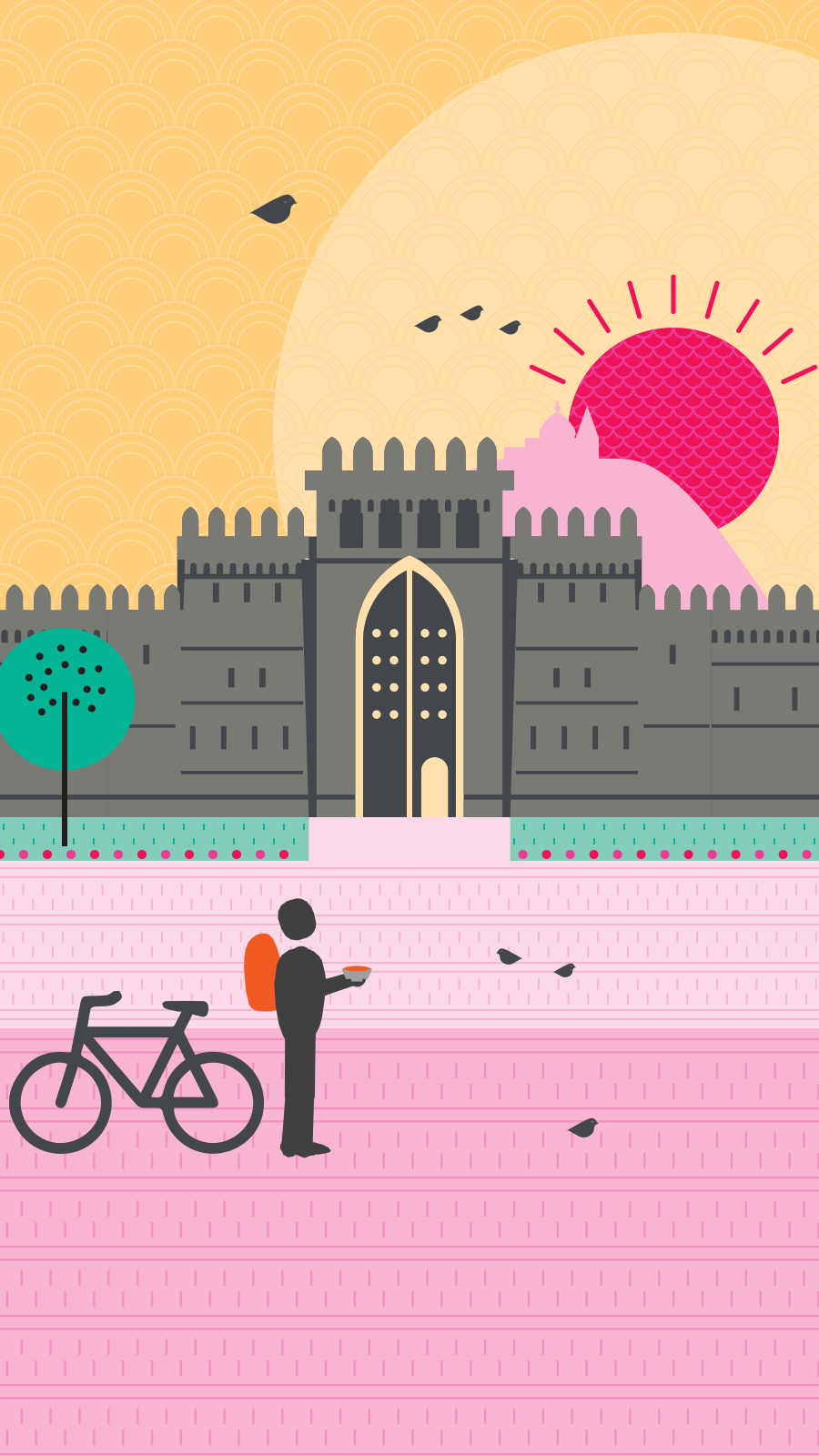
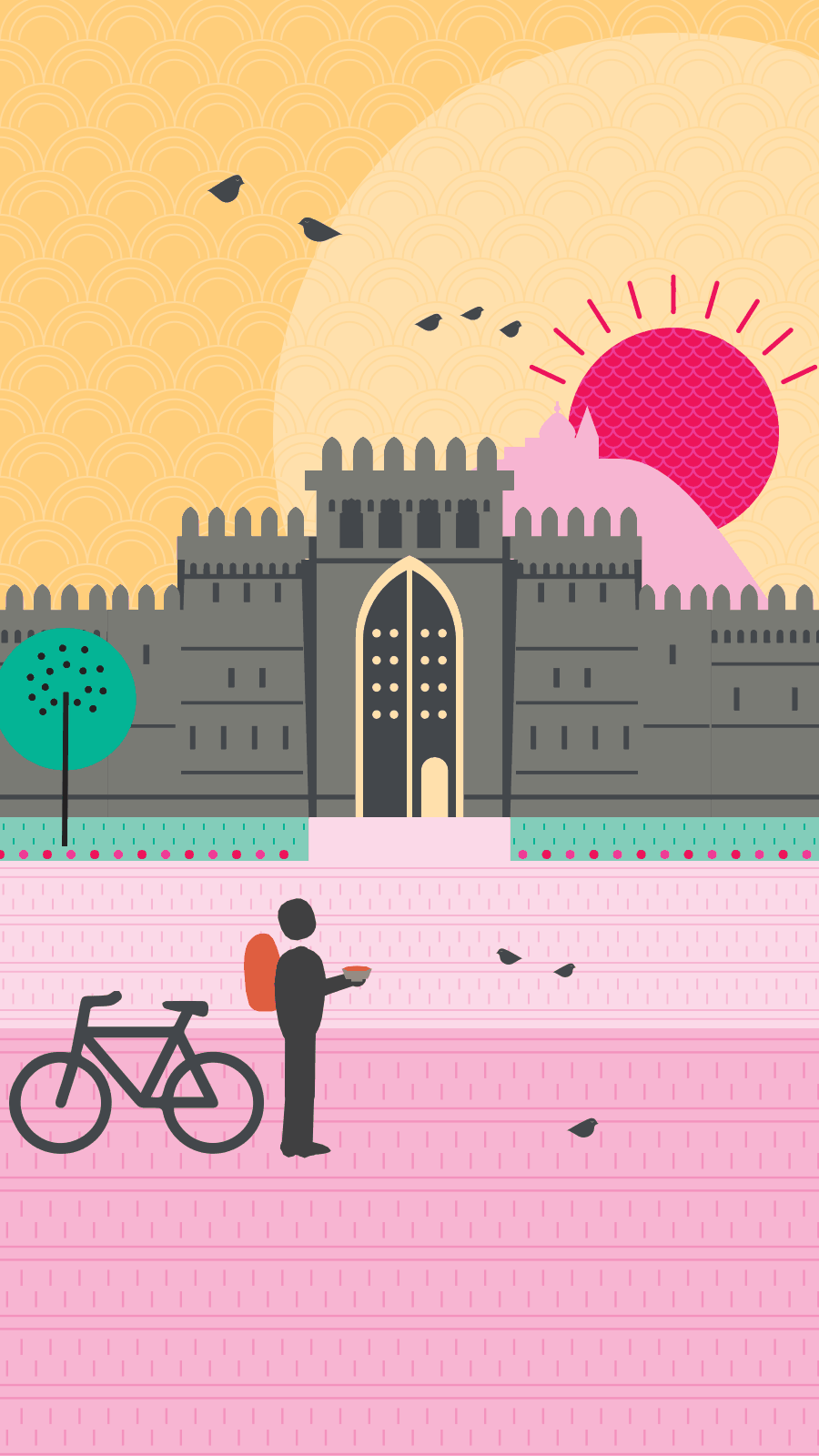
Golden hour at Shaniwar Wada: the low sun warms the old stone of the bastions while the Delhi Darwaza's spiked doors stand in soft shade, kites wheel over the walls, and a traveller in the paved forecourt, a bicycle parked beside, cranes up at the spikes with a bowl of misal.
Why this picture
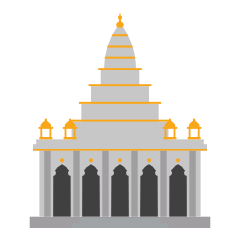
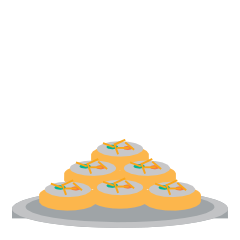
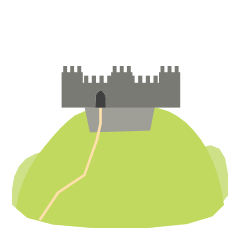
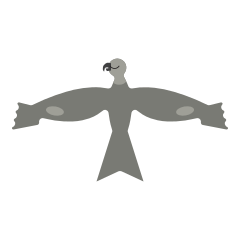
Shaniwar Wada (1732) was the Peshwas' seat; the palace burned in 1828 and its weathered walls, bastions and gates still stand over gardens. Its main gate, the Delhi Darwaza, faces north between two bastions with arrow loops and machicolations; each leaf of its huge teak doors carries 72 steel spikes at an elephant's forehead height, with a small wicket door cut into one. Parvati Hill's temples sit on the skyline, black kites wheel over the old city, Pune eats misal, and it was long India's cycle city.
- Shaniwar Wada — Wikipedia
- Parvati Hill — Wikipedia
- Misal pav — Wikipedia
- Black kite — Wikipedia
- Pune — Wikipedia
The sky wears Gond scales, from Madhya Pradesh.
The motion
The sun's fan of rays breathes over Parvati Hill; kites wheel over the walls; a flight of pigeons crosses the whole sky; pigeons peck about the forecourt; the trees sway. A 16-second loop.
Colour
Pune takes Apricot #FFCE7B, one of the three Flowers colours — with its icon in Steel Grey on it.