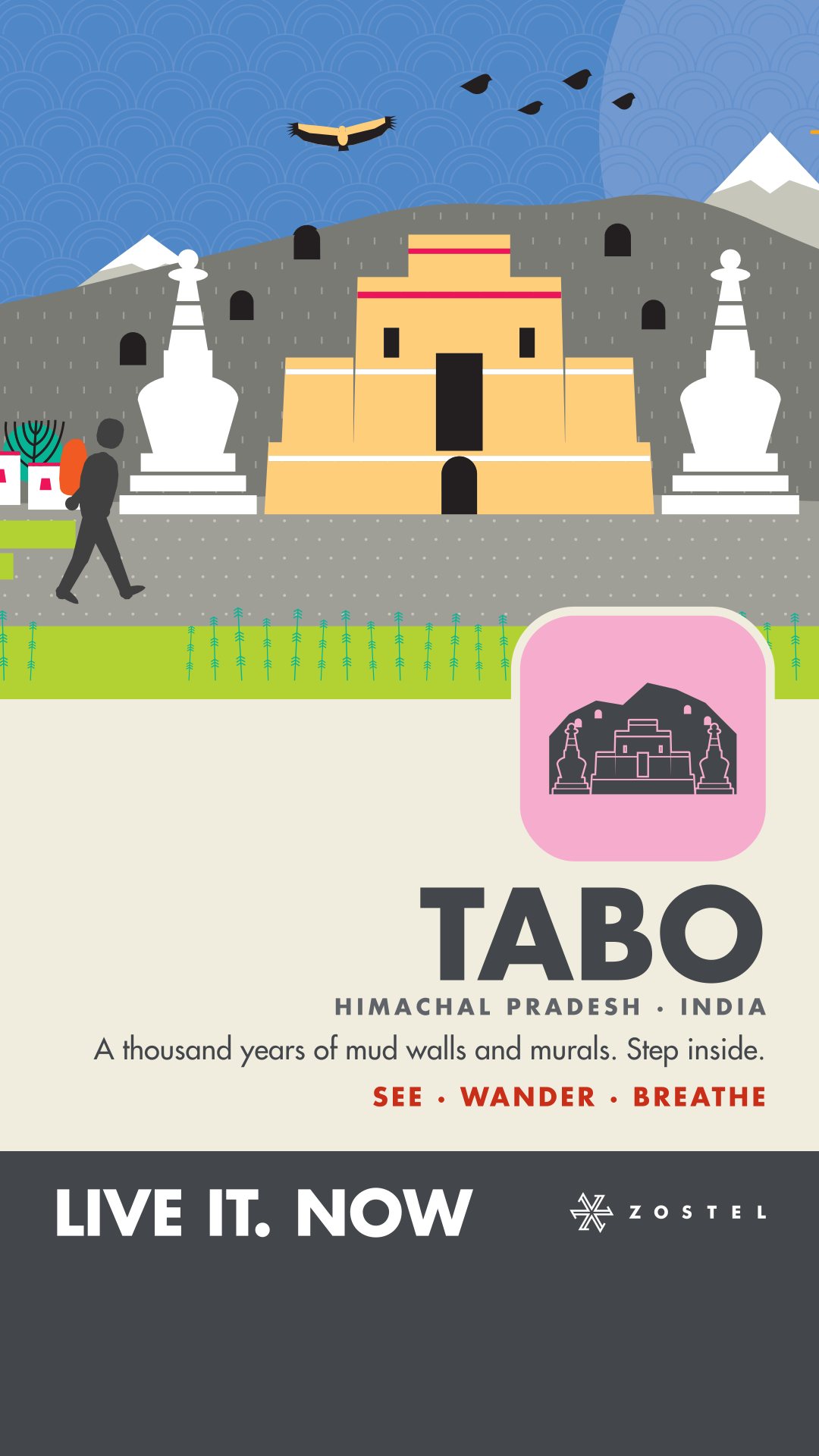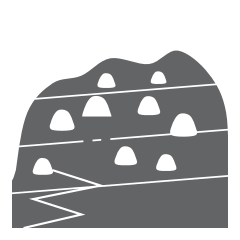









Why this icon Tabo Monastery (996 CE), mud-brick temples and chortens in the Spiti desert. Source: en.wikipedia.org
A thousand years of mud walls and murals. Step inside.
The story
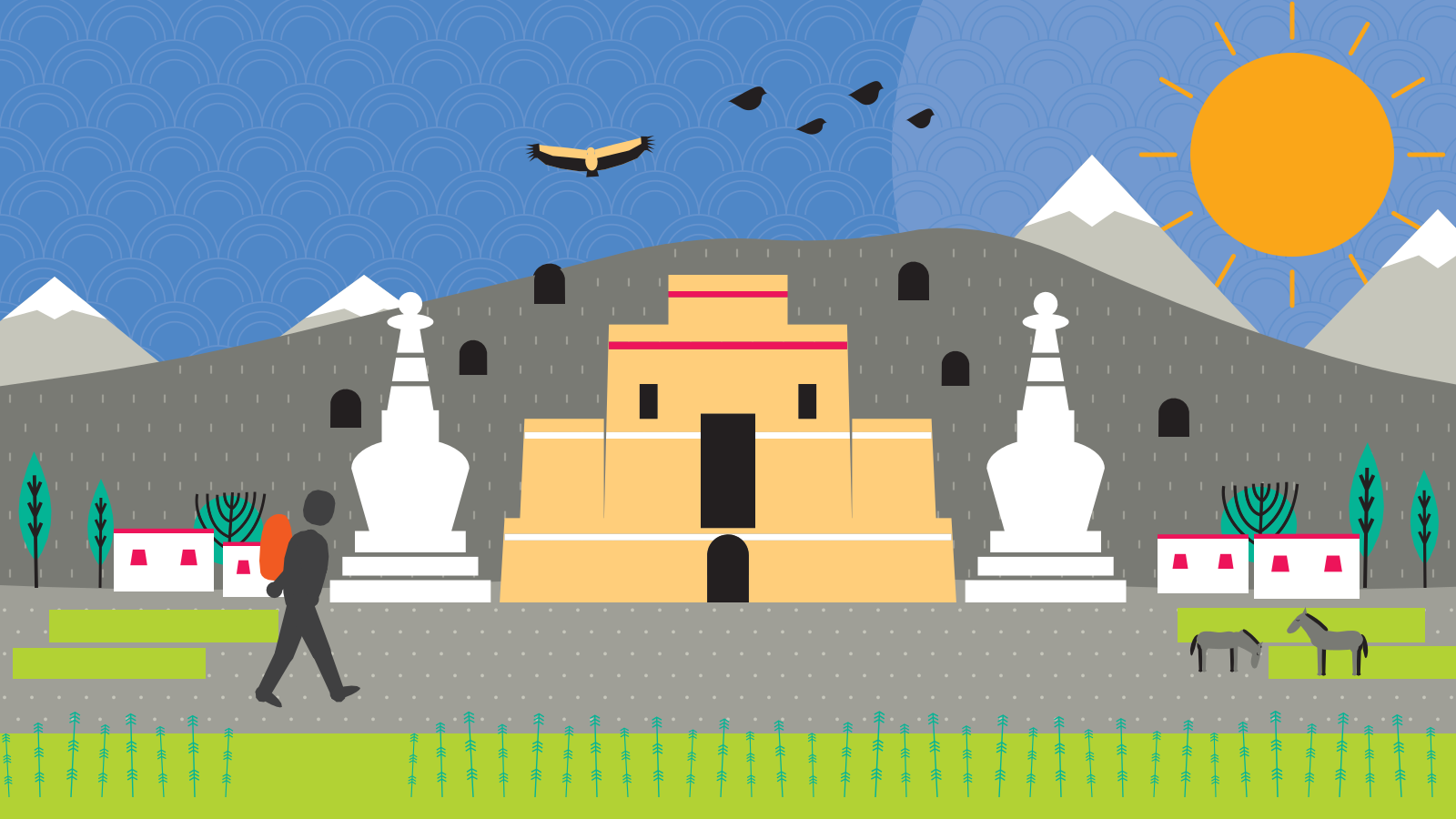
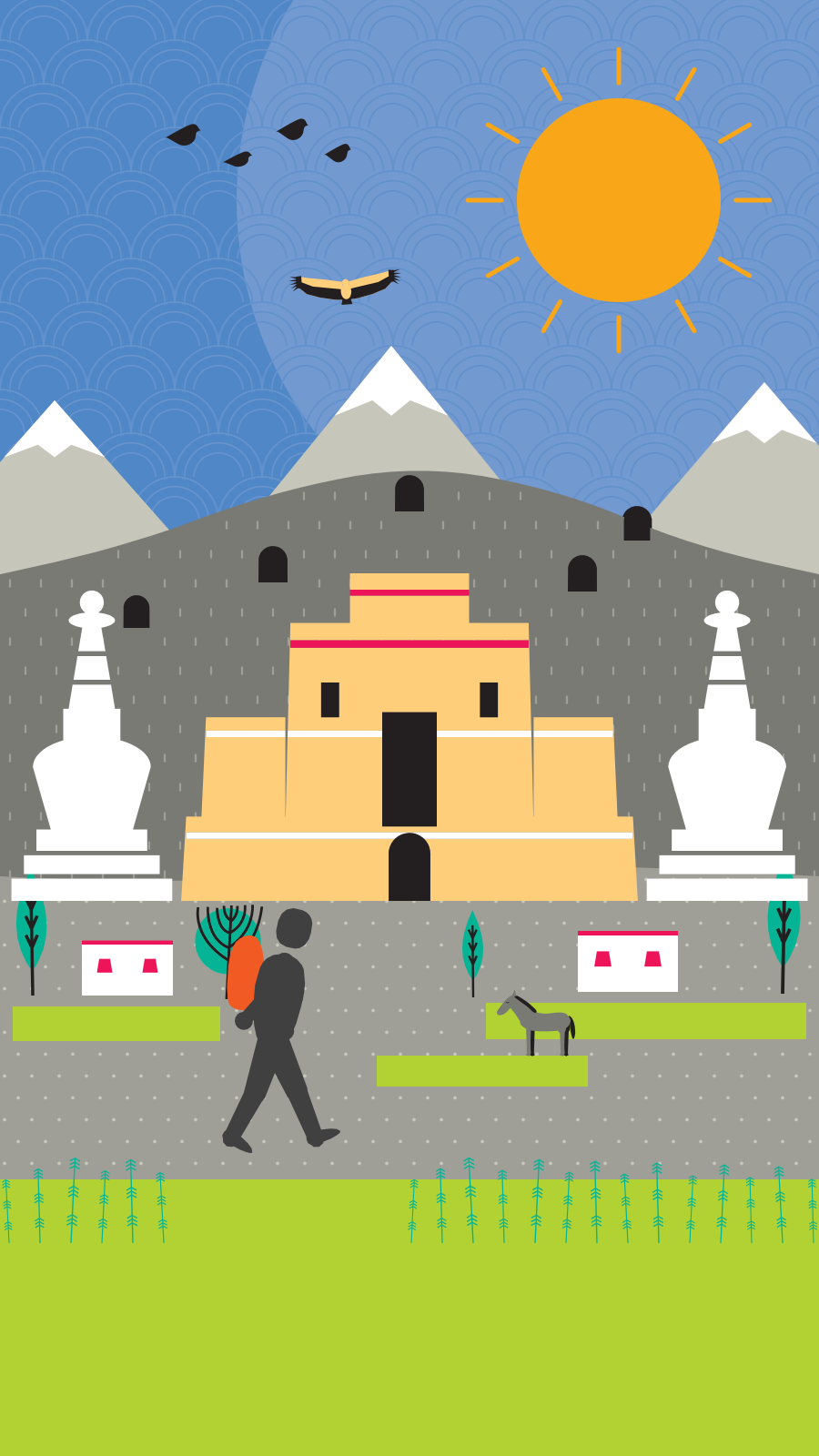
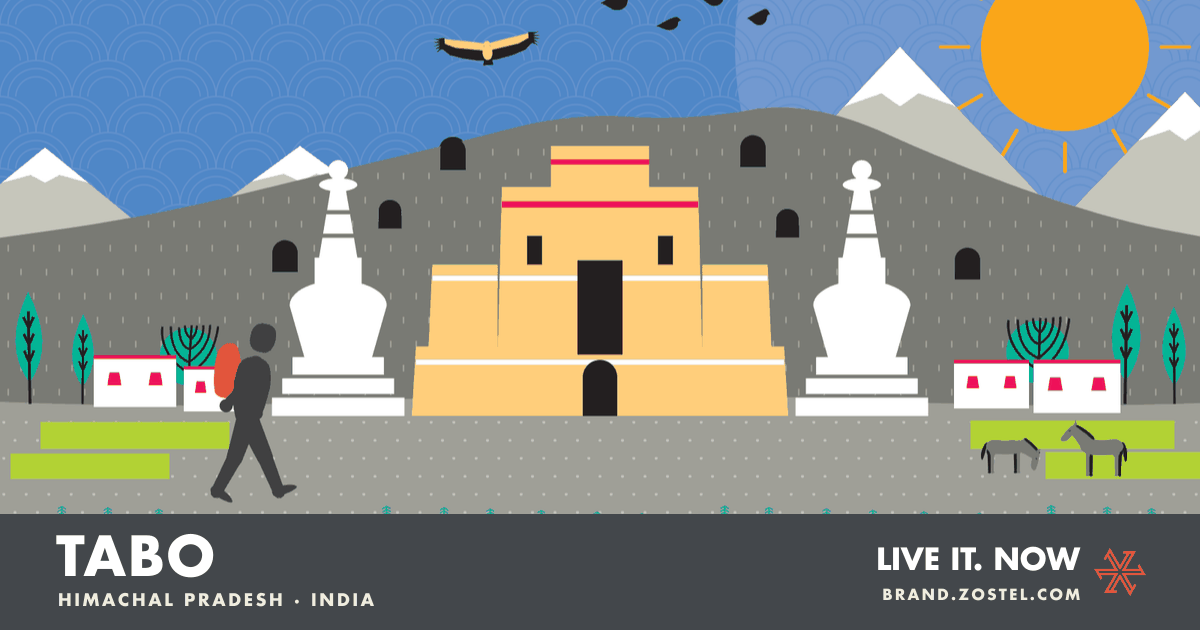
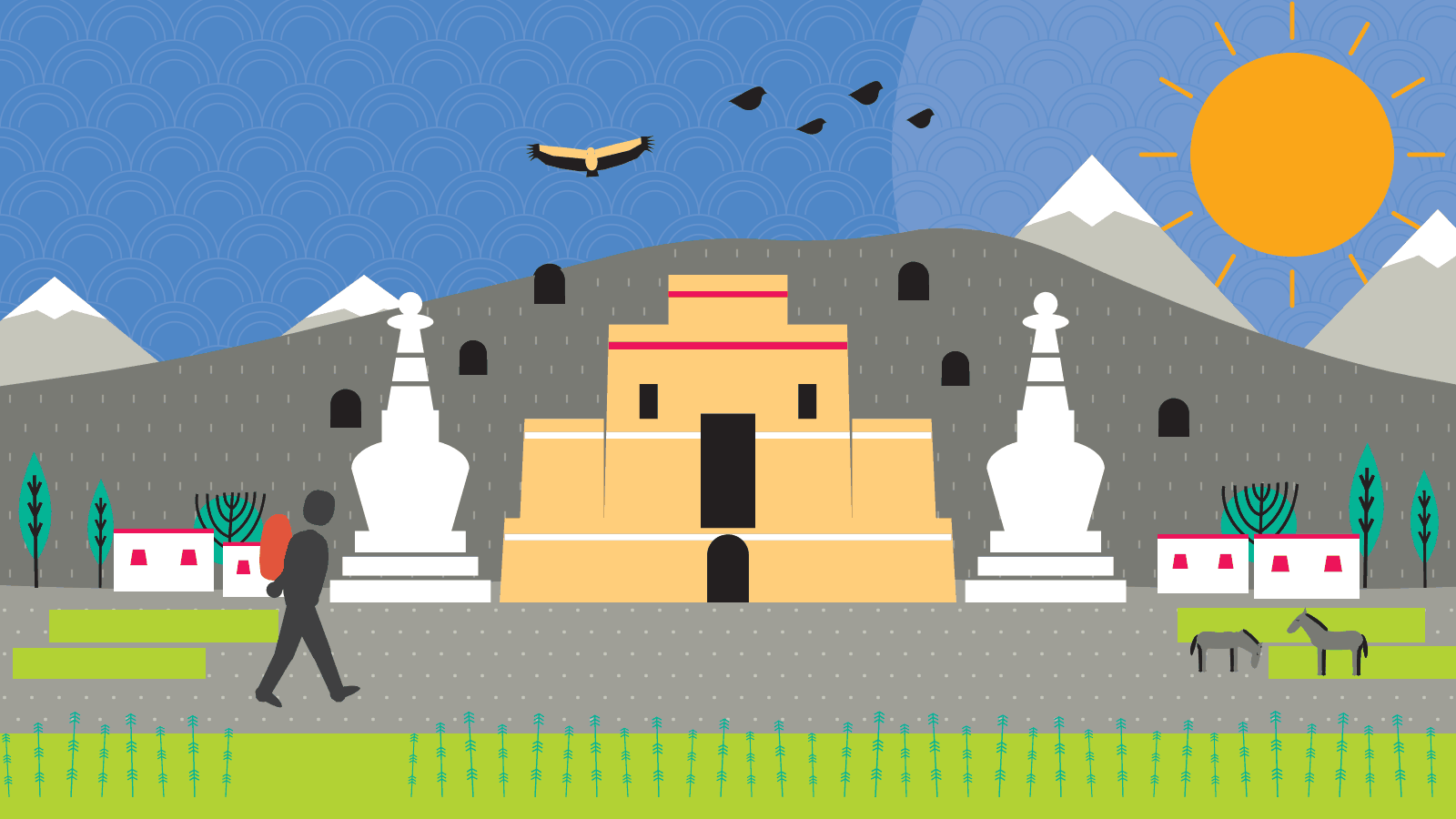
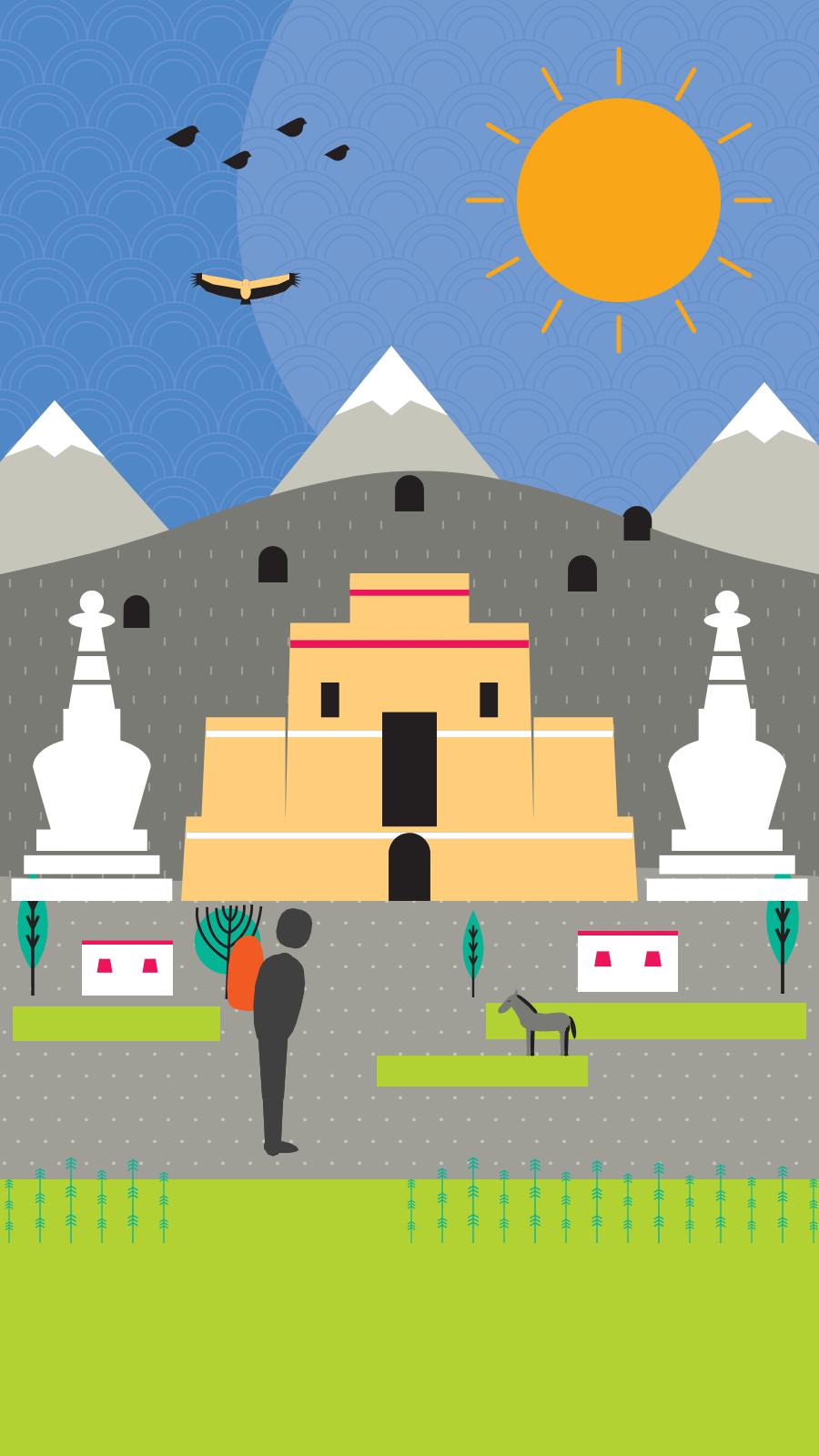
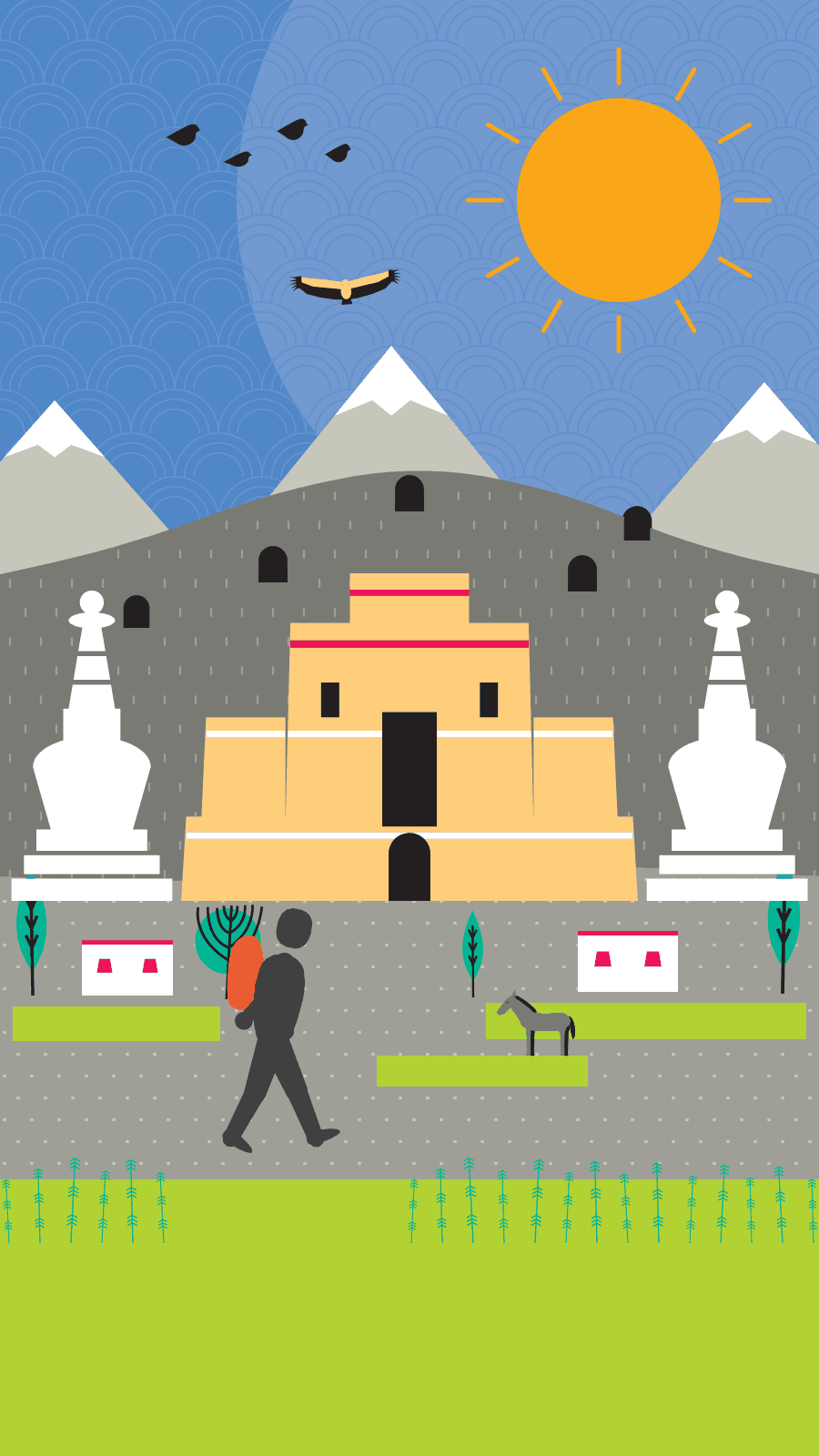
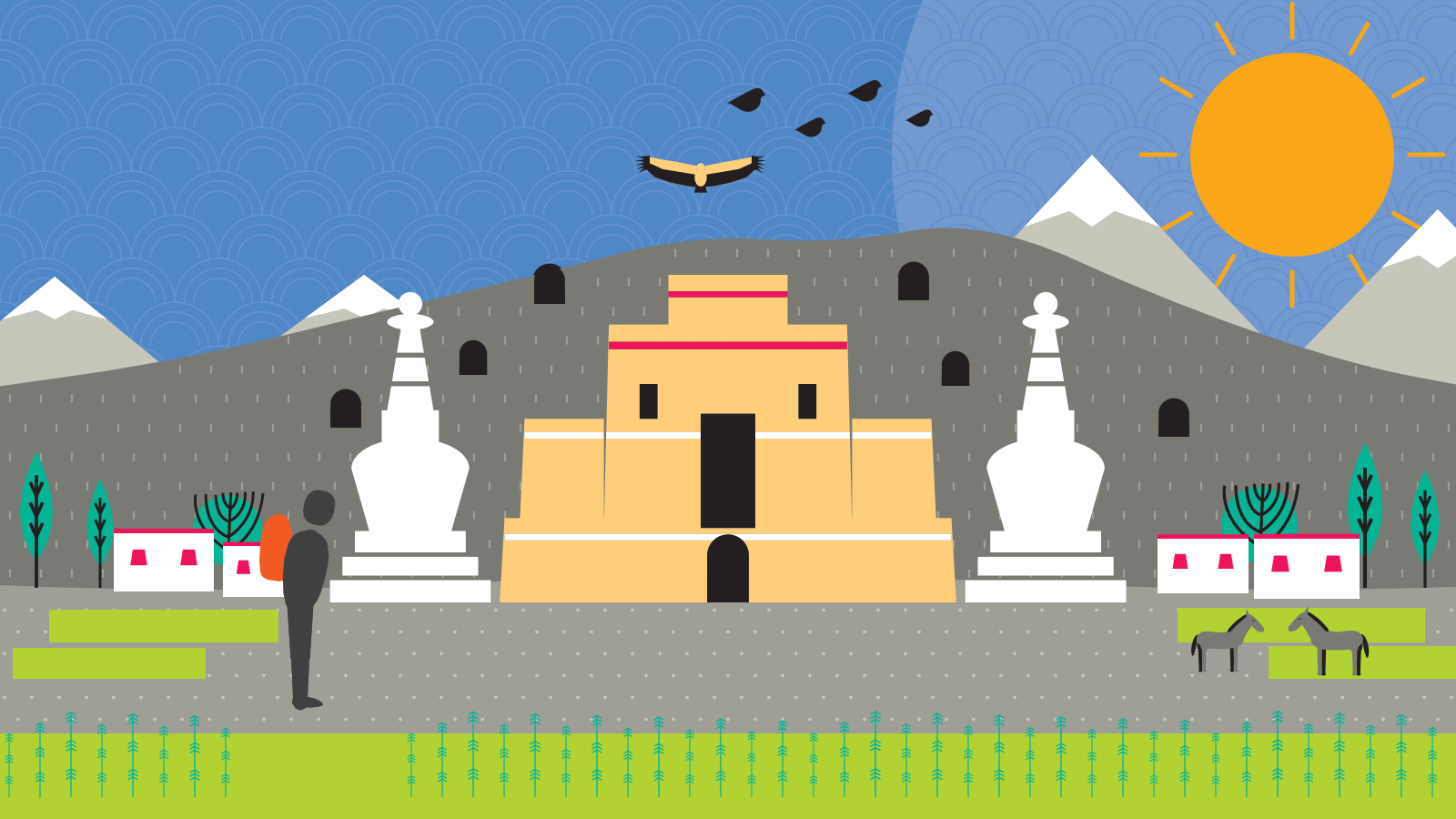
A clear summer morning in Spiti: a traveller walks up to Tabo's thousand-year-old monastery, its flat mud-walled halls and whitewashed chortens on the valley floor, the dark cliff above it dotted with cave mouths, and green pea fields, willows and grazing horses round the whitewashed village, while red-billed choughs cross the deep blue sky and a griffon wheels high overhead.
Why this picture
Tabo Monastery, founded in 996 CE, is the oldest continuously working Buddhist enclave in the Himalaya: low, flat-roofed earthen temples with few openings behind a thick mud wall on the flat floor of the Spiti valley (about 3,050 m), its chortens whitewashed, with meditation caves in the cliff above. The village houses are whitewashed with a red band; Spiti's single summer crop is green peas and barley, willows and poplars are almost its only trees, horses graze by the fields, and red-billed choughs and Himalayan griffons ride the valley's air.
- Tabo Monastery — Wikipedia
- hplahaulspiti.nic.in
- Spiti Valley — Wikipedia
- Red-billed chough — Wikipedia
- Himalayan vulture — Wikipedia
- hplahaulspiti.nic.in
The sky wears Gond scales, from Madhya Pradesh.
The motion
A griffon wheels round its thermal once a loop; red-billed choughs fly across the whole sky; the sun's rays turn; the willows and poplars sway; the pea stalks nod; the horses lower their heads to graze; the traveller walks. A 16-second loop.
Colour
Tabo takes Blush #F6ADCD, one of the three Valleys colours — with its icon in Steel Grey on it.